
404 and Found: What a Page Not Found Error on PLOS Digital Health Tells You About Open-Access Digital Health Publishing
We compile, generate and translate using Artificial Intelligence from the below given source. Macro Micro News is responsible for its editorial publication.
San Francisco, California, Source :.
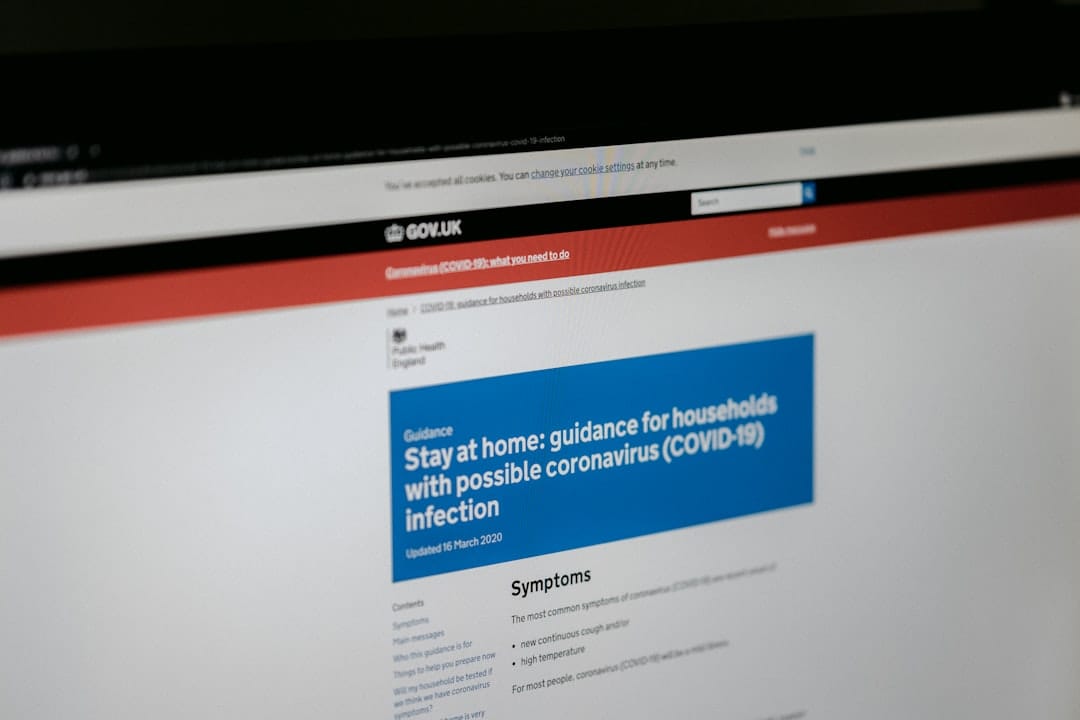
Visiting a journal’s main article landing page is supposed to connect you with the latest research, and a Page Not Found message can make you pause. On PLOS Digital Health, that pause is more useful than you might think. The error page is a quiet guide to how modern open-access science platforms operate, and it tells you a lot about how readers are expected to find research.
PLOS Digital Health is a peer-reviewed, open-access journal published by PLOS, a nonprofit 501(c)(3) corporation based in California, United States, with identification number C2354500. The journal focuses on digital health, a field where computing, mobile devices, software, and data analytics come together to improve medicine and public health. Its scope includes wearable sensors, telemedicine, artificial intelligence in clinical care, electronic health records, and patient-facing health applications. In the open-access model, published research is freely available online, so clinicians, policymakers, and the public can read findings without subscription barriers. Publishing costs are recovered through article processing fees, institutional agreements, or sponsorship, which is why publishers maintain transparent business structures and clearly identified legal status. That transparency is visible on the journal’s own website.
What happens when a research link doesn't resolve? The HTTP 404 response is the server's way of saying the requested resource is not available at that address. The cause may be a mistyped URL, a moved article, or a restructured website. What matters is what the page does next. On PLOS Digital Health, the 404 page doesn't leave you stranded. It offers a search box at the top of the screen, a browsable journal collection, and helpful menus for About and Publish sections. Those menus contain information about the journal and manuscript submission. The page also invites users who encounter website issues to email the journal with a detailed description. That simple guidance has a larger purpose. It reduces research friction by directing you to alternative routes for finding scholarly content.
One more detail worth noticing is the cookie preference center. PLOS's website lets visitors choose which non-essential cookies can be used. The categories include Functional cookies, Performance and Analytics cookies, and Marketing cookies. Strictly necessary cookies, which are required for basic site functions, remain enabled at all times. You can switch optional cookies on or off at any time and save your preferences. This system reflects broader data privacy expectations in academic publishing. Research platforms are expected to honor user consent and give readers granular control over tracking. Seeing those choices on an error page is a reminder that data ethics are part of the open-access infrastructure.
The global digital health market has expanded rapidly in recent years. Aging populations, rising chronic disease burdens, and widespread adoption of connected health devices all play a role. The COVID-19 pandemic accelerated the shift toward remote consultations and digital monitoring, and institutions have responded by publishing and seeking evidence on these technologies. As digital health research grows, so does the volume of digital objects on public platforms. Articles, data sets, and protocols all need stable management. Persistent identifiers help keep research linkable, and occasional unreachable links are still part of the landscape. A well-designed Page Not Found page works as a safety net. It turns a temporary detour into an entry point for site navigation and discovery.
For researchers, the practical takeaway is simple. If a link on PLOS Digital Health doesn't lead to the intended paper, use the search function. That is the fastest route. For authors, the Publish section contains submission and editorial policies. For anyone curious about the evolution of academic publishing, a 404 page offers a useful snapshot of how journals balance accessibility, privacy, and structure in the digital age. The next time you come across a Page Not Found page, you might just look a little closer. There is meaning in those HTTP status codes.
Related in Gadgets

Gadgets
How ROI Similarity Solves Point Cloud Noise: A New Standard for Change Detection
Laser point cloud change detection has faced persistent hurdles due to spatial and structural uncertainties. Residual registration errors, uneven point cloud density, viewpoint shifts, and object occlusion frequently lead to false alarms, making accurate monitoring difficult. To…
Read More...
Gadgets
How SMHA Solves the AI Image Quality Puzzle: A New Framework for Precision
The surge in text-to-image generation has reshaped digital creation, yet it brings a pressing question: how do we truly measure the quality of these synthetic visuals? Traditional photos face physical issues like blur or noise, but AI-generated images present a more complex land…
Read More...
Gadgets
How AI Stops Cyberattacks in P2P Energy Markets: Real-Time Detection Explained
The smart grid is undergoing a profound transformation. We are moving away from centralized power plants toward decentralized networks where energy flows bidirectionally. This shift relies on integrating information technology with physical infrastructure. Modern grids now facil…
Read More...
Gadgets
How to Cool EV Motors: The 31% Efficiency Gain in PMSM Design
The push for electric vehicles is accelerating at a rapid pace. This shift brings a significant engineering hurdle to the forefront. Thermal management in permanent magnet synchronous motors has become a critical challenge. Modern drivetrains generate intense heat. This heat con…
Read More...
Gadgets
How AI-Driven RIS on High-Altitude Platforms Boosts Energy Efficiency for IoT
Global, Source In remote rural areas and disaster zones Internet of Things devices often face a frustrating reality weak or blocked connections to terrestrial base stations. This connectivity gap creates significant hurdles for critical applications such as environmental monitor…
Read More...
Gadgets
How Real-Time Iteration NMPC Solves Offshore Wind Turbine Control in Under 5 Milliseconds
Offshore wind turbines equipped with full-power converters face a complex control challenge that requires the simultaneous coordination of power tracking, electrical safety, and mechanical load mitigation. While Nonlinear Model Predictive Control offers a systematic framework fo…
Read More...
Gadgets
How the Nautical δ-Corridor Ensures Safe Autonomous Ship Navigation
The maritime industry stands at a pivotal moment as autonomous surface ships move from experimental phases to regulated commercial deployment. A critical challenge remains: ensuring navigational safety while strictly adhering to international collision regulations. Researchers h…
Read More...
Gadgets
How L1* Regularization Transforms Multi-Modal Anomaly Detection: A New Standard for Semantic Accuracy
In a world where data streams from countless sources, traditional anomaly detection often struggles to keep pace. Most existing algorithms rely on single-modal inputs like text or images alone, missing the intricate correlations that define real-world scenarios. This limitation…
Read More...
Gadgets
How Deep Learning Keeps Remote Solar Security Systems Online
Maintaining uninterrupted surveillance in remote locations presents a unique engineering challenge. Unlike urban infrastructure powered by stable electrical grids, solar-powered security systems rely entirely on intermittent renewable energy sources and finite battery storage. A…
Read More...
Gadgets
How Failure-Guided Control Boosts Au-Wire Bonding Strength by 3x on Silicon Submounts
As programmable photonic integrated circuits expand to support higher port counts and system-level reconfigurability, high-density electrical fan-out has become a critical packaging bottleneck. In the realm of silicon photonics, particularly for devices like optical field-progra…
Read More...