
Drosophila Brain Connectome: How Colonist Neurons Architect Global Communication
We compile, generate and translate using Artificial Intelligence from the below given source. Macro Micro News is responsible for its editorial publication.
Global, Source:
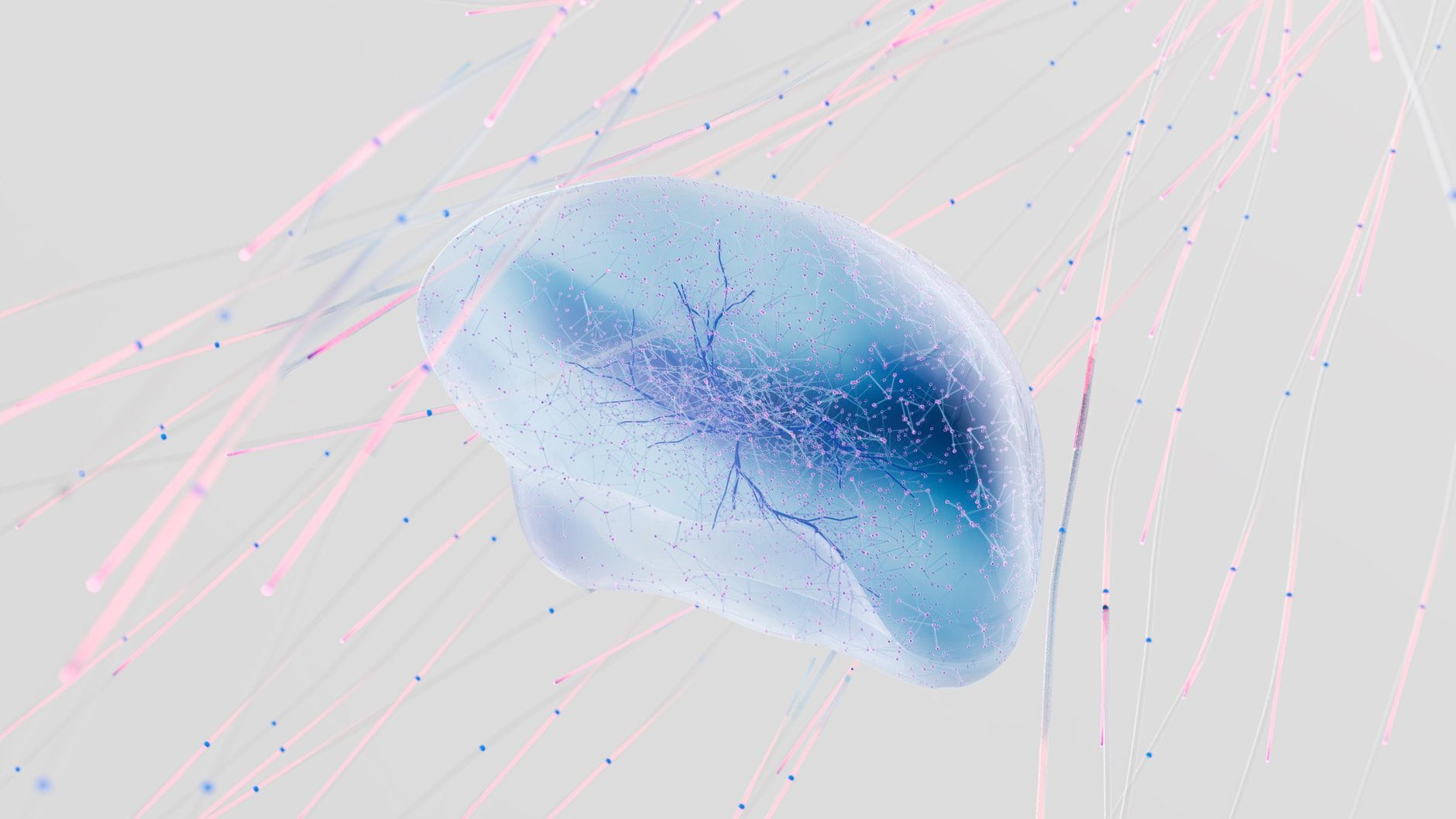
The quest to map the brain's neural networks has long been a central pursuit in neuroscience. While human connectomes remain partially understood, the fruit fly Drosophila melanogaster offers a complete structural blueprint for both larval and adult stages. This comprehensive mapping allows researchers to explore functional architecture beyond simple wiring diagrams. A key discovery in this field is the identification of colonist neurons. These specialized cells serve as strategic bridges within the brain. They exert significant influence on distant regions through long-range projections that span considerable physical distances.
Colonist neurons form unique clusters known as colonies. These groups consist of closely related neurons located in remote areas. Despite their separation from the source, these neurons maintain strong influence. Unlike typical neurons that operate within local circuits, colonists use sparse axonal projections. This structure enables synaptic connections with targets far away. Such connectivity allows for the integration of sensory, motor, and cognitive functions across different brain hemispheres. The distribution of these neurons is not random. They exhibit high centrality metrics including degree, closeness, and betweenness. In the adult brain, over 28 percent of colonist neurons rank in the top 20 percent for all three measures. This positioning highlights their role as critical hubs for information relay.
Developmental changes significantly impact the connectome structure. As the fruit fly matures, its brain adopts a hierarchical modular organization. This process makes the neural wiring more selective. Consequently, the percentage of colonist neurons with high centrality increases substantially in adults compared to larvae. These neurons create a distinct backbone within the network. This backbone features higher density and clustering coefficients than the general network. It facilitates efficient communication between localized modules. This organizational principle offers valuable insights for biologically inspired artificial intelligence systems.
Functional coherence characterizes these colonist colonies. They are often monotypic in neurotransmitter release. Most utilize acetylcholine or glutamate. Colony members also exhibit strong downstream co-targeting. This means they frequently send signals to the same postsynaptic targets. They act as convergent broadcast relays rather than isolated nodes. Identifying these patterns provides insight into how biological systems achieve efficient global communication through local specialization. These findings advance our understanding of neurological disorders linked to connectivity anomalies. They also provide a blueprint for designing next-generation neural architectures that mimic the efficiency and robustness of natural brains.
Related in Gadgets

Gadgets
Predictive Aeration: How AI and Explainable Models Slash Energy Costs in Wastewater Treatment
Aeration is the energy hog of municipal wastewater treatment plants. It consumes between 45 and 60 percent of total facility power. Traditional systems use feedback controllers that react only after disturbances hit the biological process. This delay often leads to excessive aer…
Read More...
Gadgets
How AI Detects Submerged Ships in Noisy Waters: A New Era of Maritime Security
National security and maritime rights protection rely heavily on advanced underwater surveillance systems. Nations invest significantly in these technologies to maintain strategic advantages. While acoustic detection and magnetic anomaly detection (MAD) are standard practices, t…
Read More...
Gadgets
Why You See Access Denied: The Real Story Behind Web Security Blocks
Have you ever stared at a screen only to see the words "Access Denied"? It is a moment that stops your work in its tracks. This error is more than just a nuisance. It is a signal from the complex machinery of the modern internet. Understanding what happens behind this message re…
Read More...
Gadgets
Access Denied: Why Digital Gatekeeping Threatens Open Science and What Comes Next
The digital landscape is increasingly defined by invisible barriers. When a user encounters an 'Access Denied' error, particularly in academic or scientific domains, it signals more than a technical glitch; it represents a systemic shift toward restricted knowledge dissemination…
Read More...
Gadgets
Why Your Browser Says No: The Hidden Logic Behind Access Denied Errors
The digital world moves fast. Yet one experience remains universally frustrating for users everywhere. That sudden stop when a website refuses to load. You see the stark message 'Access Denied' or the HTTP 403 Forbidden code. This is not just a random error. It is a critical sig…
Read More...
Gadgets
Why Your Browser Says No: The Hidden Logic Behind Access Denied Errors
Have you ever stared at a blank screen that simply refuses to let you in? That frustrating 'Access Denied' message is more than just a digital roadblock. It is actually a sign that the internet's security systems are working exactly as they should. When you see an HTTP 403 Forbi…
Read More...
Gadgets
COMBI-CBRN: How Modular Sensors Are Redefining Firefighter Safety in CBRN Emergencies
Global, Source Emergency response teams face a complex puzzle when dealing with Chemical, Biological, Radiological, and Nuclear incidents. The safety of first responders often hinges on the accuracy of initial reconnaissance. Traditional methods frequently rely on separate detec…
Read More...
Gadgets
How Structure-Aware Alignment Boosts AI Accuracy in Partial-Label Learning
The world of artificial intelligence faces a persistent hurdle. Perfectly labeled data is rare and expensive to obtain. Researchers have turned to partial-label learning as a solution. This method allows models to learn from ambiguous supervision. Each instance comes with a set…
Read More...
Gadgets
Boost Weed Detection AI Accuracy Without New Hardware: The MASC Method
Agricultural technology is experiencing a major shift as artificial intelligence models grow more resilient to environmental changes. A new study introduces Metadata-Guided Appearance-Shift Consistency (MASC), a training framework that improves weed detection in outdoor images w…
Read More...
Gadgets
AI Detects Transmission Tower Flaws: 59% Precision Boost for Grid Safety
Modern energy grids depend on the reliability of electrical transmission infrastructure. Manual inspections of towering steel structures remain labor-intensive and prone to human error. A recent breakthrough in computer vision technology offers a transformative solution for iden…
Read More...