
How to Cool EV Motors: The 31% Efficiency Gain in PMSM Design
We compile, generate and translate using Artificial Intelligence from the below given source. Macro Micro News is responsible for its editorial publication.
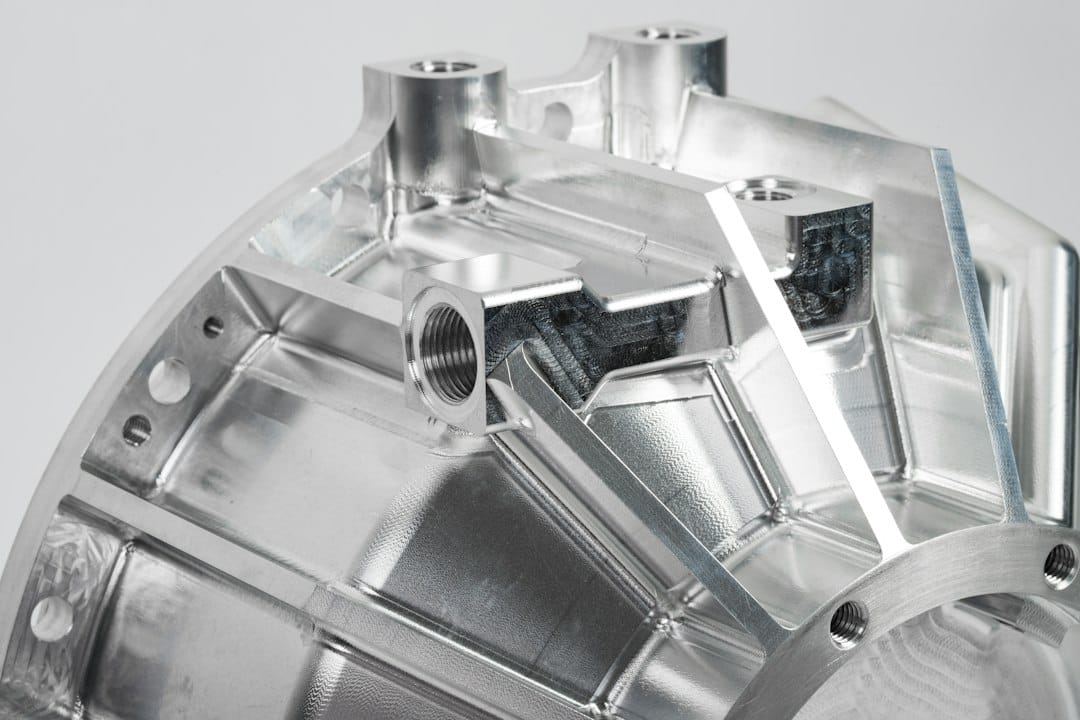
Global, Source:
The push for electric vehicles is accelerating at a rapid pace. This shift brings a significant engineering hurdle to the forefront. Thermal management in permanent magnet synchronous motors has become a critical challenge. Modern drivetrains generate intense heat. This heat concentrates in the stator and windings. If not managed properly it degrades insulation and reduces magnetic performance. Reliability suffers when temperatures rise too high.
Traditional cooling methods often fall short. Air cooling lacks the capacity for high power applications. Indirect liquid cooling introduces thermal resistance. Layers of material separate the heat source from the coolant. Engineers needed a better solution. They developed combined direct-indirect cooling systems. This approach uses internal oil jets on windings. It also uses external housing channels for the stator casing. The goal is to suppress hotspots while maintaining efficiency.
Optimization requires balancing competing goals. We must minimize component temperatures. We must also reduce hydraulic pumping power. A recent study explored this balance using advanced computational fluid dynamics. Researchers analyzed a high-load PMSM operating at 10,000 rpm. They examined three key variables. These included nozzle diameter coolant flow rate and inlet oil temperature.
The results revealed interesting trade-offs. Increasing the nozzle diameter from 1.1 mm to 1.7 mm reduced pressure drop by nearly 31%. Temperature changes were minimal during this adjustment. Higher coolant flow rates offered different benefits. Raising flow from 10 to 20 liters per minute lowered winding temperatures by over 15 K. However hydraulic resistance increased by more than 213%. Lowering inlet oil temperature improved protection but increased viscosity-related pumping power.
To find the best compromise researchers used an artificial neural network. They coupled this with the NSGA-II algorithm and TOPSIS decision-making framework. The optimal design featured a 1.7 mm nozzle diameter. The flow rate was set to 16.59 LPM. Inlet temperature remained at 15°C. This configuration achieved a 31% reduction in ideal hydraulic pumping power. Component temperatures remained comparable to high-flow baselines.
The natural flow split between branches was approximately 54% and 46%. These findings demonstrate that intelligent optimization enhances thermo-hydraulic performance. EV motors can become more compact and energy efficient. Reliability remains intact. Future work will validate these models under transient drive cycles. Rotating-domain effects will be incorporated to refine strategies further.
Related in Gadgets

Gadgets
How SMHA Solves the AI Image Quality Puzzle: A New Framework for Precision
The surge in text-to-image generation has reshaped digital creation, yet it brings a pressing question: how do we truly measure the quality of these synthetic visuals? Traditional photos face physical issues like blur or noise, but AI-generated images present a more complex land…
Read More...
Gadgets
How AI Stops Cyberattacks in P2P Energy Markets: Real-Time Detection Explained
The smart grid is undergoing a profound transformation. We are moving away from centralized power plants toward decentralized networks where energy flows bidirectionally. This shift relies on integrating information technology with physical infrastructure. Modern grids now facil…
Read More...
Gadgets
How AI-Driven RIS on High-Altitude Platforms Boosts Energy Efficiency for IoT
Global, Source In remote rural areas and disaster zones Internet of Things devices often face a frustrating reality weak or blocked connections to terrestrial base stations. This connectivity gap creates significant hurdles for critical applications such as environmental monitor…
Read More...
Gadgets
How Real-Time Iteration NMPC Solves Offshore Wind Turbine Control in Under 5 Milliseconds
Offshore wind turbines equipped with full-power converters face a complex control challenge that requires the simultaneous coordination of power tracking, electrical safety, and mechanical load mitigation. While Nonlinear Model Predictive Control offers a systematic framework fo…
Read More...
Gadgets
How the Nautical δ-Corridor Ensures Safe Autonomous Ship Navigation
The maritime industry stands at a pivotal moment as autonomous surface ships move from experimental phases to regulated commercial deployment. A critical challenge remains: ensuring navigational safety while strictly adhering to international collision regulations. Researchers h…
Read More...
Gadgets
How L1* Regularization Transforms Multi-Modal Anomaly Detection: A New Standard for Semantic Accuracy
In a world where data streams from countless sources, traditional anomaly detection often struggles to keep pace. Most existing algorithms rely on single-modal inputs like text or images alone, missing the intricate correlations that define real-world scenarios. This limitation…
Read More...
Gadgets
How Deep Learning Keeps Remote Solar Security Systems Online
Maintaining uninterrupted surveillance in remote locations presents a unique engineering challenge. Unlike urban infrastructure powered by stable electrical grids, solar-powered security systems rely entirely on intermittent renewable energy sources and finite battery storage. A…
Read More...
Gadgets
How Failure-Guided Control Boosts Au-Wire Bonding Strength by 3x on Silicon Submounts
As programmable photonic integrated circuits expand to support higher port counts and system-level reconfigurability, high-density electrical fan-out has become a critical packaging bottleneck. In the realm of silicon photonics, particularly for devices like optical field-progra…
Read More...
Gadgets
FSA-Net: How Deep Learning Pinpoints Unknown Signal Sources with Sub-Degree Precision
Imagine trying to locate multiple whispers in a noisy room without knowing how many people are speaking or where they stand. This is the daily reality for engineers working with wireless communications and radar systems. Traditional tools like MUSIC and ESPRIT have long been the…
Read More...
Gadgets
DyMC-YOLO: How Dual-Stream Fusion Boosts Real-Time Detection to 46 FPS
Object detection stands as a fundamental pillar of intelligent visual perception. It powers critical advancements in autonomous driving, security surveillance, and precision agriculture. Yet traditional visible-spectrum detectors often falter under adverse conditions like low il…
Read More...