
How TSN-Aware Scheduling Fixes Industrial Network Latency: 96% Success Rate in 10G-EPON
We compile, generate and translate using Artificial Intelligence from the below given source. Macro Micro News is responsible for its editorial publication.
Global, Source:
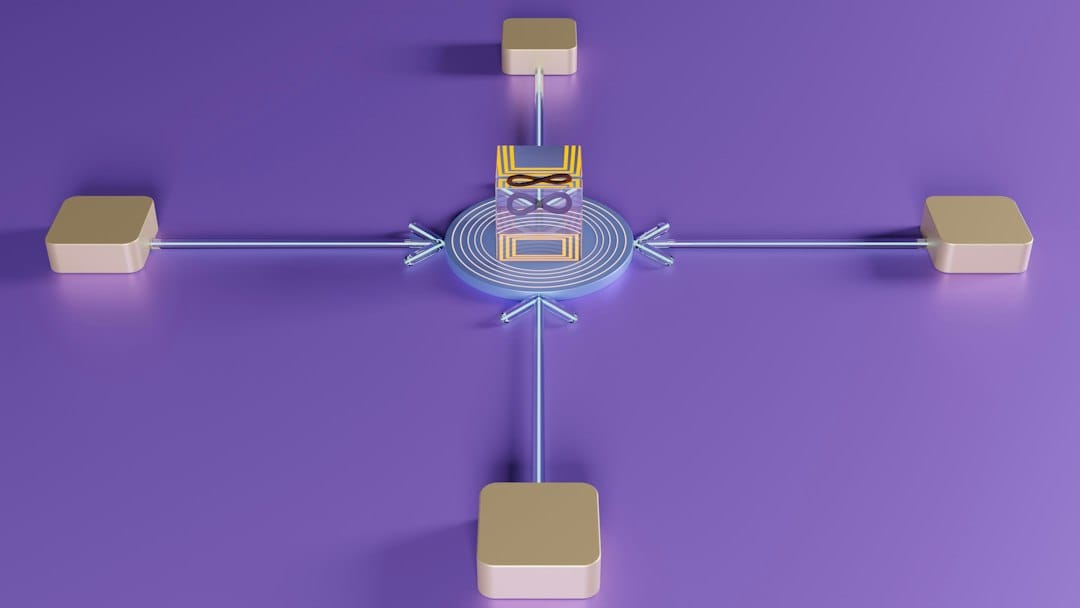
Industry 4.0 demands more than just speed. It requires precision. As factories integrate smarter automation, the need for deterministic communication has become non-negotiable. Traditional networks often struggle to bridge high-speed optical access with the strict timing of Time-Sensitive Networking backbones. This gap creates uncertainty. A new framework called Service-Window Grant Dynamic Bandwidth Allocation offers a solution. It targets converged TSN and 10G-EPON access networks directly.
The core challenge involves what experts call grant completion time. This is the moment an upstream packet finishes transmission over fiber and becomes available to the scheduler. Misalignment here can cause missed deadlines even if the optical transmission succeeds. SWG-DBA addresses this by converting native TSN occupancy profiles into path-continuous service windows. The system identifies ingress times compatible with occupied intervals on every network hop. This allows the Optical Line Terminal to issue just-in-time grants that respect both PON-domain causality and TSN deadline budgets.
Experimental results provide compelling evidence for this approach. Testing on a seven-switch topology showed significant improvements at high load levels. The SWG method achieved an upstream end-to-end success rate of 95.87 percent. Its joint-construction variant, Joint-SWG, reached 96.11 percent. These figures stand out against traditional Earliest Deadline First policies which managed only 80.41 percent success under identical conditions. Additionally, Joint-SWG reduced peak OLT buffering by 68.0 percent compared to independent construction methods. This reduction lowers hardware storage costs while maintaining high reliability.
Robustness testing further highlights the value of this technology. Just-in-time configurations retained more than 99.8 percent upstream success even with a 500 nanosecond readiness-error bound. Non-JIT counterparts dropped to approximately 31 percent in similar tests. This resilience underscores the importance of budgeted waiting margins in absorbing timing uncertainties from source devices. By aligning optical grant placement with backbone service opportunities, SWG-DBA provides a scalable solution for aggregating heterogeneous industrial traffic. This includes everything from RS422 sensors to high-speed camera streams within deterministic TSN environments. The advancement supports more efficient and robust industrial internet infrastructure.
Related in Gadgets

Gadgets
Predictive Aeration: How AI and Explainable Models Slash Energy Costs in Wastewater Treatment
Aeration is the energy hog of municipal wastewater treatment plants. It consumes between 45 and 60 percent of total facility power. Traditional systems use feedback controllers that react only after disturbances hit the biological process. This delay often leads to excessive aer…
Read More...
Gadgets
How AI Detects Submerged Ships in Noisy Waters: A New Era of Maritime Security
National security and maritime rights protection rely heavily on advanced underwater surveillance systems. Nations invest significantly in these technologies to maintain strategic advantages. While acoustic detection and magnetic anomaly detection (MAD) are standard practices, t…
Read More...
Gadgets
Why You See Access Denied: The Real Story Behind Web Security Blocks
Have you ever stared at a screen only to see the words "Access Denied"? It is a moment that stops your work in its tracks. This error is more than just a nuisance. It is a signal from the complex machinery of the modern internet. Understanding what happens behind this message re…
Read More...
Gadgets
Access Denied: Why Digital Gatekeeping Threatens Open Science and What Comes Next
The digital landscape is increasingly defined by invisible barriers. When a user encounters an 'Access Denied' error, particularly in academic or scientific domains, it signals more than a technical glitch; it represents a systemic shift toward restricted knowledge dissemination…
Read More...
Gadgets
Why Your Browser Says No: The Hidden Logic Behind Access Denied Errors
The digital world moves fast. Yet one experience remains universally frustrating for users everywhere. That sudden stop when a website refuses to load. You see the stark message 'Access Denied' or the HTTP 403 Forbidden code. This is not just a random error. It is a critical sig…
Read More...
Gadgets
Why Your Browser Says No: The Hidden Logic Behind Access Denied Errors
Have you ever stared at a blank screen that simply refuses to let you in? That frustrating 'Access Denied' message is more than just a digital roadblock. It is actually a sign that the internet's security systems are working exactly as they should. When you see an HTTP 403 Forbi…
Read More...
Gadgets
COMBI-CBRN: How Modular Sensors Are Redefining Firefighter Safety in CBRN Emergencies
Global, Source Emergency response teams face a complex puzzle when dealing with Chemical, Biological, Radiological, and Nuclear incidents. The safety of first responders often hinges on the accuracy of initial reconnaissance. Traditional methods frequently rely on separate detec…
Read More...
Gadgets
How Structure-Aware Alignment Boosts AI Accuracy in Partial-Label Learning
The world of artificial intelligence faces a persistent hurdle. Perfectly labeled data is rare and expensive to obtain. Researchers have turned to partial-label learning as a solution. This method allows models to learn from ambiguous supervision. Each instance comes with a set…
Read More...
Gadgets
Boost Weed Detection AI Accuracy Without New Hardware: The MASC Method
Agricultural technology is experiencing a major shift as artificial intelligence models grow more resilient to environmental changes. A new study introduces Metadata-Guided Appearance-Shift Consistency (MASC), a training framework that improves weed detection in outdoor images w…
Read More...
Gadgets
AI Detects Transmission Tower Flaws: 59% Precision Boost for Grid Safety
Modern energy grids depend on the reliability of electrical transmission infrastructure. Manual inspections of towering steel structures remain labor-intensive and prone to human error. A recent breakthrough in computer vision technology offers a transformative solution for iden…
Read More...