
Trevor Noah Turned Google’s Pixel 11 Event Into a Star-Studded Show: Live Blog Highlights, Pixel Watch 3, Android 16, and What You Missed
We compile, generate and translate using Artificial Intelligence from the below given source. Macro Micro News is responsible for its editorial publication.
Mountain View, California, MMN Correspondent: The stage had the feel of a late-night studio, and the audience knew right away that this would be a product launch with a different rhythm. Trevor Noah walked out on August 12, 2026, and the Made by Google event turned into a mix of comedy, live commentary, and serious hardware announcements. The Verge’s live blog tracked every moment, from the opening monologue to the final camera demo.
Google made a deliberate choice by putting Noah in the host seat. The previous Made by Google event had its own celebrity energy, and this year’s showcase aimed to fine-tune that approach. Scheduling the keynote for 6 PM ET / 3 PM PT made it easy for people to tune in after work, and the YouTube stream meant anyone could revisit the highlights later.
Before Noah even reached the stage, the rumors and previews had already set the tone. Press and content creators had spent the morning sharing hands-on impressions of the new Pixel devices. The Verge’s coverage included in-depth looks at the Pixel 11, Pixel 11 Pro, and Pixel Watch 3, giving readers a head start on the details that would make up the main event. This mix of early media access and a polished live showcase gives consumers the best of both worlds.
When the hardware arrived, it delivered. The Pixel 11 features a larger edge-to-edge display, upgraded camera sensors, and a new Tensor chip built for speed and on-device AI. The Pixel 11 Pro goes further with a periscope zoom lens that reaches 10x optical zoom. Both models are designed to last all day, and charging speed gets a welcome boost. Google’s AI work shows up in real-time translation, smarter photo editing, and voice assistant features that understand more context than before.
The Pixel Watch 3 also stepped into the spotlight. It has a brighter display, upgraded health tracking, and a sleep coaching feature that uses AI to make personalized suggestions. More importantly, it connects more deeply with Pixel phones and Google services. You can handle calls, control smart home gear, and even manage your car from your wrist. For anyone invested in Google’s world, the watch feels like a natural extension of the phone.
The night’s biggest talking point was Noah’s opening monologue. He poked fun at the tech industry’s obsession with specs and the way product launches can take themselves too seriously. The crowd ate it up, and social media filled with clips of his best lines. For those who wanted an even deeper technical breakdown, The Verge’s live blog and the early hands-on coverage filled in every gap.
The live blog itself was a team effort. Jay Peters, Victoria Song, Nathan Edwards, Jacob Kastrenakes, and David Imel shared observations and updates throughout the event. Victoria Song attended in person, capturing the atmosphere on the ground, while the other editors watched remotely and weighed in as announcements happened. The result was a real-time conversation that was just as entertaining as the show itself.
Software played a major supporting role. Android 16 arrived with AI-driven features such as predictive text, smarter notifications, and more robust privacy controls. Google Assistant received an update that makes conversations feel more natural and context aware. These updates strengthen the Pixel’s identity and add practical value for anyone who lives inside Google’s world.
The new Tensor chip is the engine behind much of this. By running AI models directly on the phone, Google can offer faster responses and better privacy while reducing the need for cloud processing. The camera takes full advantage of that power. Low light shots look clearer, unwanted objects can be removed with a tap, and 2D images can become 3D scenes. These are features people will actually use every day.
For buyers, pricing is a major factor. The Pixel 11 starts at $799, and the Pixel 11 Pro comes in at $999. A trade-in program offers up to $500 off, which makes the upgrade path easier. Pre-orders opened immediately after the event, with shipping expected in late August. Google has positioned these phones as strong options in the flagship conversation.
Early reactions from the tech community are positive. The camera and AI features have drawn particular praise, and the Pixel Watch 3’s battery life and health tools impressed reviewers as well. The phone’s design feels refined and polished, keeping the familiar Pixel DNA without standing still. A foldable Pixel was not announced at this event, and the category continues to evolve as an open chapter in Google’s story.
Looking ahead, Google is building a connected experience that can compete with the best in the industry. The connections between the Pixel 11, Pixel Watch 3, and Google services are central to that vision. AI is the other pillar. As Samsung and Apple continue to shape their own paths, Google’s ability to deliver unique AI-powered experiences will decide just how much attention the Pixel line commands.
The Made by Google event was more than a product announcement. It was a statement about accessibility, entertainment, and smart technology working together. Trevor Noah brought the charm, The Verge’s live blog captured the details, and the Pixel 11 series now carries Google’s ambitions into the real world. The next few weeks will be telling as early buyers get their hands on these devices and put them to work.
Related in Gadgets
Gadgets
How ROI Similarity Solves Point Cloud Noise: A New Standard for Change Detection
Laser point cloud change detection has faced persistent hurdles due to spatial and structural uncertainties. Residual registration errors, uneven point cloud density, viewpoint shifts, and object occlusion frequently lead to false alarms, making accurate monitoring difficult. To…
Read More...
Gadgets
How SMHA Solves the AI Image Quality Puzzle: A New Framework for Precision
The surge in text-to-image generation has reshaped digital creation, yet it brings a pressing question: how do we truly measure the quality of these synthetic visuals? Traditional photos face physical issues like blur or noise, but AI-generated images present a more complex land…
Read More...
Gadgets
How AI Stops Cyberattacks in P2P Energy Markets: Real-Time Detection Explained
The smart grid is undergoing a profound transformation. We are moving away from centralized power plants toward decentralized networks where energy flows bidirectionally. This shift relies on integrating information technology with physical infrastructure. Modern grids now facil…
Read More...
Gadgets
How to Cool EV Motors: The 31% Efficiency Gain in PMSM Design
The push for electric vehicles is accelerating at a rapid pace. This shift brings a significant engineering hurdle to the forefront. Thermal management in permanent magnet synchronous motors has become a critical challenge. Modern drivetrains generate intense heat. This heat con…
Read More...
Gadgets
How AI-Driven RIS on High-Altitude Platforms Boosts Energy Efficiency for IoT
Global, Source In remote rural areas and disaster zones Internet of Things devices often face a frustrating reality weak or blocked connections to terrestrial base stations. This connectivity gap creates significant hurdles for critical applications such as environmental monitor…
Read More...
Gadgets
How Real-Time Iteration NMPC Solves Offshore Wind Turbine Control in Under 5 Milliseconds
Offshore wind turbines equipped with full-power converters face a complex control challenge that requires the simultaneous coordination of power tracking, electrical safety, and mechanical load mitigation. While Nonlinear Model Predictive Control offers a systematic framework fo…
Read More...
Gadgets
How the Nautical δ-Corridor Ensures Safe Autonomous Ship Navigation
The maritime industry stands at a pivotal moment as autonomous surface ships move from experimental phases to regulated commercial deployment. A critical challenge remains: ensuring navigational safety while strictly adhering to international collision regulations. Researchers h…
Read More...
Gadgets
How L1* Regularization Transforms Multi-Modal Anomaly Detection: A New Standard for Semantic Accuracy
In a world where data streams from countless sources, traditional anomaly detection often struggles to keep pace. Most existing algorithms rely on single-modal inputs like text or images alone, missing the intricate correlations that define real-world scenarios. This limitation…
Read More...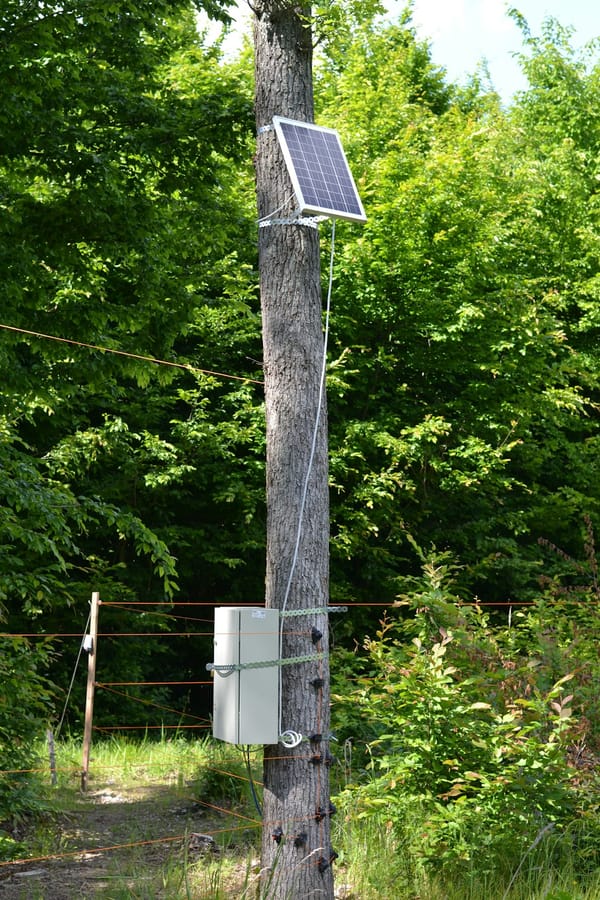
Gadgets
How Deep Learning Keeps Remote Solar Security Systems Online
Maintaining uninterrupted surveillance in remote locations presents a unique engineering challenge. Unlike urban infrastructure powered by stable electrical grids, solar-powered security systems rely entirely on intermittent renewable energy sources and finite battery storage. A…
Read More...
Gadgets
How Failure-Guided Control Boosts Au-Wire Bonding Strength by 3x on Silicon Submounts
As programmable photonic integrated circuits expand to support higher port counts and system-level reconfigurability, high-density electrical fan-out has become a critical packaging bottleneck. In the realm of silicon photonics, particularly for devices like optical field-progra…
Read More...