
A Meteorite Crashed Through a New Jersey Home. Here's What Its Ancient Salty Water Means for Life's Origins
We compile, generate and translate using Artificial Intelligence from the below given source. Macro Micro News is responsible for its editorial publication.
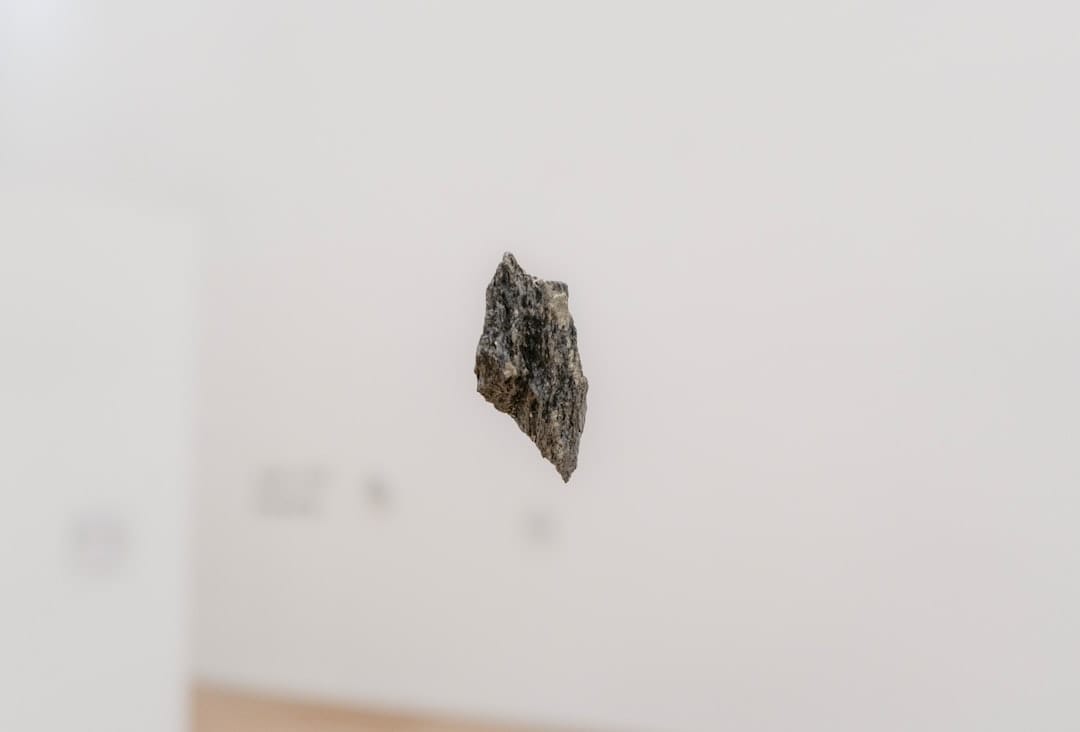
Hillsborough, New Jersey, MMN Correspondent: On a clear summer afternoon, a fireball tore across the sky above the New York City metro area. Seconds later, a two-pound rock slammed into a home in Hillsborough, New Jersey. That ordinary roof became the landing site for an extraordinary visitor from the asteroid belt.
The meteorite arrived on July 16, 2024, entering Earth's atmosphere at roughly 32,000 miles per hour, or 14.4 kilometers per second. Cameras in Connecticut and Pennsylvania, plus a doorbell camera in Wayne, New Jersey, caught the bright descent. More than 60 people across five states reported seeing the fireball, and 16 people in New York and New Jersey felt the pressure wave.
Tracking data traced the rock back to the low region of the asteroid belt, between Mars and Jupiter. The original object was about the size of a heavy airline bag. It broke apart high in the atmosphere, scattering debris along a path that stretched from Staten Island into New Jersey. Doppler weather radar at Newark Airport detected a cloud of falling pebbles, and Hillsborough sat near the far end of that trail.
Inside a master bedroom, the arrival was dramatic. The homeowner heard a loud crash and found a hole in the ceiling. A strong sulfur-like odor filled the room. Black fragments and fine dust covered the bed, the carpet, and everything nearby. Rather than using bare hands, he put on disposable gloves, collected the pieces with aluminum foil, and stored them in glass jars. That quick, careful response gave scientists an unusually clean sample of an ancient world.
Laboratory tests identified the Hillsborough meteorite as a CM-type carbonaceous chondrite, a primitive class named after the Mighei meteorite that fell in Ukraine in 1889. These meteorites are time capsules from the early solar system, holding material that has remained largely unchanged for more than 4.5 billion years. The Hillsborough specimen goes even further. It is classified as CM1/2, a rare transitional form that experienced a greater amount of watery alteration. This fall is only the 22nd observed CM-type fall and only the second witnessed fall of a CM1/2. The first was the Kolang meteorite in Indonesia in 2020.
The most compelling discovery came from NASA's Johnson Space Center. Mike Zolensky and JangMi Han found small fragments of CM1 material rich in salt. These salty spots suggest that liquid water once evaporated on the parent asteroid, leaving behind concentrated brines. That process likely happened near the surface of the asteroid. In short, this meteorite carries traces of ancient salty water from the early solar system.
The finding fits with recent space missions. JAXA's Hayabusa 2 returned samples from asteroid Ryugu, and NASA's OSIRIS-REx brought back material from asteroid Bennu. Both contain evidence of briny fluids. Researchers are now comparing the salt minerals in the Hillsborough meteorite with those from Ryugu and Bennu to better understand how such fluids shaped chemistry on primitive asteroids.
Concentrated brines are especially interesting for astrobiology. Highly saline solutions can keep phosphate dissolved, and phosphate is essential for forming nucleotides, the building blocks of RNA and DNA. Brines also encourage reactions between organic compounds and minerals, interactions linked to the synthesis of complex prebiotic molecules. This kind of chemistry may have been a major step toward the origin of life on Earth.
The meteorite also carries a rich organic inventory. Queenie Chan from Royal Holloway University of London and Nana Ogawa from the Japan Agency for Marine-Earth Science and Technology studied carbon and nitrogen isotopes. They found 1.8 percent carbon and 0.07 percent nitrogen by weight, with isotopic signatures typical of CM-type meteorites. These findings support the idea that meteorites delivered organic matter to early Earth and helped create the prebiotic soup from which life emerged.
Phil Schmitt-Kopplin from Technical University Munich led organic mass spectrometry analysis and detected a wide range of soluble organic compounds, including amino acids. The diversity of these compounds suggests that the Hillsborough material experienced extensive water alteration. Some compounds were organometallic and contained magnesium, likely formed through brine chemistry or impact shock processes. Organometallic molecules are essential to modern biology, participating in photosynthesis and oxygen transport in blood.
Danny Glavin at NASA's Goddard Space Flight Center led a team that concluded CM-type bodies could have supplied early Earth with amino acids, carboxylic acids, and other soluble organic molecules. The amino acids in Hillsborough likely formed inside its parent asteroid, with briny fluids driving at least some of the chemistry. This strengthens the idea that life's building blocks were actively assembled on asteroids, with brine chemistry playing a key role.
Some fragments of this meteorite will be curated by the American Museum of Natural History in New York City. Denton Ebel, a curator at the museum, said, "We are thrilled that nature delivered such a precious asteroid sample on our doorstep." That enthusiasm is well placed. The Hillsborough meteorite offers a unique chance to study material that usually remains far beyond our reach.
The cosmos often feels distant. Then a small rock punches through a ceiling and changes that feeling. This meteorite is a reminder that the solar system is connected, and that the ingredients for life may have taken shape in ancient salty water on a long-gone asteroid. The Hillsborough meteorite is one small object with a very large story to tell.
Related in Scientific Research

Scientific Research
PLOS Climate: How Open Access is Reshaping Global Warming Research
The landscape of scientific communication is shifting rapidly. Integrity and accessibility are no longer just nice-to-haves but essential pillars of modern research. PLOS Climate stands at the center of this transformation. This journal from the Public Library of Science in Cali…
Read More...
Scientific Research
PLOS Climate: Navigating Broken Links to Access Critical Global Warming Research
The digital landscape of scientific publishing is shifting rapidly. For researchers and enthusiasts alike, the ability to access peer-reviewed work without barriers is essential. PLOS, a nonprofit based in California, has long championed open access. Their journal PLOS Climate f…
Read More...
Scientific Research
How PLOS Climate Is Reshaping Global Science: The Open Access Advantage
In the fast-moving world of scientific communication, open access journals are doing more than just sharing papers. They are breaking down walls that have long kept knowledge out of reach. PLOS Climate stands at the center of this shift. As a key part of the Public Library of Sc…
Read More...
Scientific Research
PLOS Climate: How Open Science is Reshaping Global Data Access
The digital landscape of scientific publishing is undergoing a profound transformation. This shift is driven by the urgent need for transparency and rapid dissemination of critical research. PLOS Climate stands at the forefront of this movement. It is a specialized journal dedic…
Read More...
Scientific Research
PLOS Climate 404 Errors: How Link Rot Threatens Scientific Trust and What You Can Do
The digital landscape of scientific communication is shifting rapidly. For researchers, policymakers, and educators, the integrity of open-access journals like PLOS Climate is not just a convenience but a necessity. Yet, even the most robust platforms face technical hurdles. A r…
Read More...
Scientific Research
PLOS Climate: How Open Access is Reshaping Global Warming Solutions
The landscape of scientific publishing is shifting beneath our feet. Accessibility and transparency are no longer just nice-to-have features; they are the bedrock upon which we address the most pressing challenges of our time. The Public Library of Science (PLOS), a nonprofit ba…
Read More...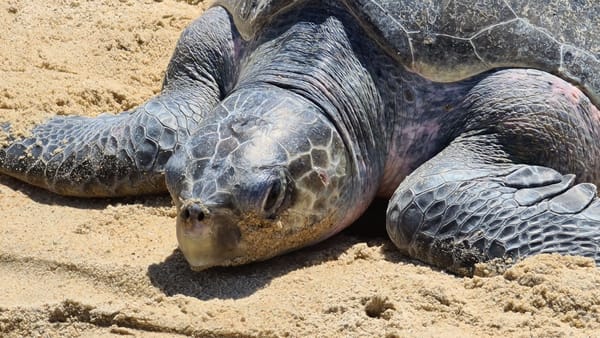
Scientific Research
California Beaches See First Olive Ridley Nesting: What This Means for Sea Turtle Conservation
Marine biologists are witnessing a historic shift in ocean ecology. On September 16, 2026, an olive ridley sea turtle laid eggs on a beach near Seal Beach in Orange County, California. This event marks the first confirmed nesting of this species on the U.S. West Coast. Historica…
Read More...
Scientific Research
PLOS Climate: Why Broken Links Threaten Global Science Access
The digital landscape of scientific communication is shifting beneath our feet. As climate research accelerates, the integrity and accessibility of this data have become paramount. Specialized journals like PLOS Climate face constant challenges regarding content availability and…
Read More...
Scientific Research
Why Climate Data Links Fail: The Open Access Fix You Need Now
Imagine clicking a link to the latest climate study only to hit a dead end. That frustrating 'Page Not Found' error is more than a technical glitch. It represents a significant barrier in the fight against misinformation and delayed action. When vital research on global warming…
Read More...
Scientific Research
What Color Is the Universe? The Surprising Beige Answer from Johns Hopkins
For centuries humanity has gazed into the night sky captivated by vibrant nebulae and dying stars. Yet a deceptively simple question remains elusive to the naked eye. What is the average color of the entire universe? The answer defies expectations of deep cosmic blues or brillia…
Read More...