
Aerospace Engineers, Meet NASA’s CRM-HL: The High-Lift Research Model Shaping Safer Takeoffs and Landings
We compile, generate and translate using Artificial Intelligence from the below given source. Macro Micro News is responsible for its editorial publication.

Hampton, Virginia, Source :.
For over a decade, NASA’s Common Research Model has been a quiet workhorse in aerodynamics. It gave researchers a shared shape to test, compare, and improve their computer models. Now NASA has expanded that idea into new territory. The CRM-HL is here, and it’s focused on the flight phases that matter most for safety and efficiency: takeoff, approach, and landing.
If you’re in aerospace, you already know the original CRM. It was never meant to fly. Its whole purpose was to give computational fluid dynamics specialists a standard geometry that matched real experimental data. That simple idea turned the CRM into one of the most used reference models in the industry. It helped drive drag prediction workshops, sharpen CFD methods, and bring simulation accuracy to a new level. The new high-lift variant takes that mission further by adding something the original deliberately left out: slats and flaps.
High-lift devices are complicated. Leading-edge slats and trailing-edge flaps produce the extra lift needed when an aircraft moves slowly. They also create rich and challenging flow physics. Air accelerates through small gaps, separates over curved surfaces, and leaves wakes that interact with boundary layers. These features test the limits of computer models. That’s exactly the challenge NASA built CRM-HL to address. It gives the global aerospace community an open, well-defined geometry to investigate with wind tunnels, CFD codes, or both.
CRM-HL joins a growing family. The high-speed CRM and the CRM-NLF variant each target a different aerodynamic puzzle. The high-lift model stands out because it focuses on a regime where stall margins, control authority, and maximum lift directly affect how safely and efficiently an aircraft operates. Understanding these low-speed flows is essential for wing and flap designs that perform reliably in the real world.
The NASA portal for CRM-HL still says its website is under construction. The data will be shared through a dedicated database when everything is ready. That upcoming release is more than a formality. It could become one of the most valuable datasets for aerospace engineers, university labs, and airframe manufacturers. When geometry and experimental data are open, teams can test their methods against something meaningful. They can benchmark against a shared standard without proprietary constraints. The benchmark becomes a shared language.
Better high-lift prediction matters far beyond the wind tunnel. Airlines and manufacturers are chasing lower fuel burn, quieter airport approaches, and stronger climb performance. High-lift design touches all three. With accurate simulation, engineers can refine flap angles, slat shapes, and wing planforms before building physical prototypes. That reduces risk. It shortens design timelines. It also opens the door to unconventional aircraft concepts, including hybrid-electric propulsion and urban air mobility.
There’s a bigger story here too. Shared reference models are becoming powerful collaboration tools in aerospace. The more consistent the data, the more meaningful the comparisons between simulation methods. NASA’s high-lift CRM is likely to anchor the next round of high-lift prediction workshops and aerodynamic studies. Once the database is live, it should become a standard reference for anyone working on low-speed aerodynamics.
For now, CRM-HL is a clear signal that high-lift aerodynamics are becoming more predictable, more testable, and more accessible. By pairing public geometry with high-quality validation data, NASA is helping to close the gap between computational predictions and physical reality. The result is a future where aircraft are faster, more efficient, and also safer and more capable in the moments that count most.
Related in Scientific Research

Scientific Research
PLOS Climate: How Open Access is Reshaping Global Warming Research
The landscape of scientific communication is shifting rapidly. Integrity and accessibility are no longer just nice-to-haves but essential pillars of modern research. PLOS Climate stands at the center of this transformation. This journal from the Public Library of Science in Cali…
Read More...
Scientific Research
PLOS Climate: Navigating Broken Links to Access Critical Global Warming Research
The digital landscape of scientific publishing is shifting rapidly. For researchers and enthusiasts alike, the ability to access peer-reviewed work without barriers is essential. PLOS, a nonprofit based in California, has long championed open access. Their journal PLOS Climate f…
Read More...
Scientific Research
How PLOS Climate Is Reshaping Global Science: The Open Access Advantage
In the fast-moving world of scientific communication, open access journals are doing more than just sharing papers. They are breaking down walls that have long kept knowledge out of reach. PLOS Climate stands at the center of this shift. As a key part of the Public Library of Sc…
Read More...
Scientific Research
PLOS Climate: How Open Science is Reshaping Global Data Access
The digital landscape of scientific publishing is undergoing a profound transformation. This shift is driven by the urgent need for transparency and rapid dissemination of critical research. PLOS Climate stands at the forefront of this movement. It is a specialized journal dedic…
Read More...
Scientific Research
PLOS Climate 404 Errors: How Link Rot Threatens Scientific Trust and What You Can Do
The digital landscape of scientific communication is shifting rapidly. For researchers, policymakers, and educators, the integrity of open-access journals like PLOS Climate is not just a convenience but a necessity. Yet, even the most robust platforms face technical hurdles. A r…
Read More...
Scientific Research
PLOS Climate: How Open Access is Reshaping Global Warming Solutions
The landscape of scientific publishing is shifting beneath our feet. Accessibility and transparency are no longer just nice-to-have features; they are the bedrock upon which we address the most pressing challenges of our time. The Public Library of Science (PLOS), a nonprofit ba…
Read More...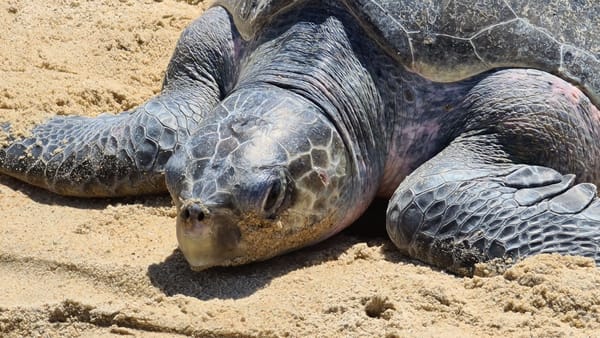
Scientific Research
California Beaches See First Olive Ridley Nesting: What This Means for Sea Turtle Conservation
Marine biologists are witnessing a historic shift in ocean ecology. On September 16, 2026, an olive ridley sea turtle laid eggs on a beach near Seal Beach in Orange County, California. This event marks the first confirmed nesting of this species on the U.S. West Coast. Historica…
Read More...
Scientific Research
PLOS Climate: Why Broken Links Threaten Global Science Access
The digital landscape of scientific communication is shifting beneath our feet. As climate research accelerates, the integrity and accessibility of this data have become paramount. Specialized journals like PLOS Climate face constant challenges regarding content availability and…
Read More...
Scientific Research
Why Climate Data Links Fail: The Open Access Fix You Need Now
Imagine clicking a link to the latest climate study only to hit a dead end. That frustrating 'Page Not Found' error is more than a technical glitch. It represents a significant barrier in the fight against misinformation and delayed action. When vital research on global warming…
Read More...
Scientific Research
What Color Is the Universe? The Surprising Beige Answer from Johns Hopkins
For centuries humanity has gazed into the night sky captivated by vibrant nebulae and dying stars. Yet a deceptively simple question remains elusive to the naked eye. What is the average color of the entire universe? The answer defies expectations of deep cosmic blues or brillia…
Read More...