
Comet NEOWISE Over the Adriatic: A Stunning Dawn Display Captured in 2026
We compile, generate and translate using Artificial Intelligence from the below given source. Macro Micro News is responsible for its editorial publication.
Global, Source:
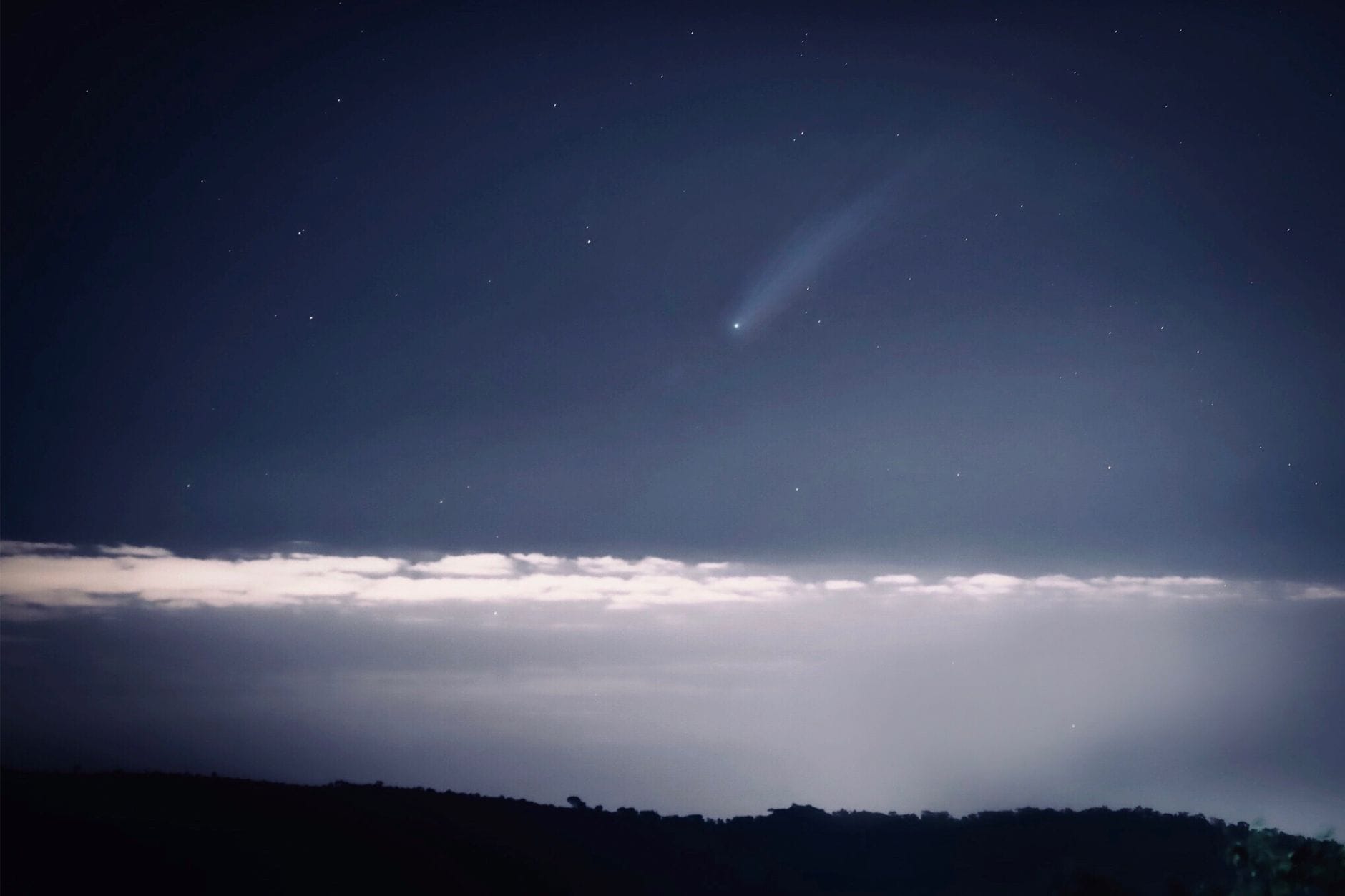
On September 13, 2026, the night sky provided a vivid reminder of our solar system's dynamic nature. A stunning composite image of Comet NEOWISE rising over the Adriatic Sea was featured as the Astronomy Picture of the Day by NASA Science. This visual record highlights one of the most significant cometary events of the early 21st century. It links past astronomical phenomena with present-day observation in a way that captivates viewers worldwide.
The image serves as a retrospective tribute to Comet C/2020 F3 (NEOWISE). This comet became a rare naked-eye object during its perihelion passage in July 2020. Skywatchers in the northern hemisphere enjoyed a spectacular sight for several weeks. The comet was visible just before dawn, offering a unique opportunity for observation. The featured photograph captures the moment the comet emerged above the horizon. It is framed against the darkening pre-dawn sky and the undulating waves of the Adriatic Sea.
The composition highlights the delicate structure of the comet’s ion tail. This feature stretched across the frame, contrasting sharply with bright foreground elements and distant star fields. Creating this image required significant technical precision and patience. The photographer combined over 240 individual exposures taken over a period of 30 minutes. This stacking technique allowed for the enhancement of faint details. It revealed the intricate dust and gas structures that make up the comet’s coma and tails.
The resulting image showcases the comet’s unexpected brightness. This brightness persisted for more than a month after its closest approach to the Sun. During this time, the comet’s ion tail spanned approximately five kilometers across at its base. It extended millions of kilometers into space. The tail is composed of charged particles pushed away by the solar wind. This phenomenon demonstrates the powerful forces at play in our cosmic neighborhood.
Comet NEOWISE was discovered by the Near-Earth Object Wide-field Infrared Survey Explorer mission. This NASA project is dedicated to detecting near-Earth asteroids and comets. Its appearance in 2020 was particularly notable. It was the brightest comet visible from Earth since Comet Hyakutake in 1996. The event sparked global interest in astronomy. It encouraged amateur astronomers and casual observers alike to look up and appreciate celestial mechanics.
The image not only documents a specific astronomical event but also celebrates human endeavor. We explore and understand the universe through both advanced technology and ground-based observation. The enduring popularity of such images underscores public fascination with transient celestial events. Comets like NEOWISE serve as natural laboratories for studying primordial materials. These materials are left over from the formation of the solar system.
By analyzing their composition and behavior, scientists gain insights into conditions that existed billions of years ago. The visual documentation of these events plays a crucial role in inspiring future generations. Platforms like NASA’s APOD foster a deeper connection between humanity and the cosmos. This shared experience reminds us of our place in the vast expanse of space.
Related in Scientific Research
Scientific Research
NASA Physics of the Cosmos: Third Early Career Workshop for Astrophysicists in September 2026
NASA’s Physics of the Cosmos Program has announced its Third Early Career Workshop, scheduled for September 22 to 24, 2026. This fully virtual event aims to support graduate students, postdoctoral researchers, and early-career scientists by providing critical insights into astro…
Read More...
Scientific Research
Houston Japan Festival 2026: NASA and JAXA Unite to Inspire Future Explorers
On September 12-13, 2026, Hermann Park in Houston buzzed with a unique energy that blended cultural celebration with the thrill of space exploration. The city’s 33rd Annual Japan Festival became more than just a showcase of heritage; it transformed into a hub for international c…
Read More...
Scientific Research
Callanish Stones: How Earth's Orbit Creates a Figure-Eight Sky Over Ancient Scotland
The night sky has long served as a canvas for humanity’s oldest questions. On September 20, 2026, the Astronomy Picture of the Day offers a unique perspective on how our planet moves through space. The featured image captures an analemma, a figure-eight pattern formed by the Sun…
Read More...
Scientific Research
Ladakh Night Sky: Witness the Zodiacal Light Phenomenon at Hanle Reserve
On September 19, 2026, the night sky over Ladakh, India, offered a breathtaking demonstration of the zodiacal light. This phenomenon remains invisible to most urban dwellers but captivates astronomers and astrophotographers worldwide. Captured at the Hanle Dark Sky Reserve, this…
Read More...
Scientific Research
M33: The Triangulum Galaxy's Star-Forming Secrets and Cosmic Role
Deep within the northern constellation of Triangulum lies one of the most magnificent face-on spiral galaxies in our local cosmic neighborhood. Messier 33, widely known as the Triangulum Galaxy, stands as a testament to the grandeur of spiral structures in the universe. With a d…
Read More...
Scientific Research
Carina Nebula: Inside the Stellar Nursery Shaping Giant Stars
Deep within the southern sky, roughly 7,500 light-years from Earth, lies one of the most active star-forming regions in our galaxy. The Carina Nebula stands out as a vast cloud of gas and dust that acts like a cosmic treasure chest. It hides a dense cluster of young stars that a…
Read More...
Scientific Research
Webb Telescope Reveals M64's Counter-Rotating Gas: A Galaxy Merger Story
The James Webb Space Telescope has offered astronomers a striking new view of Messier 64, often called the Black Eye Galaxy. This spiral galaxy sits about 17 million light-years away in the constellation Coma Berenices. It is well known for its dark dust band that hides part of…
Read More...
Scientific Research
Watch Venus Disappear: The Rare Daytime Moon Occultation of September 15, 2026
On September 15, 2026, skywatchers around the world witnessed a rare and captivating celestial event. The Moon passed directly in front of the bright planet Venus during daylight hours. This phenomenon is often called a daytime eclipse. It temporarily hid Venus from view against…
Read More...
Scientific Research
NASA AI/ML STIG: LLM Agent Foundations for Space Science in September 2026
The convergence of astrophysics and artificial intelligence is poised to take center stage on September 14, 2026. NASA’s Cosmic Origins program will host a pivotal lecture that highlights the integration of advanced computational tools into space science. This event focuses spec…
Read More...
Scientific Research
Apollo 11: How One Foil Sheet Captured the Sun's Breath for Science
Global, Source On September 12, 2026, NASA’s Astronomy Picture of the Day brought attention to a pivotal moment from the Apollo 11 mission. The featured image titled "Apollo 11: Catching Some Sun" shows astronaut Buzz Aldrin deploying a specialized device on the lunar surface. T…
Read More...