
Europe's 2026 Defense Shield: How Disaster Prep and €6.5B Recovery Are Reshaping the Continent
We compile, generate and translate using Artificial Intelligence from the below given source. Macro Micro News is responsible for its editorial publication.
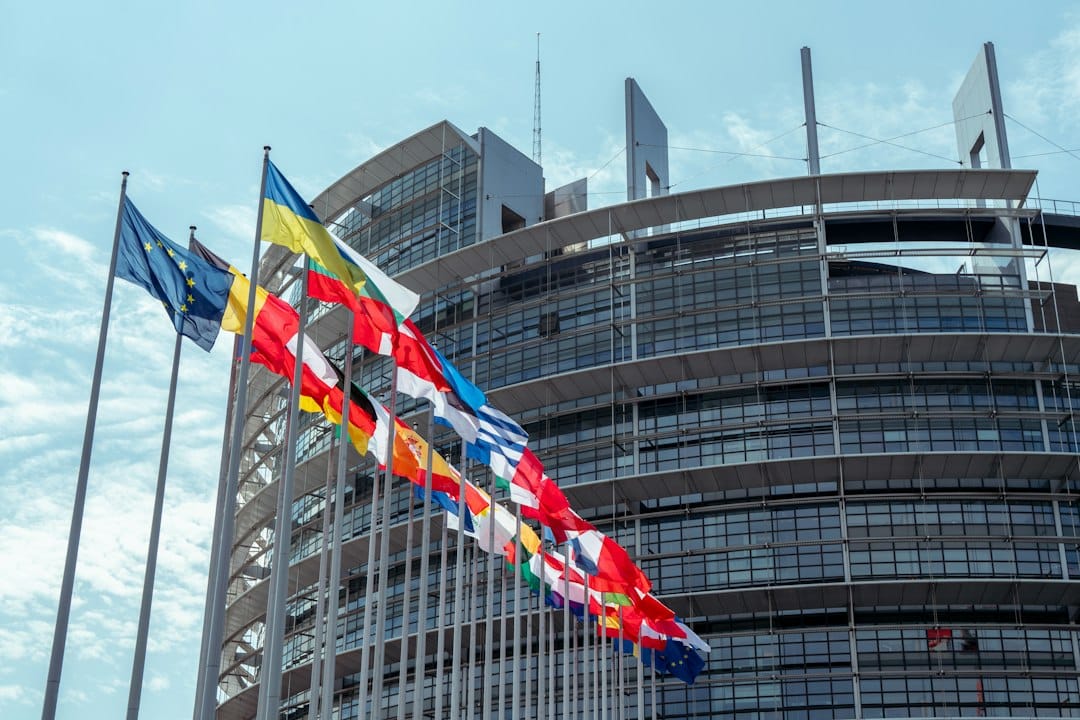
Brussels, Belgium, Source:
As climate change accelerates the frequency and severity of extreme weather events, the European Union is implementing a multi-faceted strategy to bolster its resilience. On October 30, 2026, the European Commission announced the establishment of the PreparEU Advisory Group, a high-level body tasked with providing strategic advice to President Ursula von der Leyen and Commissioner Hadja Lahbib. This group, comprising 11 senior civil protection experts and six scientists from various EU Member States, aims to address accelerating disaster risks, including wildfires and extreme weather. The Advisory Group will evaluate existing capacities, examine the impact of technological and natural hazards on critical infrastructure, and propose concrete improvements for EU civil protection. Its first meeting is scheduled for early November 2026, with recommendations due by spring 2027.
Public sentiment strongly backs these efforts. A new Special Eurobarometer reveals that nine in ten Europeans believe it is crucial for the EU to coordinate disaster response, while 94% agree that Member States should support one another when national resources are overwhelmed. Furthermore, 91% of respondents favor strengthening coordinated EU action and extending assistance to non-EU countries facing major disasters. This overwhelming support underscores a collective commitment to solidarity and preparedness in an era of borderless crises.
In parallel with security enhancements, the EU continues to drive economic recovery through the NextGenerationEU program. The Commission disbursed nearly €6.5 billion to France, Austria, and Luxembourg under the Recovery and Resilience Facility (RRF). France has now received 100% of its allocated funding after fulfilling all 176 milestones, while Austria has also reached full disbursement. Luxembourg received an additional €92.2 million, bringing its total to 76% of its allocation. Additionally, the Commission approved Czechia’s seventh payment request of €951 million, covering reforms in housing, energy efficiency, and cybersecurity, bringing its total RRF receipt to 99.4% of its plan.
To address specific economic pressures, the Commission approved state aid measures for agricultural sectors impacted by rising fuel and fertilizer prices due to geopolitical tensions. France received approval for an additional €212 million to support agricultural and aquaculture companies, while Portugal secured €3 million for farmers in the Azores. Germany was also cleared to provide €29.3 million for the construction of a multimodal rail-road freight terminal in Stolberg, promoting a shift from road to rail transport to reduce emissions and congestion.
On the corporate front, the Commission cleared several mergers and acquisitions, including the acquisition of Optio by Cinven and La Caisse, Béaba Suavinex Group by Portobello and Bluegem, and a joint venture between KI Group and OCP Group for phosphate-based fertilizers. These decisions reflect the Commission’s ongoing role in ensuring competitive markets while supporting strategic industrial developments. Meanwhile, Commissioner Lahbib is set to open the 9th European Civil Protection Forum in November, gathering over 1,900 participants to showcase innovative solutions and strengthen Europe’s crisis response capabilities.
Related in Politics

Politics
Europe's Future Awaits: How Young Leaders Can Shape a Sovereign Continent by 2040
At the College of Europe in Bruges, Executive Vice-President Teresa Ribera issued a compelling invitation to the next generation. She framed the European Union not as a fixed entity but as a living project that demands constant renewal. Speaking to students from around the world…
Read More...
Politics
EU's 2026 Strategy: How Citizens, Health Roadmaps, and Antitrust Actions Are Reshaping Europe
On November 23, 2026, the European Commission unveiled a comprehensive agenda designed to fortify the Union across democratic, health, and economic sectors. This strategic pivot emphasizes proactive governance, aiming to enhance internal societal cohesion while ensuring fairness…
Read More...
Politics
EU and Indonesia Sign Historic Trade Deal: What This Means for Your Business
In a significant shift for global commerce, the European Union and Indonesia have officially finalized their Comprehensive Economic Partnership Agreement. This milestone follows nearly ten years of detailed negotiations and represents one of the most ambitious trade frameworks t…
Read More...
Politics
Europe's Transport Revolution: How Science and Funding Are Reshaping Mobility by 2030
On the occasion of the 50th anniversary of the Hellenic Institute of Transportologists (HITE), European Commissioner for Transport Adina-Ioana Vălean delivered a poignant address highlighting the symbiotic relationship between Greece’s integration into the European Community and…
Read More...
Politics
EU Nature Reform: How to Protect Biodiversity Without Hurting the Economy
The European Union stands at a pivotal moment in its environmental policy journey. The focus is squarely on the practical implementation of the Birds and Habitats Directives. As the stress test of these foundational nature laws nears completion, the European Commission has made…
Read More...
Politics
Germany's Electoral Paradox: Why Legal Barriers Block Democratic Oversight
The recent dismissal of a constitutional complaint by the BSW party has sparked a critical conversation about electoral integrity in Germany. Stefan Möller, Deputy Federal Spokesperson for the Alternative for Germany (AfD), provided a sharp analysis following the Federal Constit…
Read More...
Politics
Europe's 2035 Materials Blueprint: How Smart Metals and Graphene Will Redefine Industry
The European Commission has laid out a bold vision to transform the continent into the global hub for advanced materials by 2035. This strategic proposal aims to secure leadership in innovation, production, and application of next-generation materials. Commissioner Mariya Gabrie…
Read More...
Politics
EU Climate Chief Hoekstra Reveals COP31 Strategy: How Europe Leads the Net-Zero Race
Commissioner Wopke Hoekstra took center stage at COP31 to outline a bold new vision for European climate leadership. The message was clear and direct. The European Union is not just participating in global climate discussions; it is actively shaping them. By balancing ambitious…
Read More...
Politics
Germany's Steel Crisis: How Subsidies Are Failing Workers in 2026
The German steel industry is navigating a turbulent period defined by rising production costs and significant workforce reductions. Recent figures indicate that the industrial sector saw a decline of 140,200 jobs in late 2026 compared to the previous year. This represents a 2.6…
Read More...
Politics
UniCredit and Commerzbank Merger: A Milestone for Europe's Integrated Banking Union
The European Commission has delivered a landmark decision by unconditionally approving the acquisition of Germany’s Commerzbank by Italy’s UniCredit. This transaction, recognized as the largest cross-border banking deal since the financial crisis, marks a significant step toward…
Read More...