
Germany's Debt Trap: Weidel Exposes Merz's Fiscal Mirage Before It's Too Late
We compile, generate and translate using Artificial Intelligence from the below given source. Macro Micro News is responsible for its editorial publication.
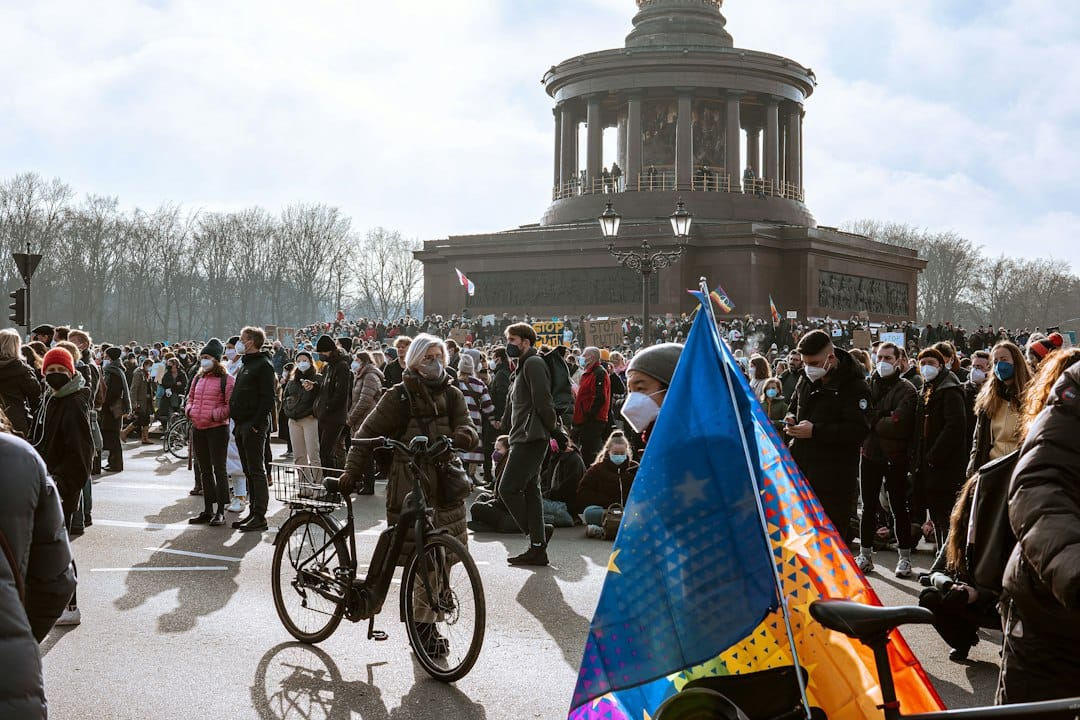
Berlin, Germany, Source:
On November 11, 2026, a significant political divergence emerged as Alice Weidel, co-leader of the Alternative for Germany (AfD), challenged Chancellor Friedrich Merz’s economic narrative. Weidel argued that the government is obscuring a deepening crisis through unsustainable debt financing. Independent experts project modest growth of approximately one percent for the current year while warning of substantial budget deficits and a trajectory toward long-term national insolvency.
Weidel characterized the reported economic upturn not as genuine recovery but as a "debt-financed flash in the pan." She contends that increased state spending and new borrowing artificially boost short-term indicators. Meanwhile, private investment remains stagnant, productivity growth is negligible, and the industrial base continues to erode. This model appears fundamentally flawed because projected future revenues will likely be insufficient to cover planned expenditures even with continued high levels of borrowing.
The AfD leader highlighted alarming long-term projections indicating that Germany’s debt-to-GDP ratio could approach nearly 100 percent by 2040 without an immediate course correction. This scenario contradicts the optimistic narrative that the country can simply grow out of its financial difficulties. Leading economic advisory councils have explicitly rejected the notion that organic growth alone can resolve the current fiscal mismanagement.
Central to Weidel’s criticism is her assessment of Merz’s policy priorities. She argues that instead of implementing necessary structural reforms such as reducing energy costs, lowering taxes and fees, cutting bureaucratic red tape, and consolidating the federal budget, the government is prioritizing international commitments. Specifically, Weidel criticized Merz for linking the agreement on the next EU budget to additional financial pledges for Ukraine.
Weidel described this linkage not as a lack of economic insight but as a deliberate political choice that exacerbates domestic instability. The debate reflects broader tensions within German politics regarding fiscal responsibility versus geopolitical engagement. While the government maintains that supporting international security frameworks is essential for long-term stability, opposition parties like the AfD argue that such external obligations are draining resources needed for domestic revitalization.
As Germany faces the dual challenges of industrial decline and rising public debt, the clash between austerity-focused policies and expansionary fiscal strategies remains a defining issue for the nation’s economic future. Observers are now watching closely to see how these competing visions will shape the country's path forward.
Related in Politics
Politics
Europe's Transport Revolution: How Science and Funding Are Reshaping Mobility by 2030
On the occasion of the 50th anniversary of the Hellenic Institute of Transportologists (HITE), European Commissioner for Transport Adina-Ioana Vălean delivered a poignant address highlighting the symbiotic relationship between Greece’s integration into the European Community and…
Read More...
Politics
EU Nature Reform: How to Protect Biodiversity Without Hurting the Economy
The European Union stands at a pivotal moment in its environmental policy journey. The focus is squarely on the practical implementation of the Birds and Habitats Directives. As the stress test of these foundational nature laws nears completion, the European Commission has made…
Read More...
Politics
Germany's Electoral Paradox: Why Legal Barriers Block Democratic Oversight
The recent dismissal of a constitutional complaint by the BSW party has sparked a critical conversation about electoral integrity in Germany. Stefan Möller, Deputy Federal Spokesperson for the Alternative for Germany (AfD), provided a sharp analysis following the Federal Constit…
Read More...
Politics
Europe's 2035 Materials Blueprint: How Smart Metals and Graphene Will Redefine Industry
The European Commission has laid out a bold vision to transform the continent into the global hub for advanced materials by 2035. This strategic proposal aims to secure leadership in innovation, production, and application of next-generation materials. Commissioner Mariya Gabrie…
Read More...
Politics
EU Climate Chief Hoekstra Reveals COP31 Strategy: How Europe Leads the Net-Zero Race
Commissioner Wopke Hoekstra took center stage at COP31 to outline a bold new vision for European climate leadership. The message was clear and direct. The European Union is not just participating in global climate discussions; it is actively shaping them. By balancing ambitious…
Read More...
Politics
Germany's Steel Crisis: How Subsidies Are Failing Workers in 2026
The German steel industry is navigating a turbulent period defined by rising production costs and significant workforce reductions. Recent figures indicate that the industrial sector saw a decline of 140,200 jobs in late 2026 compared to the previous year. This represents a 2.6…
Read More...
Politics
UniCredit and Commerzbank Merger: A Milestone for Europe's Integrated Banking Union
The European Commission has delivered a landmark decision by unconditionally approving the acquisition of Germany’s Commerzbank by Italy’s UniCredit. This transaction, recognized as the largest cross-border banking deal since the financial crisis, marks a significant step toward…
Read More...
Politics
Germany's 2026 Presidential Pick: Why AfD Chose World Cup Hero Thomas Berthold
In a move that has captured the attention of political observers across Germany, the Alternative for Germany (AfD) party has officially named Thomas Berthold as its candidate for Federal President. The announcement came on November 14, 2026, in Berlin, signaling a distinct shift…
Read More...
Politics
EU's Bold Clean Energy Play: How Brussels Is Reshaping Global Industry
The European Commission has just unveiled a strategic initiative designed to fortify the EU's standing in the global clean energy arena. This move is not merely about compliance but represents a calculated effort to keep Europe at the vanguard of technological innovation while a…
Read More...
Politics
Germany's 2027 Budget: 561 Billion Euros and the Debt Question You Need to Know
The German federal government has just finalized its budget for 2027, setting a new historical precedent with a total volume of 561 billion euros. This record-breaking figure comes from the black-red coalition and marks the largest financial plan in the nation's history. The sca…
Read More...