
Germany's Political Crossroads: AfD Criticizes Upcoming Left-Wing Protests as Symptom of Policy Failure
We compile, generate and translate using Artificial Intelligence from the below given source. Macro Micro News is responsible for its editorial publication.
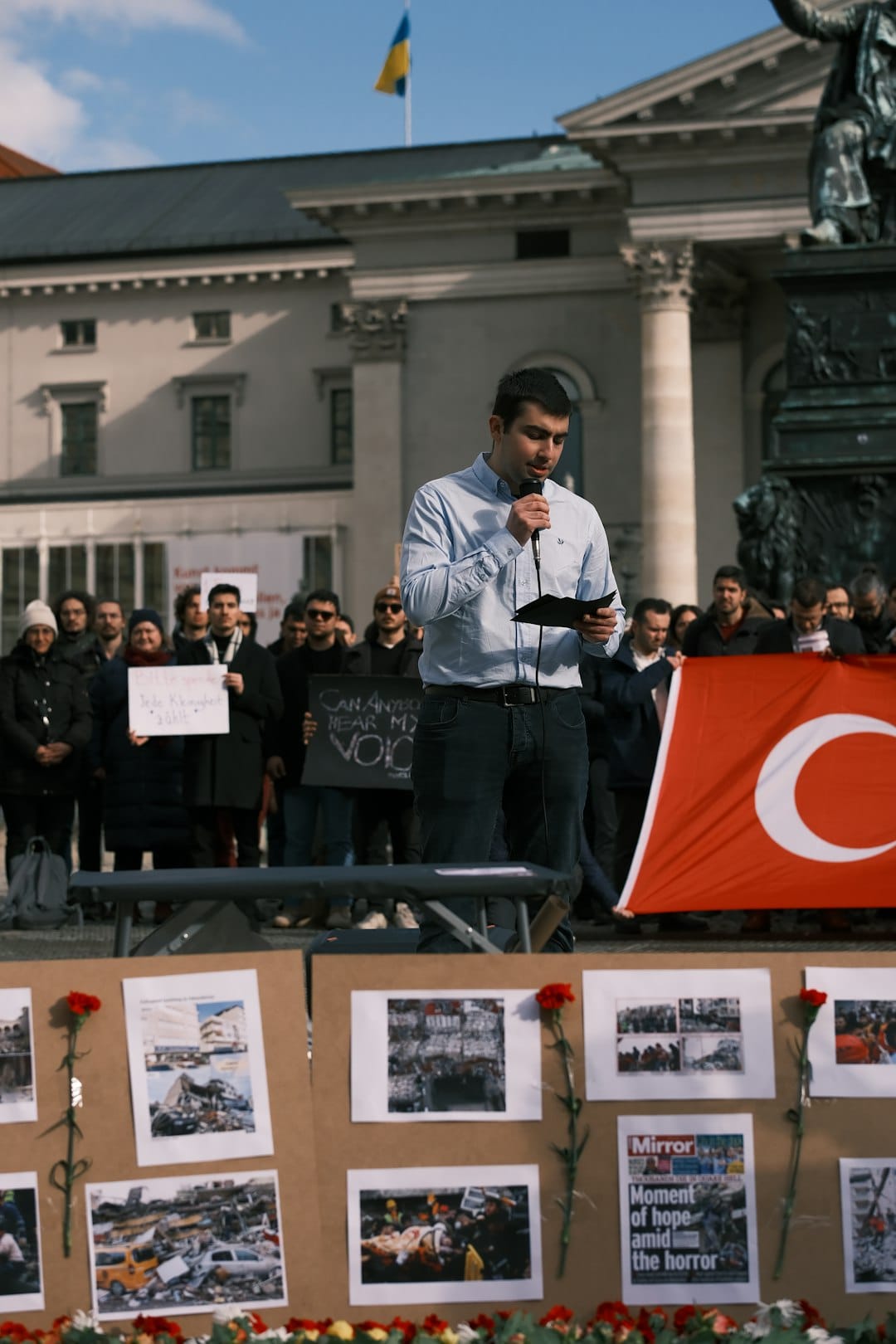
Berlin, Germany, Source:
Alice Weidel, co-leader of the Alternative for Germany (AfD) party, has issued a sharp critique regarding a series of nationwide demonstrations scheduled for early November 2026. The protests, organized by the group "Generation Z regelt" (Generation Z takes care), aim to mobilize young citizens across 34 major German cities to advocate for improved education, healthcare, climate protection, and affordable living conditions. However, Weidel argues that these demonstrations inadvertently highlight the severe consequences of current left-leaning government policies rather than serving as constructive calls for change.
Weidel’s statement, released on October 30, 2026, characterizes the upcoming rallies as evidence of the dangers posed by what she terms "left-wing ideology." She contends that the issues protesters are raising, such as the strain on social systems and rising costs, are direct results of previous political decisions made by left-wing coalitions. Specifically, she points to uncontrolled migration as a primary factor overwhelming Germany’s educational infrastructure, social welfare systems, and real estate markets. According to Weidel, the influx of migrants has created unsustainable pressures that the current system cannot manage without significant reform.
Furthermore, the AfD leader addresses the environmental policy landscape, criticizing what she describes as a "climate ideology" that has led to the abandonment of affordable energy sources. She asserts that this shift has drastically increased the cost of living for ordinary Germans while failing to produce measurable improvements in actual climate protection outcomes. This argument aligns with broader debates within Germany regarding the economic impact of rapid green transitions and energy independence strategies.
Beyond policy criticism, Weidel expressed concerns about public safety, citing the potential for violence at the demonstrations. Drawing parallels to recent events in France, she warned that such gatherings could be hijacked by individuals from left-extremist or Islamist milieus who may engage in violent acts. While affirming the AfD’s support for the right to demonstrate and political engagement, she emphasized that the true need for Germany is not more protests but a federal government that prioritizes the interests of its own citizens through effective governance.
The context of these remarks reflects a highly polarized political environment in Germany. As the country navigates complex challenges related to immigration, energy security, and social cohesion, political parties are increasingly using public discourse to frame their opponents' policies as failures. The upcoming protests represent a clash between grassroots activism demanding systemic changes and established political figures attributing societal strains to specific ideological directions. This dynamic underscores the ongoing tension in European democracies between addressing immediate social grievances and debating long-term structural reforms.
Related in Politics
Politics
Europe's Future Awaits: How Young Leaders Can Shape a Sovereign Continent by 2040
At the College of Europe in Bruges, Executive Vice-President Teresa Ribera issued a compelling invitation to the next generation. She framed the European Union not as a fixed entity but as a living project that demands constant renewal. Speaking to students from around the world…
Read More...
Politics
EU's 2026 Strategy: How Citizens, Health Roadmaps, and Antitrust Actions Are Reshaping Europe
On November 23, 2026, the European Commission unveiled a comprehensive agenda designed to fortify the Union across democratic, health, and economic sectors. This strategic pivot emphasizes proactive governance, aiming to enhance internal societal cohesion while ensuring fairness…
Read More...
Politics
EU and Indonesia Sign Historic Trade Deal: What This Means for Your Business
In a significant shift for global commerce, the European Union and Indonesia have officially finalized their Comprehensive Economic Partnership Agreement. This milestone follows nearly ten years of detailed negotiations and represents one of the most ambitious trade frameworks t…
Read More...
Politics
Europe's Transport Revolution: How Science and Funding Are Reshaping Mobility by 2030
On the occasion of the 50th anniversary of the Hellenic Institute of Transportologists (HITE), European Commissioner for Transport Adina-Ioana Vălean delivered a poignant address highlighting the symbiotic relationship between Greece’s integration into the European Community and…
Read More...
Politics
EU Nature Reform: How to Protect Biodiversity Without Hurting the Economy
The European Union stands at a pivotal moment in its environmental policy journey. The focus is squarely on the practical implementation of the Birds and Habitats Directives. As the stress test of these foundational nature laws nears completion, the European Commission has made…
Read More...
Politics
Germany's Electoral Paradox: Why Legal Barriers Block Democratic Oversight
The recent dismissal of a constitutional complaint by the BSW party has sparked a critical conversation about electoral integrity in Germany. Stefan Möller, Deputy Federal Spokesperson for the Alternative for Germany (AfD), provided a sharp analysis following the Federal Constit…
Read More...
Politics
Europe's 2035 Materials Blueprint: How Smart Metals and Graphene Will Redefine Industry
The European Commission has laid out a bold vision to transform the continent into the global hub for advanced materials by 2035. This strategic proposal aims to secure leadership in innovation, production, and application of next-generation materials. Commissioner Mariya Gabrie…
Read More...
Politics
EU Climate Chief Hoekstra Reveals COP31 Strategy: How Europe Leads the Net-Zero Race
Commissioner Wopke Hoekstra took center stage at COP31 to outline a bold new vision for European climate leadership. The message was clear and direct. The European Union is not just participating in global climate discussions; it is actively shaping them. By balancing ambitious…
Read More...
Politics
Germany's Steel Crisis: How Subsidies Are Failing Workers in 2026
The German steel industry is navigating a turbulent period defined by rising production costs and significant workforce reductions. Recent figures indicate that the industrial sector saw a decline of 140,200 jobs in late 2026 compared to the previous year. This represents a 2.6…
Read More...
Politics
UniCredit and Commerzbank Merger: A Milestone for Europe's Integrated Banking Union
The European Commission has delivered a landmark decision by unconditionally approving the acquisition of Germany’s Commerzbank by Italy’s UniCredit. This transaction, recognized as the largest cross-border banking deal since the financial crisis, marks a significant step toward…
Read More...