
Here’s What NASA’s Curiosity Rover Found After 14 Years on Mars: Vast Honeycomb Patterns That Have Scientists Puzzled
We compile, generate and translate using Artificial Intelligence from the below given source. Macro Micro News is responsible for its editorial publication.

Valle Grande, Gale Crater, Mars, MMN Correspondent: NASA’s Curiosity rover has just delivered another remarkable surprise from the Red Planet. Inside a region called Valle Grande, the ground is covered with an enormous network of small polygon-shaped fractures. Viewed from above, they form a honeycomb pattern that stretches across the valley in every direction. Each individual shape spans only 1.5 to 3 inches across, and their crisp, repeated geometry makes the terrain look almost manufactured. The images were captured on Martian sols 4,930 and 4,931, which correspond to June 19 and 20, 2026. A full 360-degree panorama reveals the complete sweep of this unexpected landscape.
The pattern does not stay on the valley floor. It climbs the flanks of a neighboring butte called Miraflores, which rises about 20 feet above the surrounding terrain. The top of that butte is capped with windblown sand, adding another layer of complexity. Could this honeycomb have formed all at once, or did multiple events shape it over time? The evenness and scale of the fracture network have left mission scientists studying every detail. Ashwin Vasavada, the mission’s project scientist at NASA’s Jet Propulsion Laboratory, described the scene as one of the most visually impressive of the entire mission. “This sea of polygons took our breath away,” he said.
The big question now is how these patterns came to be. Some polygonal cracks on Mars have been linked to drying mud, much like the cracks seen in terrestrial lake beds. The size and consistency of the Valle Grande network point to a more involved process. One possibility involves repeated freezing and thawing. When ground temperature swings above and below zero, the soil contracts and expands, creating fractures that line up in predictable geometric patterns. Another idea involves pressure from buried layers. As sediment accumulates, deeper material feels growing pressure, which can push water out and generate stress fractures in the same polygonal style. There is also the chance that ancient subsurface ice played a role. If that ice slowly turned to vapor and escaped, the overlying ground could have settled into exactly this kind of latticework.
Context makes the discovery especially meaningful. Curiosity has been moving through Gale Crater since landing on August 5, 2012, and it has spent years climbing the lower slopes of Mount Sharp, a mountain that rises about three miles from the crater floor. Along the way, the rover has found clays, sulfates, sedimentary layers and organic compounds. Those materials paint a clear picture of a planet with a watery past. Some of the most intriguing evidence points to wet-dry cycling, meaning early Mars experienced alternating periods of moisture and dryness. Those conditions are energetic enough to drive chemical reactions that could support complex molecules. The new honeycomb terrain sits right next to areas where such cycling has been identified, giving scientists a chance to study how changing climate shaped the Martian surface.
Researchers are now modeling how the polygons evolved. They are combining high-resolution imaging, chemical analysis and spectrometry to test whether these fractures formed quickly or across millions of years. They are also comparing the structures to similar features on Earth, including permafrost patterns in the Arctic and crack networks in desert lakebeds. Those comparisons help narrow the possibilities and point toward the most likely Martian scenario.
This latest finding adds a new chapter to an already remarkable mission. Curiosity has found sulfur crystals, metallic meteorites and many signs of ancient habitable environments. Its software and navigation upgrades have allowed it to keep pushing far beyond its original design life. The rover continues to function as a capable field geologist, sending home images that expand the understanding of Mars with every passing week.
The honeycomb landscape in Valle Grande is more than just a beautiful image. It is a physical record of climate changes that happened billions of years ago. The pattern offers a rare glimpse into the forces that shaped Mars when conditions were very different. For future missions, these sites could become key targets for sample collection, especially if they preserve evidence of past life. For now, the patterns stand as a reminder that Mars still knows how to surprise us, and that every new discovery opens the door to deeper questions.
Related in Scientific Research

Scientific Research
PLOS Climate: How Open Access is Reshaping Global Warming Research
The landscape of scientific communication is shifting rapidly. Integrity and accessibility are no longer just nice-to-haves but essential pillars of modern research. PLOS Climate stands at the center of this transformation. This journal from the Public Library of Science in Cali…
Read More...
Scientific Research
PLOS Climate: Navigating Broken Links to Access Critical Global Warming Research
The digital landscape of scientific publishing is shifting rapidly. For researchers and enthusiasts alike, the ability to access peer-reviewed work without barriers is essential. PLOS, a nonprofit based in California, has long championed open access. Their journal PLOS Climate f…
Read More...
Scientific Research
How PLOS Climate Is Reshaping Global Science: The Open Access Advantage
In the fast-moving world of scientific communication, open access journals are doing more than just sharing papers. They are breaking down walls that have long kept knowledge out of reach. PLOS Climate stands at the center of this shift. As a key part of the Public Library of Sc…
Read More...
Scientific Research
PLOS Climate: How Open Science is Reshaping Global Data Access
The digital landscape of scientific publishing is undergoing a profound transformation. This shift is driven by the urgent need for transparency and rapid dissemination of critical research. PLOS Climate stands at the forefront of this movement. It is a specialized journal dedic…
Read More...
Scientific Research
PLOS Climate 404 Errors: How Link Rot Threatens Scientific Trust and What You Can Do
The digital landscape of scientific communication is shifting rapidly. For researchers, policymakers, and educators, the integrity of open-access journals like PLOS Climate is not just a convenience but a necessity. Yet, even the most robust platforms face technical hurdles. A r…
Read More...
Scientific Research
PLOS Climate: How Open Access is Reshaping Global Warming Solutions
The landscape of scientific publishing is shifting beneath our feet. Accessibility and transparency are no longer just nice-to-have features; they are the bedrock upon which we address the most pressing challenges of our time. The Public Library of Science (PLOS), a nonprofit ba…
Read More...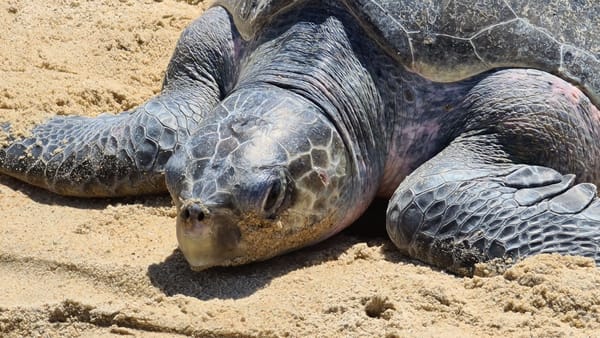
Scientific Research
California Beaches See First Olive Ridley Nesting: What This Means for Sea Turtle Conservation
Marine biologists are witnessing a historic shift in ocean ecology. On September 16, 2026, an olive ridley sea turtle laid eggs on a beach near Seal Beach in Orange County, California. This event marks the first confirmed nesting of this species on the U.S. West Coast. Historica…
Read More...
Scientific Research
PLOS Climate: Why Broken Links Threaten Global Science Access
The digital landscape of scientific communication is shifting beneath our feet. As climate research accelerates, the integrity and accessibility of this data have become paramount. Specialized journals like PLOS Climate face constant challenges regarding content availability and…
Read More...
Scientific Research
Why Climate Data Links Fail: The Open Access Fix You Need Now
Imagine clicking a link to the latest climate study only to hit a dead end. That frustrating 'Page Not Found' error is more than a technical glitch. It represents a significant barrier in the fight against misinformation and delayed action. When vital research on global warming…
Read More...
Scientific Research
What Color Is the Universe? The Surprising Beige Answer from Johns Hopkins
For centuries humanity has gazed into the night sky captivated by vibrant nebulae and dying stars. Yet a deceptively simple question remains elusive to the naked eye. What is the average color of the entire universe? The answer defies expectations of deep cosmic blues or brillia…
Read More...