
M33: The Triangulum Galaxy's Star-Forming Secrets and Cosmic Role
We compile, generate and translate using Artificial Intelligence from the below given source. Macro Micro News is responsible for its editorial publication.
Global, Source:
Deep within the northern constellation of Triangulum lies one of the most magnificent face-on spiral galaxies in our local cosmic neighborhood. Messier 33, widely known as the Triangulum Galaxy, stands as a testament to the grandeur of spiral structures in the universe. With a diameter spanning over 50,000 light-years, it holds the distinction of being the third-largest galaxy in the Local Group, trailing only behind the Andromeda Galaxy (M31) and our own Milky Way.
Located approximately 3 million light-years from Earth, M33 is not merely an isolated celestial body but is thought to be a satellite of the Andromeda Galaxy. This gravitational relationship offers a fascinating perspective on galactic dynamics. If one were to stand on a planet within M33, the view of Andromeda would be spectacular, showcasing two grand spiral star systems interacting across the void. From our vantage point on Earth, however, M33 presents a breathtaking display of its loosely wound spiral arms, which are rich with blue star clusters and pinkish emission nebulae. These glowing regions mark areas of intense star formation, highlighting the galaxy's active stellar nursery.
One of the most prominent features visible in detailed observations of M33 is NGC 604, the brightest star-forming region in the galaxy. Located at roughly the five o'clock position relative to the galactic center, this massive H II region serves as a vivid indicator of the high-energy processes occurring within the spiral arms. The presence of such vibrant nebulosity makes M33 a prime target for astronomers studying the lifecycle of stars and the evolution of galactic structures.
Beyond its visual appeal, M33 plays a critical role in cosmology as a "cosmic yardstick." Much like the Andromeda Galaxy, M33 hosts a population of well-measured variable stars, particularly Cepheid variables. These pulsating stars have a direct relationship between their luminosity and period, allowing astronomers to calculate precise distances to them. By measuring these distances, scientists can calibrate the cosmic distance ladder, providing essential data for understanding the scale and expansion rate of the universe. As we continue to explore the Local Group, the Triangulum Galaxy remains a key piece of the puzzle in mapping our place in the cosmos.
Related in Scientific Research
Scientific Research
NASA Physics of the Cosmos: Third Early Career Workshop for Astrophysicists in September 2026
NASA’s Physics of the Cosmos Program has announced its Third Early Career Workshop, scheduled for September 22 to 24, 2026. This fully virtual event aims to support graduate students, postdoctoral researchers, and early-career scientists by providing critical insights into astro…
Read More...
Scientific Research
Houston Japan Festival 2026: NASA and JAXA Unite to Inspire Future Explorers
On September 12-13, 2026, Hermann Park in Houston buzzed with a unique energy that blended cultural celebration with the thrill of space exploration. The city’s 33rd Annual Japan Festival became more than just a showcase of heritage; it transformed into a hub for international c…
Read More...
Scientific Research
Callanish Stones: How Earth's Orbit Creates a Figure-Eight Sky Over Ancient Scotland
The night sky has long served as a canvas for humanity’s oldest questions. On September 20, 2026, the Astronomy Picture of the Day offers a unique perspective on how our planet moves through space. The featured image captures an analemma, a figure-eight pattern formed by the Sun…
Read More...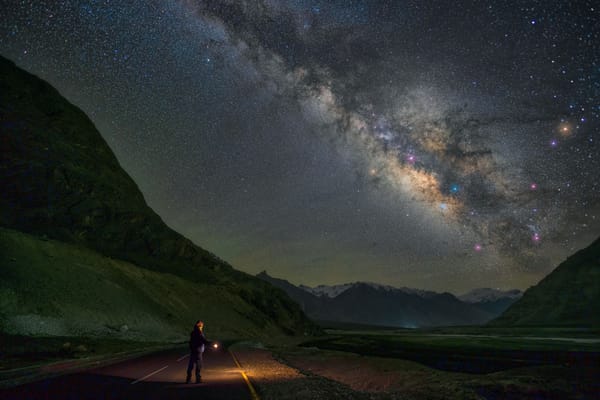
Scientific Research
Ladakh Night Sky: Witness the Zodiacal Light Phenomenon at Hanle Reserve
On September 19, 2026, the night sky over Ladakh, India, offered a breathtaking demonstration of the zodiacal light. This phenomenon remains invisible to most urban dwellers but captivates astronomers and astrophotographers worldwide. Captured at the Hanle Dark Sky Reserve, this…
Read More...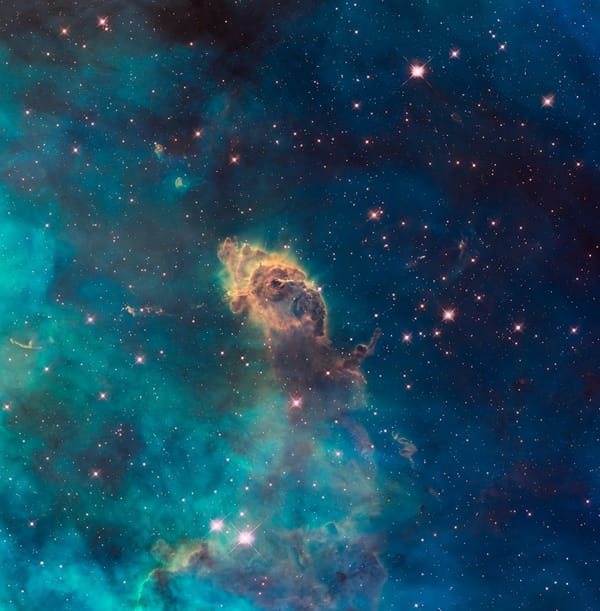
Scientific Research
Carina Nebula: Inside the Stellar Nursery Shaping Giant Stars
Deep within the southern sky, roughly 7,500 light-years from Earth, lies one of the most active star-forming regions in our galaxy. The Carina Nebula stands out as a vast cloud of gas and dust that acts like a cosmic treasure chest. It hides a dense cluster of young stars that a…
Read More...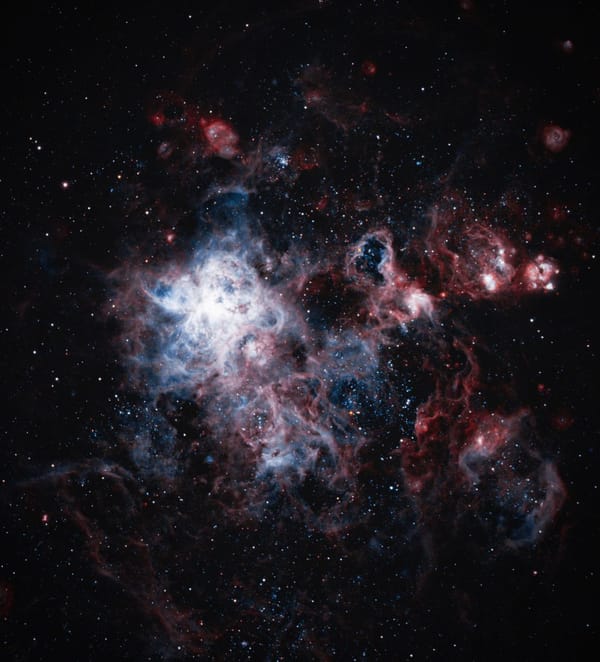
Scientific Research
Webb Telescope Reveals M64's Counter-Rotating Gas: A Galaxy Merger Story
The James Webb Space Telescope has offered astronomers a striking new view of Messier 64, often called the Black Eye Galaxy. This spiral galaxy sits about 17 million light-years away in the constellation Coma Berenices. It is well known for its dark dust band that hides part of…
Read More...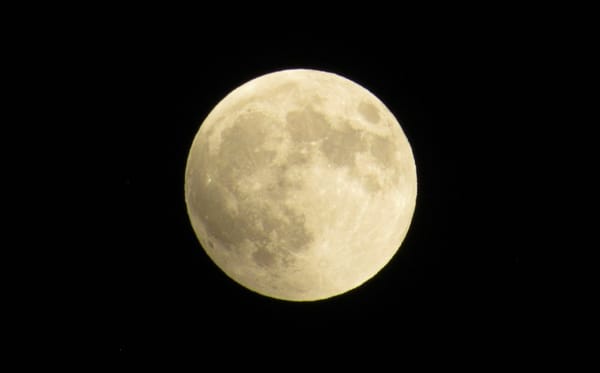
Scientific Research
Watch Venus Disappear: The Rare Daytime Moon Occultation of September 15, 2026
On September 15, 2026, skywatchers around the world witnessed a rare and captivating celestial event. The Moon passed directly in front of the bright planet Venus during daylight hours. This phenomenon is often called a daytime eclipse. It temporarily hid Venus from view against…
Read More...
Scientific Research
NASA AI/ML STIG: LLM Agent Foundations for Space Science in September 2026
The convergence of astrophysics and artificial intelligence is poised to take center stage on September 14, 2026. NASA’s Cosmic Origins program will host a pivotal lecture that highlights the integration of advanced computational tools into space science. This event focuses spec…
Read More...
Scientific Research
Comet NEOWISE Over the Adriatic: A Stunning Dawn Display Captured in 2026
On September 13, 2026, the night sky provided a vivid reminder of our solar system's dynamic nature. A stunning composite image of Comet NEOWISE rising over the Adriatic Sea was featured as the Astronomy Picture of the Day by NASA Science. This visual record highlights one of th…
Read More...
Scientific Research
Apollo 11: How One Foil Sheet Captured the Sun's Breath for Science
Global, Source On September 12, 2026, NASA’s Astronomy Picture of the Day brought attention to a pivotal moment from the Apollo 11 mission. The featured image titled "Apollo 11: Catching Some Sun" shows astronaut Buzz Aldrin deploying a specialized device on the lunar surface. T…
Read More...