
Milky Way Meets Aurora: The Rare Sky Event of November 17, 2026
We compile, generate and translate using Artificial Intelligence from the below given source. Macro Micro News is responsible for its editorial publication.
Global, Source:
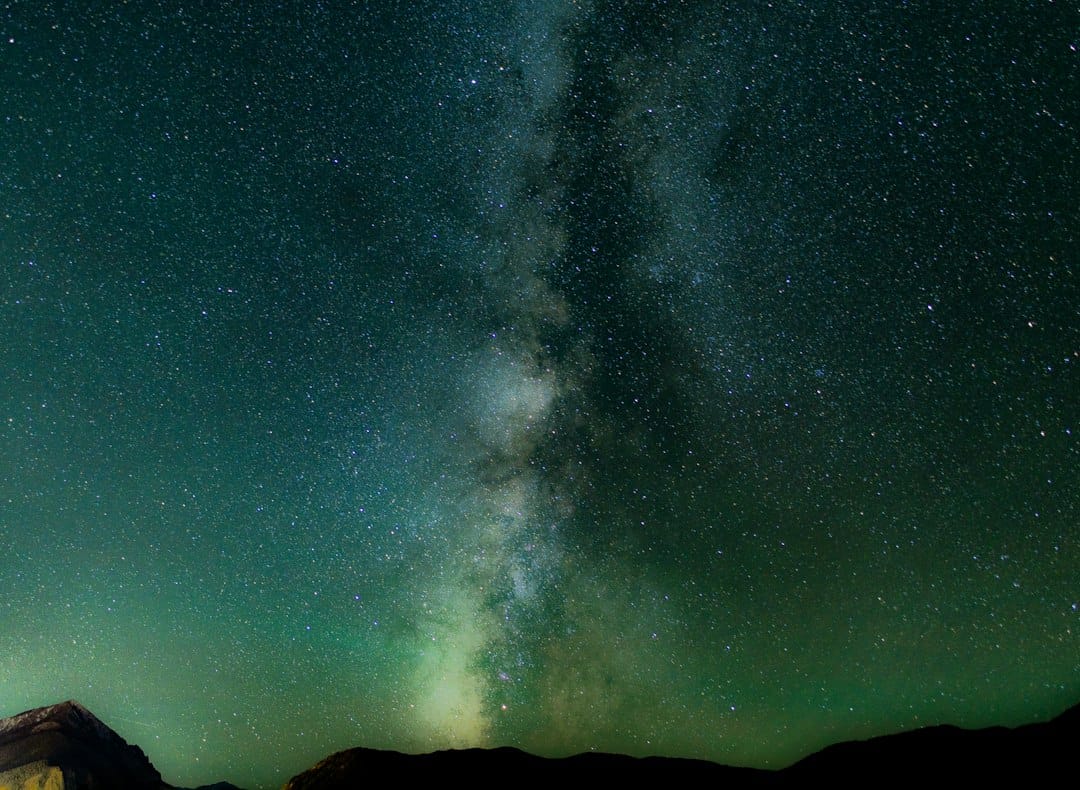
On November 17, 2026, the night sky presented a breathtaking spectacle that blurred the lines between the distant cosmos and our immediate atmospheric environment. Captured in northern regions, an image revealed two majestic arches dominating the heavens, creating a visual illusion of a celestial battle for dominance. However, this dramatic confrontation is merely a chance superposition of two vastly different phenomena occurring simultaneously in the same field of view.
The arch on the left represents the central band of the Milky Way, our home galaxy. This ancient structure, composed of billions of stars, interstellar gas, and cosmic dust, has existed for over thirteen billion years. It stretches across the universe, far beyond the reach of human perception without technological aid. In contrast, the arch on the right is an aurora, specifically the Aurora Borealis or Northern Lights. Unlike the static, ancient backdrop of the galaxy, this phenomenon is dynamic and ephemeral, lasting only hours. It is formed by energized particles from the sun interacting with Earth's magnetic field and atmosphere, occurring relatively close to the planet's surface.
Despite their differences in scale, age, and composition, these two arches share a common origin story rooted in solar activity. The sun constantly ejects energetic particles known as the solar wind. When these particles collide with Earth’s magnetosphere, they are guided toward the poles, where they excite atmospheric gases, creating the shimmering curtains of light known as auroras. Thus, while the Milky Way provides the grand stage, it is the sun’s energetic output that paints the temporary, vibrant foreground.
In the background of this composite scene, other celestial markers can be identified. Far behind the center of the Milky Way’s band lies the galactic center, the dense core of our galaxy. Even farther in the distance, near the top of the frame just left of center, shines Venus, the brightest planet in our solar system. Its presence adds another layer of depth to the image, reminding observers of the multiple layers of space visible in a single exposure.
This photograph, taken approximately a month prior to its feature date, serves as a reminder of the interconnectedness of solar and galactic systems. It highlights how local weather patterns in space driven by solar storms can coexist with the eternal structures of the galaxy. For astronomers and stargazers alike, such images underscore the importance of dark-sky locations and clear atmospheric conditions to capture both the faint glow of distant galaxies and the vivid bursts of terrestrial auroras. The event illustrates not just a visual treat, but a scientific demonstration of particle physics and astrophysics playing out in real-time above our heads.
Related in Space Tech
Space Tech
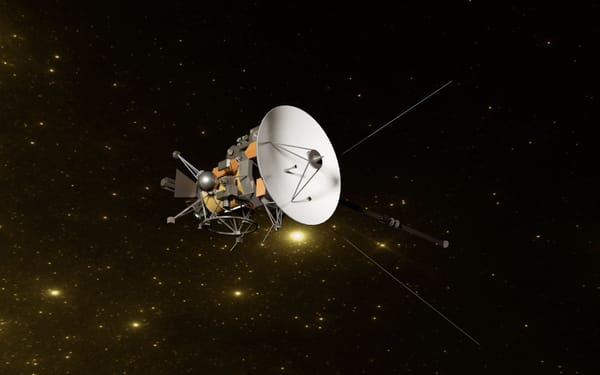
Voyager 1 Enters Interstellar Space: The Historic Milestone of November 2026
On November 20, 2026, the astronomical community marked a profound milestone as NASA’s Astronomy Picture of the Day highlighted the historic journey of Voyager 1. The featured image, captured by the Emirates Astronomical Observatory, depicts a time-exposure photograph where Mors…
Read More...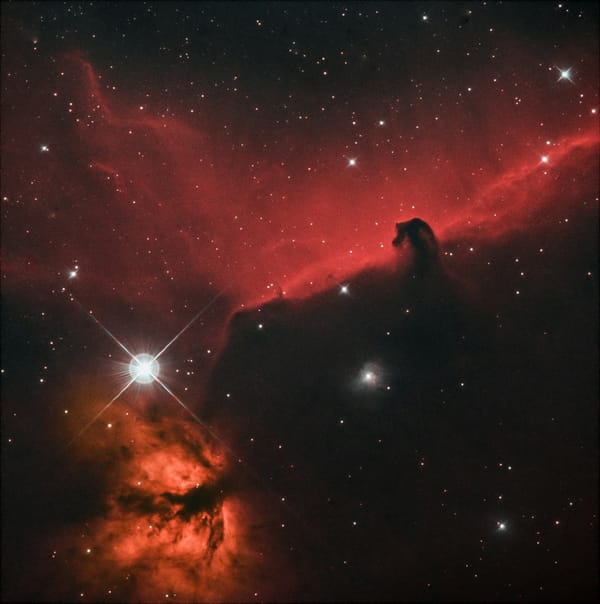
Space Tech
Orion's Cosmic Canvas: Horsehead and Flame Nebulas Revealed in Stunning Detail
The night sky often serves as a canvas for some of the most breathtaking natural artistry in the universe. Few images capture this essence quite like the combined view of the Horsehead and Flame Nebulas. This celestial scene offers a profound glimpse into the dynamic processes o…
Read More...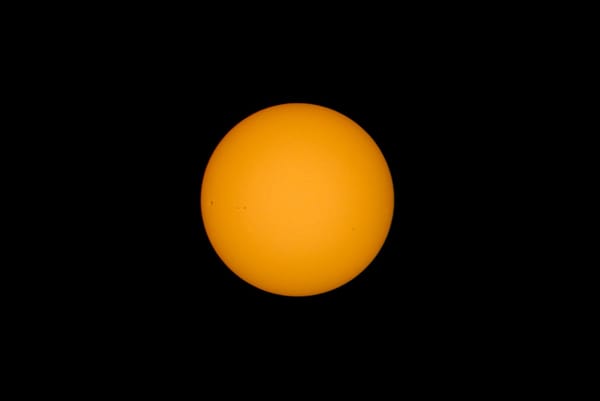
Space Tech
M-Class Solar Flare: How NASA's New Image Reveals the Sun's Extreme Heat Mystery
On November 18, 2026, NASA’s Astronomy Picture of the Day shared a striking image captured on May 14, 2025. This visual record highlights an M-class solar flare and invites you to look closer at the dynamic processes shaping our star. The photograph displays bright loops of plas…
Read More...
Space Tech
Webb Telescope Reveals NGC 7129: How Violent Jets Sculpt New Stars
The James Webb Space Telescope has delivered a stunning new view of NGC 7129, a star-forming region located about 3,000 light-years away in the constellation Cepheus. This celestial nursery offers astronomers a rare chance to study how stars are born within chaotic and turbulent…
Read More...
Space Tech
NASA Chandra Data Reveals Why Massive Star AT 2016blu Keeps Exploding
Astronomers have used NASA’s Chandra X-ray Observatory to uncover the reasons behind the erratic behavior of a massive star named AT 2016blu. This discovery offers a clearer picture of how unstable stars evolve and release energy in violent bursts. The star resides in the spiral…
Read More...
Space Tech
NGC 206: Andromeda's Massive Star Nursery Revealed
Deep within the swirling arms of our nearest galactic neighbor lies a celestial jewel that offers a rare glimpse into the vibrant processes of star birth. NGC 206 is a massive stellar association nestled within the spiral structure of the Andromeda Galaxy (M31). This region stan…
Read More...
Space Tech
NGC 4449: How a Tiny Dwarf Galaxy Shapes the Universe
We often measure cosmic importance by sheer scale. The Milky Way stretches about 100,000 light-years across and holds hundreds of billions of stars. This massive structure sets a standard for what we consider a significant galaxy. Yet astronomers are finding that smaller systems…
Read More...
Space Tech
Saturn Vanishes: Witness the Rare Lunar Eclipse of 2025 and Plan for 2031
On November 10, 2026, NASA’s Astronomy Picture of the Day (APOD) brought attention to a stunning celestial event that unfolded earlier in the year. Skywatchers witnessed a lunar occultation of Saturn, an event where our natural satellite temporarily hides one of the solar system…
Read More...
Space Tech
378 Days in Isolation: CHAPEA Mission 2 Crew Unveils Secrets of Simulated Mars Life
On October 31, 2026, a historic chapter in human space exploration came to a close at NASA’s Johnson Space Center in Houston. After 378 days of continuous isolation, the four crew members of the Crew Health and Performance Exploration Analog (CHAPEA) Mission 2 stepped out of the…
Read More...
Space Tech
Europe's November 2017 Fireball: What the Sky Revealed About Comet Debris
The evening of November 14, 2017, brought a dramatic transformation to the skies over Europe. A brilliant fireball streaked across the northern horizon, captivating observers and scientists with its intense brightness and soft pinkish hues. This rare celestial display was captur…
Read More...