
Saturn Vanishes: Witness the Rare Lunar Eclipse of 2025 and Plan for 2031
We compile, generate and translate using Artificial Intelligence from the below given source. Macro Micro News is responsible for its editorial publication.
Global, Source:
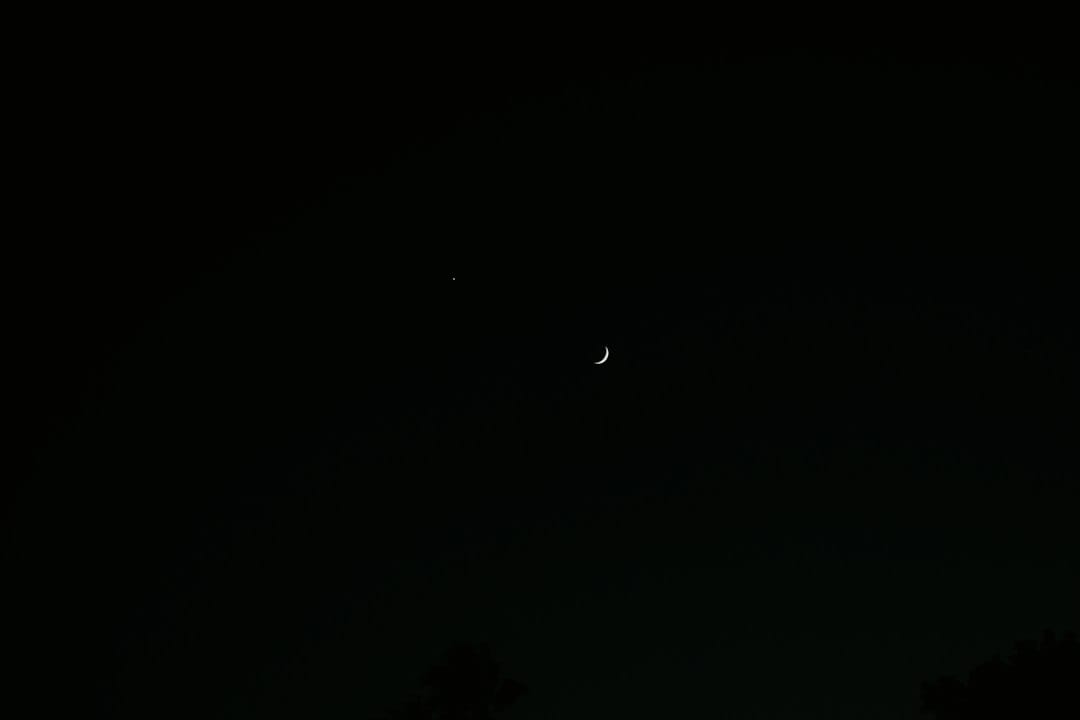
On November 10, 2026, NASA’s Astronomy Picture of the Day (APOD) brought attention to a stunning celestial event that unfolded earlier in the year. Skywatchers witnessed a lunar occultation of Saturn, an event where our natural satellite temporarily hides one of the solar system's most iconic planets. This rare alignment offered observers across specific regions a unique chance to see Saturn disappear behind the Moon.
The visual record of this phenomenon is preserved in a digital fusion image made from three distinct photographs. The first frame shows Saturn just before it vanished, highlighting its majestic rings against the darkening sky. The next two images capture the Moon alone at different intervals after the planet was obscured. Taken from various locations after sunset, these photos provide a clear timeline of the occultation process.
Astronomers and enthusiasts can study the precise moments of disappearance and reappearance thanks to the clarity of these images. These events are governed by complex orbital mechanics, making them fascinating subjects for detailed analysis. The timing and path of such occultations depend on the relative positions and movements of Earth, the Moon, and Saturn.
One notable detail in the imagery is a bright dot near where Saturn was expected to be. While it might look like a moon of Saturn, such as Titan, it is actually a background star. This star lies much further away than Saturn, creating a layered depth effect. The star appears to pass behind Saturn, which then passes behind the Moon, showcasing the vast scale of the universe.
Occultations of planets by the Moon are relatively common but remain spectacular due to the suddenness of the event. For observers in central and northern regions during the 2025 event, the experience was vivid and memorable. Those who missed this occurrence have hope for the future. The next time the Moon will move directly in front of Saturn, visible from similar vantage points, is scheduled for 2031.
Understanding these events requires knowledge of the motions of Earth, the Moon, and Saturn. The Moon orbits Earth approximately every 27.3 days, while Saturn takes nearly 29 years to orbit the Sun. Their apparent paths across the sky occasionally cross, leading to these occultations. Astronomers use these events to refine measurements of planetary positions and atmospheric conditions.
For amateur astronomers and professional scientists alike, tracking these eclipses offers a connection to the broader cosmos. It serves as a reminder of the dynamic nature of our solar system. As technology advances, capturing high-resolution images of such events becomes easier, allowing more people to appreciate the intricate dance of celestial bodies. The 2025 Saturn occultation stands as a testament to the enduring wonder of astronomy.
Related in Space Tech
Space Tech
Voyager 1 Enters Interstellar Space: The Historic Milestone of November 2026
On November 20, 2026, the astronomical community marked a profound milestone as NASA’s Astronomy Picture of the Day highlighted the historic journey of Voyager 1. The featured image, captured by the Emirates Astronomical Observatory, depicts a time-exposure photograph where Mors…
Read More...
Space Tech
Orion's Cosmic Canvas: Horsehead and Flame Nebulas Revealed in Stunning Detail
The night sky often serves as a canvas for some of the most breathtaking natural artistry in the universe. Few images capture this essence quite like the combined view of the Horsehead and Flame Nebulas. This celestial scene offers a profound glimpse into the dynamic processes o…
Read More...
Space Tech
M-Class Solar Flare: How NASA's New Image Reveals the Sun's Extreme Heat Mystery
On November 18, 2026, NASA’s Astronomy Picture of the Day shared a striking image captured on May 14, 2025. This visual record highlights an M-class solar flare and invites you to look closer at the dynamic processes shaping our star. The photograph displays bright loops of plas…
Read More...
Space Tech
Milky Way Meets Aurora: The Rare Sky Event of November 17, 2026
On November 17, 2026, the night sky presented a breathtaking spectacle that blurred the lines between the distant cosmos and our immediate atmospheric environment. Captured in northern regions, an image revealed two majestic arches dominating the heavens, creating a visual illus…
Read More...
Space Tech
Webb Telescope Reveals NGC 7129: How Violent Jets Sculpt New Stars
The James Webb Space Telescope has delivered a stunning new view of NGC 7129, a star-forming region located about 3,000 light-years away in the constellation Cepheus. This celestial nursery offers astronomers a rare chance to study how stars are born within chaotic and turbulent…
Read More...
Space Tech
NASA Chandra Data Reveals Why Massive Star AT 2016blu Keeps Exploding
Astronomers have used NASA’s Chandra X-ray Observatory to uncover the reasons behind the erratic behavior of a massive star named AT 2016blu. This discovery offers a clearer picture of how unstable stars evolve and release energy in violent bursts. The star resides in the spiral…
Read More...
Space Tech
NGC 206: Andromeda's Massive Star Nursery Revealed
Deep within the swirling arms of our nearest galactic neighbor lies a celestial jewel that offers a rare glimpse into the vibrant processes of star birth. NGC 206 is a massive stellar association nestled within the spiral structure of the Andromeda Galaxy (M31). This region stan…
Read More...
Space Tech
NGC 4449: How a Tiny Dwarf Galaxy Shapes the Universe
We often measure cosmic importance by sheer scale. The Milky Way stretches about 100,000 light-years across and holds hundreds of billions of stars. This massive structure sets a standard for what we consider a significant galaxy. Yet astronomers are finding that smaller systems…
Read More...
Space Tech
378 Days in Isolation: CHAPEA Mission 2 Crew Unveils Secrets of Simulated Mars Life
On October 31, 2026, a historic chapter in human space exploration came to a close at NASA’s Johnson Space Center in Houston. After 378 days of continuous isolation, the four crew members of the Crew Health and Performance Exploration Analog (CHAPEA) Mission 2 stepped out of the…
Read More...
Space Tech
Europe's November 2017 Fireball: What the Sky Revealed About Comet Debris
The evening of November 14, 2017, brought a dramatic transformation to the skies over Europe. A brilliant fireball streaked across the northern horizon, captivating observers and scientists with its intense brightness and soft pinkish hues. This rare celestial display was captur…
Read More...