
NASA AI/ML STIG: LLM Agent Foundations for Space Science in September 2026
We compile, generate and translate using Artificial Intelligence from the below given source. Macro Micro News is responsible for its editorial publication.
Global, Source:
The convergence of astrophysics and artificial intelligence is poised to take center stage on September 14, 2026. NASA’s Cosmic Origins program will host a pivotal lecture that highlights the integration of advanced computational tools into space science. This event focuses specifically on the capabilities and architectures of Large Language Model agents. The session is organized under the Artificial Intelligence & Machine Learning Science and Technology Interest Group. This community is dedicated to fostering innovation at the intersection of data science and cosmic discovery.
Scheduled for 4:00 PM Eastern Time, the virtual lecture features Josh Speagle from the University of Toronto. Dr. Speagle’s presentation titled "Foundations of LLM Agents and State of the Art" explores the structural and functional evolution of autonomous AI systems. Astronomical datasets are growing exponentially in volume and complexity due to next-generation telescopes. The need for sophisticated AI agents that can autonomously process and interpret this data has become critical. The lecture aims to provide the scientific community with a comprehensive understanding of current state-of-the-art methodologies in agent-based AI.
The AI/ML STIG serves as a vital hub for researchers engineers and scientists within the NASA ecosystem. These professionals leverage machine learning to solve complex problems in cosmology planetary science and heliophysics. By hosting lectures like this one the group facilitates knowledge transfer between academic institutions and federal research agencies. This ensures that breakthroughs in computer science are rapidly adapted for space exploration applications. The virtual format underscores NASA’s commitment to global accessibility allowing participants from diverse geographical locations to engage with cutting-edge developments without logistical barriers.
This specific focus on LLM agents reflects a broader trend in the scientific community toward autonomous research assistants. Unlike traditional supervised learning models LLM agents possess the ability to reason plan and execute multi-step tasks. This makes them invaluable for handling the unstructured data often found in observational astronomy. As NASA continues to push the boundaries of human knowledge about the universe collaboration between top-tier academic talent and national space agency resources ensures that the scientific community remains at the forefront of technological advancement. The insights shared during this session are expected to influence future protocols for data management and analysis across various NASA missions reinforcing the role of AI as an indispensable partner in the quest to understand the cosmos.
Related in Scientific Research
Scientific Research
NASA Physics of the Cosmos: Third Early Career Workshop for Astrophysicists in September 2026
NASA’s Physics of the Cosmos Program has announced its Third Early Career Workshop, scheduled for September 22 to 24, 2026. This fully virtual event aims to support graduate students, postdoctoral researchers, and early-career scientists by providing critical insights into astro…
Read More...
Scientific Research
Houston Japan Festival 2026: NASA and JAXA Unite to Inspire Future Explorers
On September 12-13, 2026, Hermann Park in Houston buzzed with a unique energy that blended cultural celebration with the thrill of space exploration. The city’s 33rd Annual Japan Festival became more than just a showcase of heritage; it transformed into a hub for international c…
Read More...
Scientific Research
Callanish Stones: How Earth's Orbit Creates a Figure-Eight Sky Over Ancient Scotland
The night sky has long served as a canvas for humanity’s oldest questions. On September 20, 2026, the Astronomy Picture of the Day offers a unique perspective on how our planet moves through space. The featured image captures an analemma, a figure-eight pattern formed by the Sun…
Read More...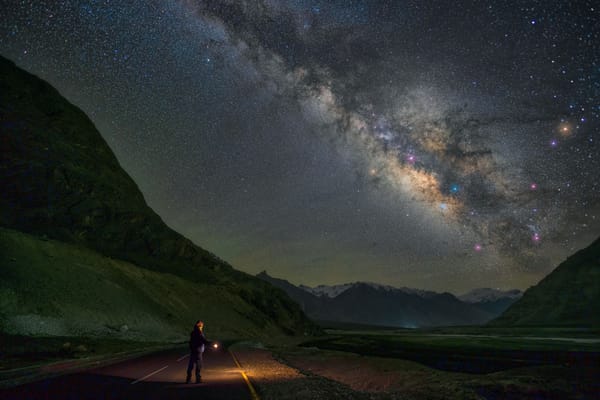
Scientific Research
Ladakh Night Sky: Witness the Zodiacal Light Phenomenon at Hanle Reserve
On September 19, 2026, the night sky over Ladakh, India, offered a breathtaking demonstration of the zodiacal light. This phenomenon remains invisible to most urban dwellers but captivates astronomers and astrophotographers worldwide. Captured at the Hanle Dark Sky Reserve, this…
Read More...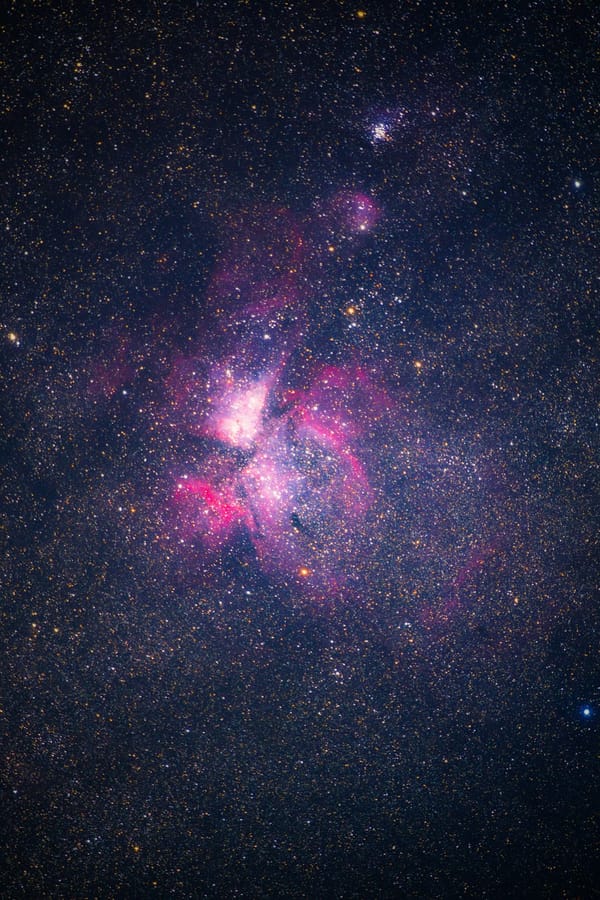
Scientific Research
M33: The Triangulum Galaxy's Star-Forming Secrets and Cosmic Role
Deep within the northern constellation of Triangulum lies one of the most magnificent face-on spiral galaxies in our local cosmic neighborhood. Messier 33, widely known as the Triangulum Galaxy, stands as a testament to the grandeur of spiral structures in the universe. With a d…
Read More...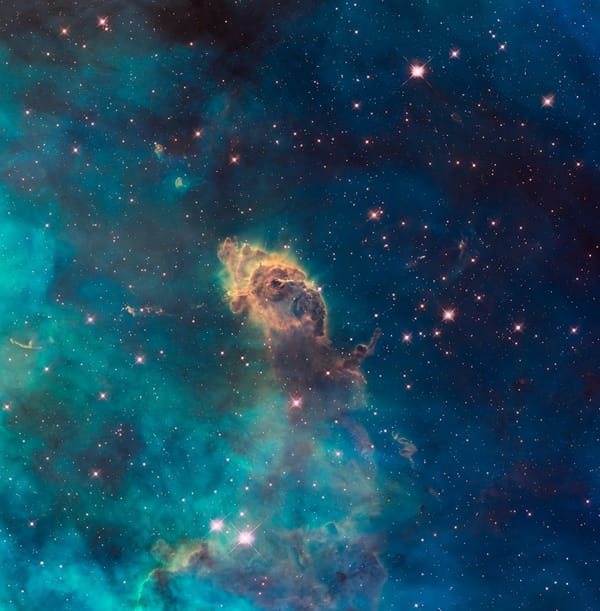
Scientific Research
Carina Nebula: Inside the Stellar Nursery Shaping Giant Stars
Deep within the southern sky, roughly 7,500 light-years from Earth, lies one of the most active star-forming regions in our galaxy. The Carina Nebula stands out as a vast cloud of gas and dust that acts like a cosmic treasure chest. It hides a dense cluster of young stars that a…
Read More...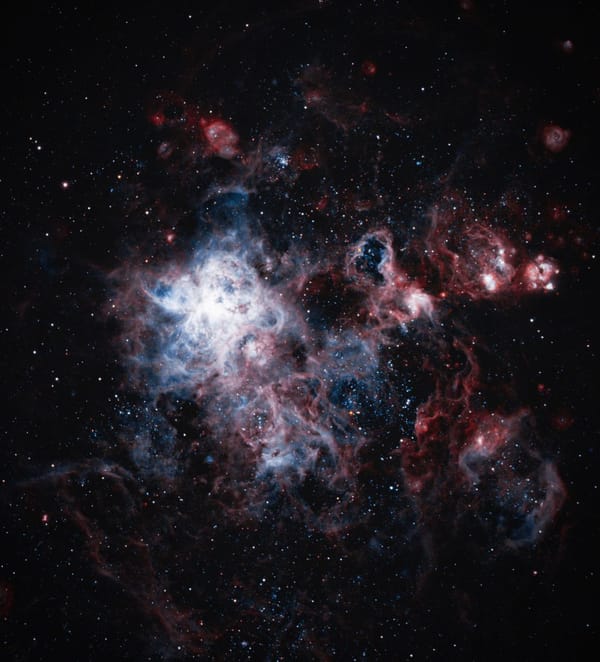
Scientific Research
Webb Telescope Reveals M64's Counter-Rotating Gas: A Galaxy Merger Story
The James Webb Space Telescope has offered astronomers a striking new view of Messier 64, often called the Black Eye Galaxy. This spiral galaxy sits about 17 million light-years away in the constellation Coma Berenices. It is well known for its dark dust band that hides part of…
Read More...
Scientific Research
Watch Venus Disappear: The Rare Daytime Moon Occultation of September 15, 2026
On September 15, 2026, skywatchers around the world witnessed a rare and captivating celestial event. The Moon passed directly in front of the bright planet Venus during daylight hours. This phenomenon is often called a daytime eclipse. It temporarily hid Venus from view against…
Read More...
Scientific Research
Comet NEOWISE Over the Adriatic: A Stunning Dawn Display Captured in 2026
On September 13, 2026, the night sky provided a vivid reminder of our solar system's dynamic nature. A stunning composite image of Comet NEOWISE rising over the Adriatic Sea was featured as the Astronomy Picture of the Day by NASA Science. This visual record highlights one of th…
Read More...
Scientific Research
Apollo 11: How One Foil Sheet Captured the Sun's Breath for Science
Global, Source On September 12, 2026, NASA’s Astronomy Picture of the Day brought attention to a pivotal moment from the Apollo 11 mission. The featured image titled "Apollo 11: Catching Some Sun" shows astronaut Buzz Aldrin deploying a specialized device on the lunar surface. T…
Read More...