
NASA and IBM Launch Open-Source AI Model to Decode Lunar Data
We compile, generate and translate using Artificial Intelligence from the below given source. Macro Micro News is responsible for its editorial publication.
United States, Source:
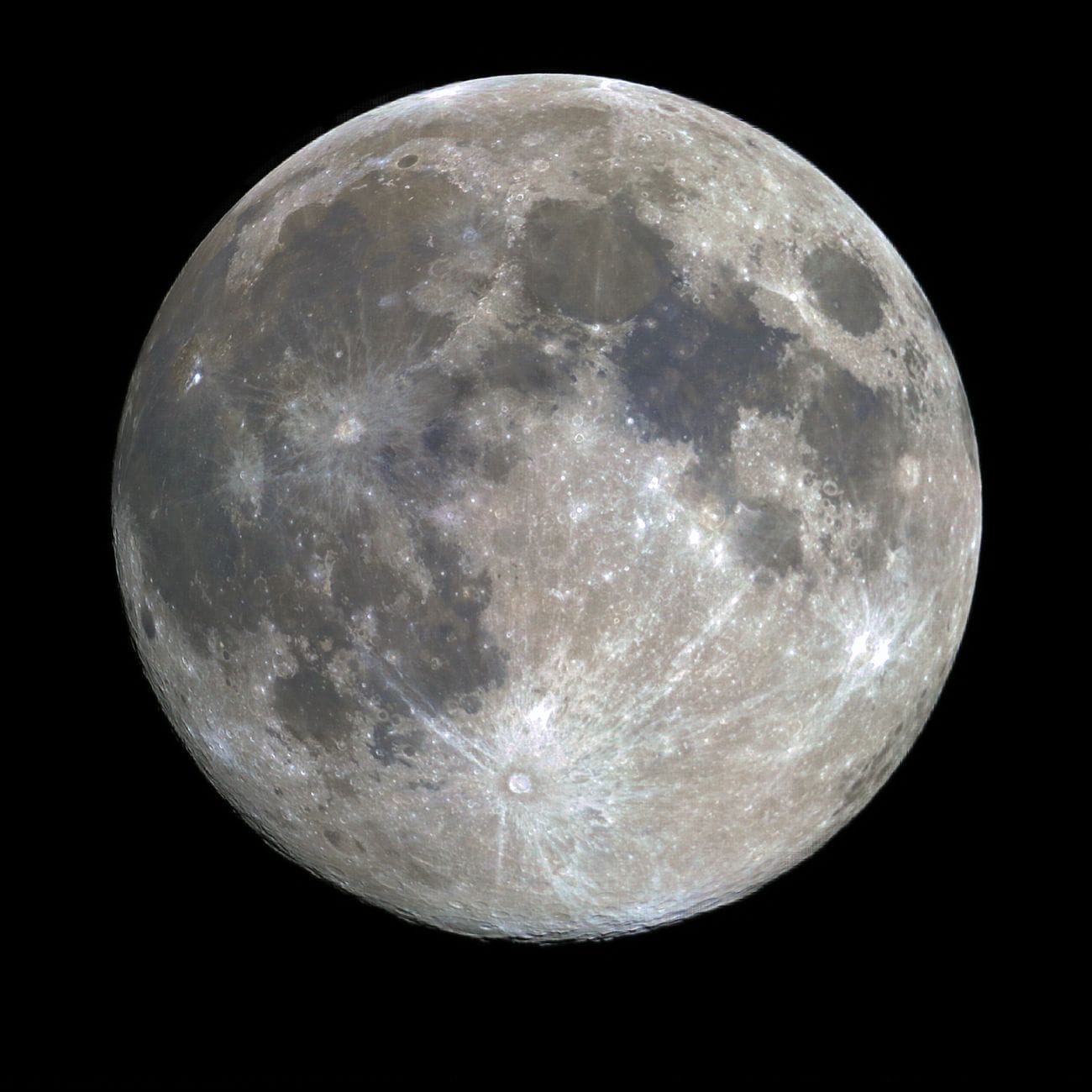
The partnership between NASA and IBM Research marks a new era in how we understand our nearest celestial neighbor. The launch of the NASA-IBM Lunar Foundation Model offers researchers a powerful tool to interpret complex lunar data. This initiative stands out as one of the first open-source AI models dedicated to lunar science. It shifts the focus from manual analysis to automated discovery, allowing scientists to process vast amounts of information with greater efficiency.
At the heart of this model is an impressive dataset drawn from NASA’s Lunar Reconnaissance Orbiter. The training includes over two million image tiles collected across nearly twenty years. These images feature high-resolution camera shots at one-meter resolution and multispectral images at 100-meter resolution. The system also incorporates terrain data from NASA’s GRAIL mission and JAXA’s SELENE. This comprehensive approach allows the model to learn patterns that traditional algorithms might miss.
Unlike specialized systems that require custom development for each task, this pre-trained model adapts quickly. Scientists can fine-tune it using small amounts of labeled data. This flexibility opens up several key research avenues. Researchers are now mapping craters to determine surface ages more accurately. They are also identifying irregular mare patches, which provide clues about the Moon's volcanic history. Another critical application involves estimating the stability of water ice near the poles. Understanding these ice deposits is vital for planning future human missions.
The model shows strong performance in predicting where polar ice might be found. It preserves fine-scale details that help identify resources essential for long-term exploration. It also detects subtle changes on the surface, such as new impact craters caused by rocket bodies. By comparing imagery before and after events, the AI highlights changes that might otherwise go unnoticed. This capability enhances our ability to monitor lunar activity in real time.
This project aligns with NASA’s broader strategy to integrate artificial intelligence into scientific workflows. It complements other successful initiatives like the Prithvi Models for Earth observation and the Surya Model for heliophysics. The development involved teams from NASA’s Marshall Space Flight Center, Goddard Space Flight Center, and Ames Research Center. Academic partners including the SETI Institute and Howard University also contributed to the effort. The release of this model as open science encourages global collaboration and reproducible research.
Related in Scientific Research
Scientific Research
NASA Physics of the Cosmos: Third Early Career Workshop for Astrophysicists in September 2026
NASA’s Physics of the Cosmos Program has announced its Third Early Career Workshop, scheduled for September 22 to 24, 2026. This fully virtual event aims to support graduate students, postdoctoral researchers, and early-career scientists by providing critical insights into astro…
Read More...
Scientific Research
Houston Japan Festival 2026: NASA and JAXA Unite to Inspire Future Explorers
On September 12-13, 2026, Hermann Park in Houston buzzed with a unique energy that blended cultural celebration with the thrill of space exploration. The city’s 33rd Annual Japan Festival became more than just a showcase of heritage; it transformed into a hub for international c…
Read More...
Scientific Research
Callanish Stones: How Earth's Orbit Creates a Figure-Eight Sky Over Ancient Scotland
The night sky has long served as a canvas for humanity’s oldest questions. On September 20, 2026, the Astronomy Picture of the Day offers a unique perspective on how our planet moves through space. The featured image captures an analemma, a figure-eight pattern formed by the Sun…
Read More...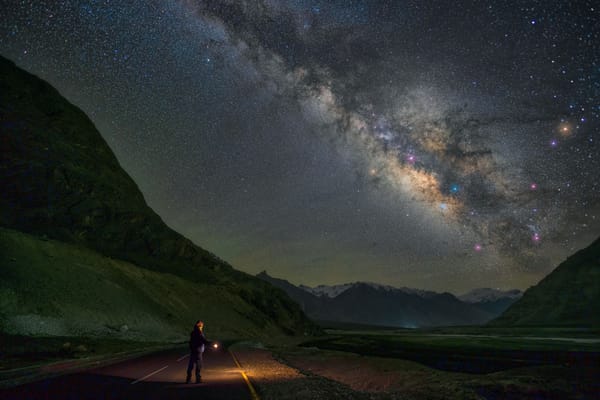
Scientific Research
Ladakh Night Sky: Witness the Zodiacal Light Phenomenon at Hanle Reserve
On September 19, 2026, the night sky over Ladakh, India, offered a breathtaking demonstration of the zodiacal light. This phenomenon remains invisible to most urban dwellers but captivates astronomers and astrophotographers worldwide. Captured at the Hanle Dark Sky Reserve, this…
Read More...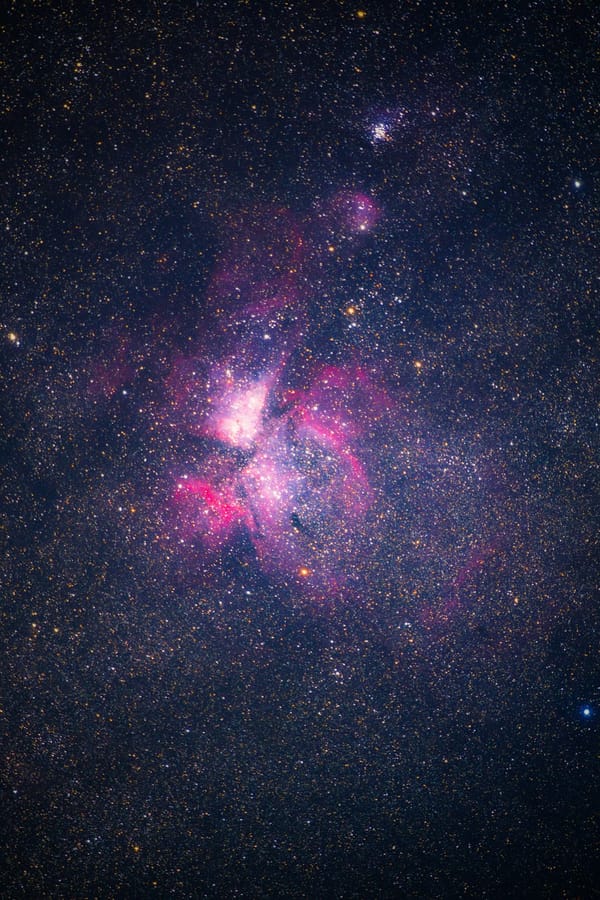
Scientific Research
M33: The Triangulum Galaxy's Star-Forming Secrets and Cosmic Role
Deep within the northern constellation of Triangulum lies one of the most magnificent face-on spiral galaxies in our local cosmic neighborhood. Messier 33, widely known as the Triangulum Galaxy, stands as a testament to the grandeur of spiral structures in the universe. With a d…
Read More...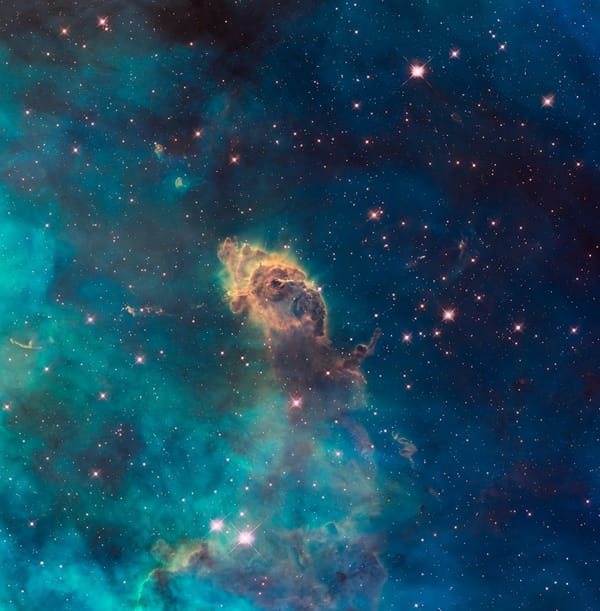
Scientific Research
Carina Nebula: Inside the Stellar Nursery Shaping Giant Stars
Deep within the southern sky, roughly 7,500 light-years from Earth, lies one of the most active star-forming regions in our galaxy. The Carina Nebula stands out as a vast cloud of gas and dust that acts like a cosmic treasure chest. It hides a dense cluster of young stars that a…
Read More...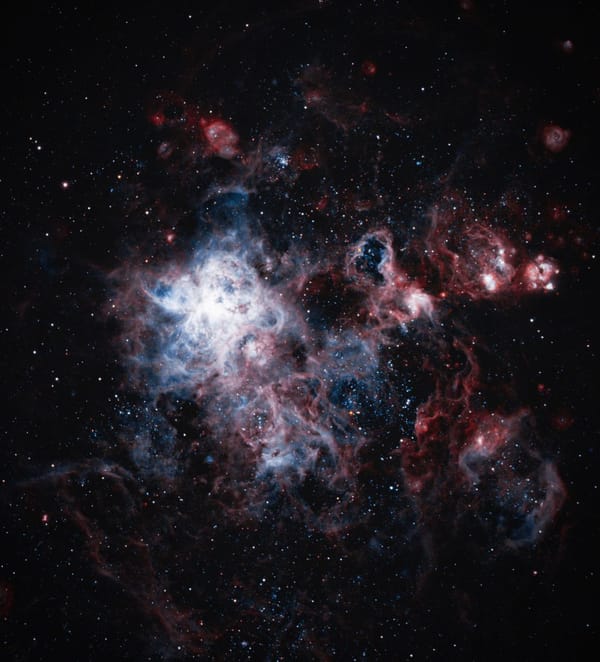
Scientific Research
Webb Telescope Reveals M64's Counter-Rotating Gas: A Galaxy Merger Story
The James Webb Space Telescope has offered astronomers a striking new view of Messier 64, often called the Black Eye Galaxy. This spiral galaxy sits about 17 million light-years away in the constellation Coma Berenices. It is well known for its dark dust band that hides part of…
Read More...
Scientific Research
Watch Venus Disappear: The Rare Daytime Moon Occultation of September 15, 2026
On September 15, 2026, skywatchers around the world witnessed a rare and captivating celestial event. The Moon passed directly in front of the bright planet Venus during daylight hours. This phenomenon is often called a daytime eclipse. It temporarily hid Venus from view against…
Read More...
Scientific Research
NASA AI/ML STIG: LLM Agent Foundations for Space Science in September 2026
The convergence of astrophysics and artificial intelligence is poised to take center stage on September 14, 2026. NASA’s Cosmic Origins program will host a pivotal lecture that highlights the integration of advanced computational tools into space science. This event focuses spec…
Read More...
Scientific Research
Comet NEOWISE Over the Adriatic: A Stunning Dawn Display Captured in 2026
On September 13, 2026, the night sky provided a vivid reminder of our solar system's dynamic nature. A stunning composite image of Comet NEOWISE rising over the Adriatic Sea was featured as the Astronomy Picture of the Day by NASA Science. This visual record highlights one of th…
Read More...