
NASA's High-Altitude Eclipse Chase: What Scientists Saw at 50,000 Feet
We compile, generate and translate using Artificial Intelligence from the below given source. Macro Micro News is responsible for its editorial publication.
Reykjavik, Iceland, Source: Global, Source
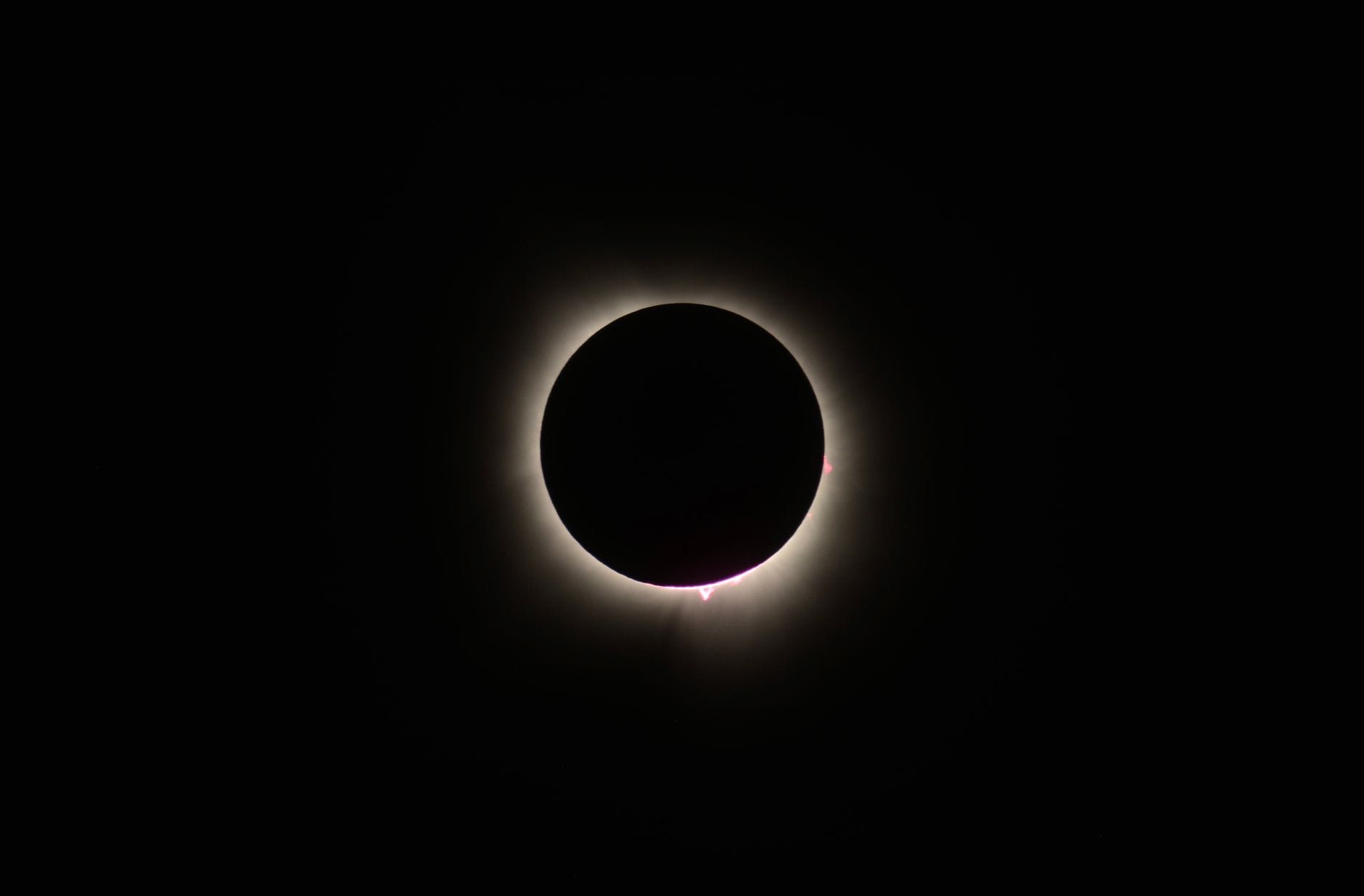
On August 12, 2026, the skies over the North Atlantic became a stage for one of nature's most precise performances. As the Moon slid directly between the Earth and the Sun, NASA launched a sophisticated mission to intercept the event. A high-altitude research aircraft took off from Iceland, aiming not just to witness the eclipse but to chase its shadow across the planet. This approach offered scientists a vantage point that ground-based observers could only dream of, free from the atmospheric interference that often clouds our view.
Piloted at an altitude of 50,000 feet, the aircraft followed the exact path of the eclipse's umbra. By soaring above clouds, dust, and water vapor, the crew ensured their instruments captured the phenomenon with exceptional clarity. The stratosphere provided a crystal-clear window into the cosmos, allowing high-resolution cameras to document the transition from partial to total eclipse in real-time. Imagine looking out from a cockpit where the air is thin and the view is unobstructed by the turbulent layers below.
The footage reveals a dramatic shift in lighting as totality began. The sky darkened significantly, mimicking twilight conditions despite it being midday. In this brief window, planets usually lost in the sun's glare emerged into view. Venus shone brightly to the left, while Jupiter and Mercury appeared to the right of the eclipsed Sun. Below, the horizon remained bright, marking the boundary where the shadow had not yet reached. This contrast between the illuminated earth and the darkened sky above creates a striking visual narrative of celestial mechanics.
This expedition underscores the vital role aviation plays in modern astronomy. Moving above the lower atmosphere allows researchers to gather data that fixed observatories simply cannot obtain. The images and data collected contribute to a deeper understanding of solar physics and atmospheric optics. They also highlight the precision required to study such fleeting events. As technology advances, missions like this will continue to expand our knowledge of the universe, turning the chase for shadows into a pursuit of profound scientific insight.
Related in Scientific Research

Scientific Research
PLOS Climate: How Open Access is Reshaping Global Warming Research
The landscape of scientific communication is shifting rapidly. Integrity and accessibility are no longer just nice-to-haves but essential pillars of modern research. PLOS Climate stands at the center of this transformation. This journal from the Public Library of Science in Cali…
Read More...
Scientific Research
PLOS Climate: Navigating Broken Links to Access Critical Global Warming Research
The digital landscape of scientific publishing is shifting rapidly. For researchers and enthusiasts alike, the ability to access peer-reviewed work without barriers is essential. PLOS, a nonprofit based in California, has long championed open access. Their journal PLOS Climate f…
Read More...
Scientific Research
How PLOS Climate Is Reshaping Global Science: The Open Access Advantage
In the fast-moving world of scientific communication, open access journals are doing more than just sharing papers. They are breaking down walls that have long kept knowledge out of reach. PLOS Climate stands at the center of this shift. As a key part of the Public Library of Sc…
Read More...
Scientific Research
PLOS Climate: How Open Science is Reshaping Global Data Access
The digital landscape of scientific publishing is undergoing a profound transformation. This shift is driven by the urgent need for transparency and rapid dissemination of critical research. PLOS Climate stands at the forefront of this movement. It is a specialized journal dedic…
Read More...
Scientific Research
PLOS Climate 404 Errors: How Link Rot Threatens Scientific Trust and What You Can Do
The digital landscape of scientific communication is shifting rapidly. For researchers, policymakers, and educators, the integrity of open-access journals like PLOS Climate is not just a convenience but a necessity. Yet, even the most robust platforms face technical hurdles. A r…
Read More...
Scientific Research
PLOS Climate: How Open Access is Reshaping Global Warming Solutions
The landscape of scientific publishing is shifting beneath our feet. Accessibility and transparency are no longer just nice-to-have features; they are the bedrock upon which we address the most pressing challenges of our time. The Public Library of Science (PLOS), a nonprofit ba…
Read More...
Scientific Research
California Beaches See First Olive Ridley Nesting: What This Means for Sea Turtle Conservation
Marine biologists are witnessing a historic shift in ocean ecology. On September 16, 2026, an olive ridley sea turtle laid eggs on a beach near Seal Beach in Orange County, California. This event marks the first confirmed nesting of this species on the U.S. West Coast. Historica…
Read More...
Scientific Research
PLOS Climate: Why Broken Links Threaten Global Science Access
The digital landscape of scientific communication is shifting beneath our feet. As climate research accelerates, the integrity and accessibility of this data have become paramount. Specialized journals like PLOS Climate face constant challenges regarding content availability and…
Read More...
Scientific Research
Why Climate Data Links Fail: The Open Access Fix You Need Now
Imagine clicking a link to the latest climate study only to hit a dead end. That frustrating 'Page Not Found' error is more than a technical glitch. It represents a significant barrier in the fight against misinformation and delayed action. When vital research on global warming…
Read More...
Scientific Research
What Color Is the Universe? The Surprising Beige Answer from Johns Hopkins
For centuries humanity has gazed into the night sky captivated by vibrant nebulae and dying stars. Yet a deceptively simple question remains elusive to the naked eye. What is the average color of the entire universe? The answer defies expectations of deep cosmic blues or brillia…
Read More...