
OceanEye Alliance: How Global Cooperation is Rewriting the Rules of Marine Governance
We compile, generate and translate using Artificial Intelligence from the below given source. Macro Micro News is responsible for its editorial publication.
Brussels, Belgium, Source:
As the world navigates an increasingly fragmented and multipolar geopolitical landscape, the urgency for robust international ocean governance has never been more critical. During the closing session of the Organisation of African, Caribbean and Pacific States (OACPS) and EU Joint Parliamentary Assembly, Commissioner Kadis highlighted that the health of our oceans directly dictates global security, climate stability, food security, and economic resilience. In response to these interconnected challenges, the European Commission adopted the European Ocean Pact in June 2025, establishing a comprehensive framework dedicated to strengthening multilateral cooperation and science-based policymaking.
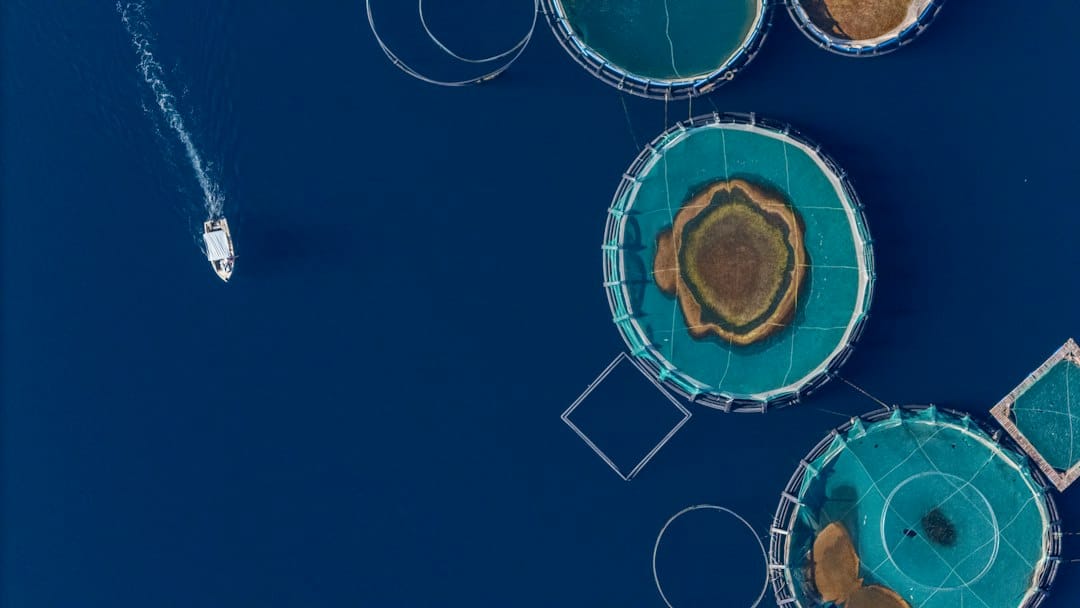
The ocean covers approximately 70% of the Earth's surface and serves as the planet's primary climate regulator, absorbing around 30% of human-made carbon emissions and 90% of excess heat generated by industrial activity. Despite this vital role, large areas of the ocean remain poorly observed due to sparse instrumentation and uneven data distribution. To address this gap, the European Commission, in partnership with the Government of Canada, launched the OceanEye International Alliance for the Global Ocean Observing System. Officially unveiled during the United Nations General Assembly High-Level Week in September, the Alliance aims to mobilize collective support for sustained ocean observation, which is foundational to evidence-based decision-making.
The initiative has already demonstrated significant momentum, securing nearly EUR 220 million in funding alongside substantial in-kind contributions from its initial cohort of 34 member nations. This collaborative effort underscores the reality that no single country can independently monitor or protect the global ocean. The Alliance encourages further national participation to ensure a unified, coordinated response to rising sea levels, intensifying storms, and frequent flooding events driven by climate change.
Parallel to observational efforts, the international community is focusing on legal frameworks to protect marine biodiversity. Sustainable Development Goal 14 (Life Below Water) provides a clear political commitment to conserve marine resources, reduce pollution, and expand protected areas. A cornerstone of this effort is the High Seas Treaty, formally known as the Agreement on Marine Biological Diversity of Areas Beyond National Jurisdiction (BBNJ). This treaty offers practical tools to govern the two-thirds of the ocean that lie outside national jurisdictions, where regulatory oversight has historically been weak. The upcoming first meeting of the Conference of the Parties (COP-1) will serve as a critical test of implementation, requiring countries to move beyond promises to actionable institutional arrangements.
Looking ahead, effective ocean governance necessitates adherence to customary international law and a precautionary, science-based approach, particularly regarding emerging issues like deep-sea mining. By fostering a system that is better informed, more cooperative, and legally grounded, the global community can build a sustainable blue economy. The path forward requires unwavering multilateralism, ensuring that the rules-based order protects the marine ecosystems upon which all life depends.
Related in Politics

Politics
Europe's Transport Revolution: How Science and Funding Are Reshaping Mobility by 2030
On the occasion of the 50th anniversary of the Hellenic Institute of Transportologists (HITE), European Commissioner for Transport Adina-Ioana Vălean delivered a poignant address highlighting the symbiotic relationship between Greece’s integration into the European Community and…
Read More...
Politics
EU Nature Reform: How to Protect Biodiversity Without Hurting the Economy
The European Union stands at a pivotal moment in its environmental policy journey. The focus is squarely on the practical implementation of the Birds and Habitats Directives. As the stress test of these foundational nature laws nears completion, the European Commission has made…
Read More...
Politics
Germany's Electoral Paradox: Why Legal Barriers Block Democratic Oversight
The recent dismissal of a constitutional complaint by the BSW party has sparked a critical conversation about electoral integrity in Germany. Stefan Möller, Deputy Federal Spokesperson for the Alternative for Germany (AfD), provided a sharp analysis following the Federal Constit…
Read More...
Politics
Europe's 2035 Materials Blueprint: How Smart Metals and Graphene Will Redefine Industry
The European Commission has laid out a bold vision to transform the continent into the global hub for advanced materials by 2035. This strategic proposal aims to secure leadership in innovation, production, and application of next-generation materials. Commissioner Mariya Gabrie…
Read More...
Politics
EU Climate Chief Hoekstra Reveals COP31 Strategy: How Europe Leads the Net-Zero Race
Commissioner Wopke Hoekstra took center stage at COP31 to outline a bold new vision for European climate leadership. The message was clear and direct. The European Union is not just participating in global climate discussions; it is actively shaping them. By balancing ambitious…
Read More...
Politics
Germany's Steel Crisis: How Subsidies Are Failing Workers in 2026
The German steel industry is navigating a turbulent period defined by rising production costs and significant workforce reductions. Recent figures indicate that the industrial sector saw a decline of 140,200 jobs in late 2026 compared to the previous year. This represents a 2.6…
Read More...
Politics
UniCredit and Commerzbank Merger: A Milestone for Europe's Integrated Banking Union
The European Commission has delivered a landmark decision by unconditionally approving the acquisition of Germany’s Commerzbank by Italy’s UniCredit. This transaction, recognized as the largest cross-border banking deal since the financial crisis, marks a significant step toward…
Read More...
Politics
Germany's 2026 Presidential Pick: Why AfD Chose World Cup Hero Thomas Berthold
In a move that has captured the attention of political observers across Germany, the Alternative for Germany (AfD) party has officially named Thomas Berthold as its candidate for Federal President. The announcement came on November 14, 2026, in Berlin, signaling a distinct shift…
Read More...
Politics
EU's Bold Clean Energy Play: How Brussels Is Reshaping Global Industry
The European Commission has just unveiled a strategic initiative designed to fortify the EU's standing in the global clean energy arena. This move is not merely about compliance but represents a calculated effort to keep Europe at the vanguard of technological innovation while a…
Read More...
Politics
Germany's 2027 Budget: 561 Billion Euros and the Debt Question You Need to Know
The German federal government has just finalized its budget for 2027, setting a new historical precedent with a total volume of 561 billion euros. This record-breaking figure comes from the black-red coalition and marks the largest financial plan in the nation's history. The sca…
Read More...