
Pelican Nebula: How Starlight is Sculpting a Cosmic Icon in Real Time
We compile, generate and translate using Artificial Intelligence from the below given source. Macro Micro News is responsible for its editorial publication.
Global, Source:
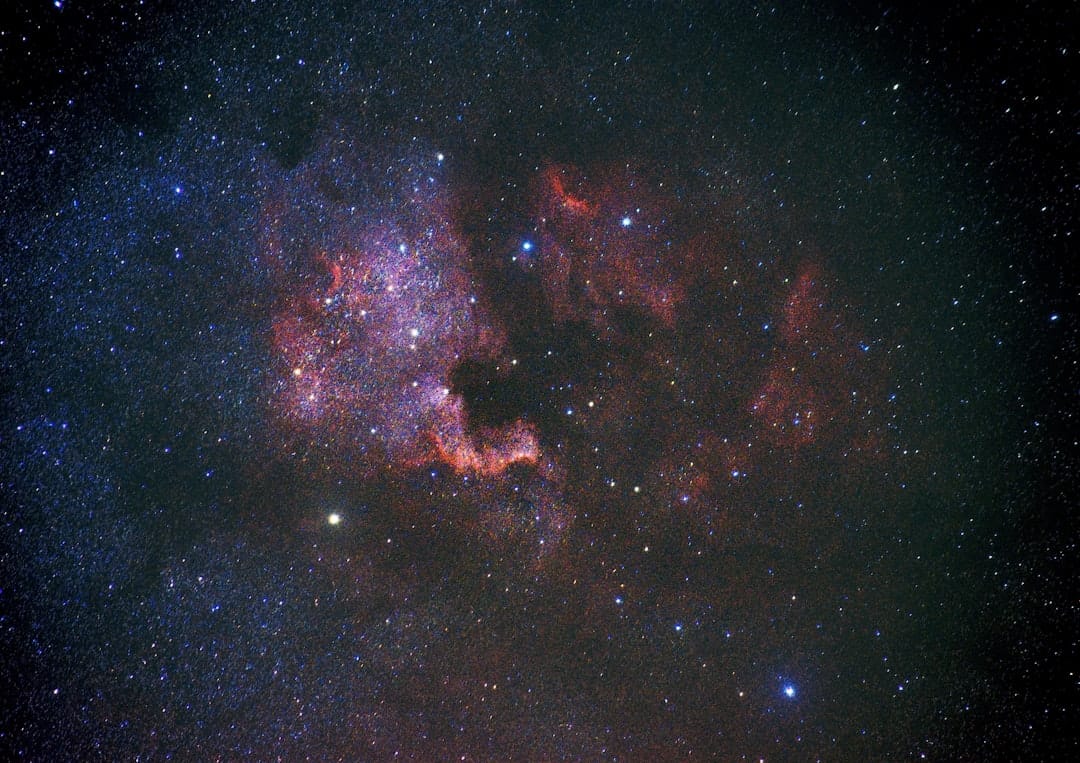
Have you ever wondered what it looks like when the universe builds a new star? Deep within the constellation Cygnus, the Swan, lies a region that offers exactly that answer. The Pelican Nebula, officially known as IC 5070, stands as one of the most visually striking areas in our galaxy. It is not just a static picture but a dynamic environment undergoing a slow transformation. This process gives astronomers a rare window into how star-forming regions evolve over millions of years.
The nebula’s shape resembles a large white pelican with its beak open. This silhouette has fascinated skywatchers for decades. However, recent high-resolution observations suggest this form is temporary. The image captured on September 7, 2026, reveals intricate details through 25 hours of exposure time. These long exposures bring out layers of ionized gas and shadowy dust lanes that were previously hidden from view.
This celestial structure connects to the even larger Eagle Nebula (M16). A dense lane of dark dust and gas separates them. Together they form a complex stellar nursery. Cold clouds of molecular hydrogen collapse under their own gravity to ignite new stars. The interplay between these elements creates a scene of constant change and creation.
At the heart of this spectacle lies the process of photoevaporation. Young O-type and B-type stars emit intense ultraviolet radiation. This energy heats the surrounding cold gas causing it to glow brightly. The radiation also slowly erodes denser clumps of material. In the upper right portion of the nebula a bright orange region marks the boundary between hot ionized gas and cooler neutral gas. This interface shows where destructive and creative forces meet.
The heat from these young stars strips away outer layers of gas clouds. This action may halt further star formation in specific areas while triggering collapse in neighboring dense pockets. Despite these changes some dense knots of cold gas remain intact. Their own mass shields them from harsh radiation. These cores likely serve as sites for future star birth.
The long-term outlook for the Pelican Nebula involves dissolution. Over millions of years relentless pressure from stellar winds and radiation will disperse remaining gas and dust. The iconic pelican shape may fade leaving behind only a faint remnant or a different configuration of stars. This evolution highlights the transient nature of nebulae. They are fleeting stages in the continuous cycle of stellar life and death. For now the Pelican remains a breathtaking testament to the power and beauty of the universe inviting us to witness the cosmos in motion.
Related in Scientific Research
Scientific Research
NASA Physics of the Cosmos: Third Early Career Workshop for Astrophysicists in September 2026
NASA’s Physics of the Cosmos Program has announced its Third Early Career Workshop, scheduled for September 22 to 24, 2026. This fully virtual event aims to support graduate students, postdoctoral researchers, and early-career scientists by providing critical insights into astro…
Read More...
Scientific Research
Houston Japan Festival 2026: NASA and JAXA Unite to Inspire Future Explorers
On September 12-13, 2026, Hermann Park in Houston buzzed with a unique energy that blended cultural celebration with the thrill of space exploration. The city’s 33rd Annual Japan Festival became more than just a showcase of heritage; it transformed into a hub for international c…
Read More...
Scientific Research
Callanish Stones: How Earth's Orbit Creates a Figure-Eight Sky Over Ancient Scotland
The night sky has long served as a canvas for humanity’s oldest questions. On September 20, 2026, the Astronomy Picture of the Day offers a unique perspective on how our planet moves through space. The featured image captures an analemma, a figure-eight pattern formed by the Sun…
Read More...
Scientific Research
Ladakh Night Sky: Witness the Zodiacal Light Phenomenon at Hanle Reserve
On September 19, 2026, the night sky over Ladakh, India, offered a breathtaking demonstration of the zodiacal light. This phenomenon remains invisible to most urban dwellers but captivates astronomers and astrophotographers worldwide. Captured at the Hanle Dark Sky Reserve, this…
Read More...
Scientific Research
M33: The Triangulum Galaxy's Star-Forming Secrets and Cosmic Role
Deep within the northern constellation of Triangulum lies one of the most magnificent face-on spiral galaxies in our local cosmic neighborhood. Messier 33, widely known as the Triangulum Galaxy, stands as a testament to the grandeur of spiral structures in the universe. With a d…
Read More...
Scientific Research
Carina Nebula: Inside the Stellar Nursery Shaping Giant Stars
Deep within the southern sky, roughly 7,500 light-years from Earth, lies one of the most active star-forming regions in our galaxy. The Carina Nebula stands out as a vast cloud of gas and dust that acts like a cosmic treasure chest. It hides a dense cluster of young stars that a…
Read More...
Scientific Research
Webb Telescope Reveals M64's Counter-Rotating Gas: A Galaxy Merger Story
The James Webb Space Telescope has offered astronomers a striking new view of Messier 64, often called the Black Eye Galaxy. This spiral galaxy sits about 17 million light-years away in the constellation Coma Berenices. It is well known for its dark dust band that hides part of…
Read More...
Scientific Research
Watch Venus Disappear: The Rare Daytime Moon Occultation of September 15, 2026
On September 15, 2026, skywatchers around the world witnessed a rare and captivating celestial event. The Moon passed directly in front of the bright planet Venus during daylight hours. This phenomenon is often called a daytime eclipse. It temporarily hid Venus from view against…
Read More...
Scientific Research
NASA AI/ML STIG: LLM Agent Foundations for Space Science in September 2026
The convergence of astrophysics and artificial intelligence is poised to take center stage on September 14, 2026. NASA’s Cosmic Origins program will host a pivotal lecture that highlights the integration of advanced computational tools into space science. This event focuses spec…
Read More...
Scientific Research
Comet NEOWISE Over the Adriatic: A Stunning Dawn Display Captured in 2026
On September 13, 2026, the night sky provided a vivid reminder of our solar system's dynamic nature. A stunning composite image of Comet NEOWISE rising over the Adriatic Sea was featured as the Astronomy Picture of the Day by NASA Science. This visual record highlights one of th…
Read More...