
PLOS Climate 404 Errors: How Link Rot Threatens Scientific Trust and What You Can Do
We compile, generate and translate using Artificial Intelligence from the below given source. Macro Micro News is responsible for its editorial publication.

San Francisco, United States, Source:
The digital landscape of scientific communication is shifting rapidly. For researchers, policymakers, and educators, the integrity of open-access journals like PLOS Climate is not just a convenience but a necessity. Yet, even the most robust platforms face technical hurdles. A recent wave of 'Page Not Found' errors on the PLOS Climate website has sparked important conversations about the fragility of digital academic infrastructure.
When users encounter these 404 errors, they are often redirected to an error page indicating that the specific URL could not be located. While this may seem like a minor technical glitch, it highlights a significant challenge in maintaining seamless access to critical research. The platform typically guides users to use the article search box or explore the 'About' and 'Publish' menus for further information. This guidance helps ensure that researchers can continue their work despite temporary link rot or server misconfigurations.
PLOS, the nonprofit organization behind PLOS Climate, operates as a 501(c)(3) corporation based in California. Its mission focuses on accelerating progress in science and medicine by transforming research communication. As a leader in open access, PLOS emphasizes transparency, reproducibility, and global collaboration. The presence of cookie preference centers and detailed privacy policies reflects a strong commitment to user data protection and compliance with international regulations. These elements are crucial for maintaining trust among the global scientific community.
404 errors can stem from various factors, such as outdated links, server migrations, or content reorganization. For a journal dealing with time-sensitive and highly cited research, ensuring that every published article remains accessible is essential. Researchers rely on these platforms for literature reviews, meta-analyses, and policy development. Any disruption in access can hinder the flow of knowledge and delay critical responses to global climate challenges.
To mitigate such issues, academic publishers must invest in continuous website maintenance, regular link checking, and user-friendly navigation systems. The PLOS Climate team encourages users to report any technical difficulties directly to their support staff. This fosters a collaborative environment where feedback leads to immediate improvements. This proactive approach enhances user satisfaction and reinforces the reliability of the platform as a primary source of climate science information.
The digital nature of modern publishing requires journals to adapt to changing web standards and security protocols. The integration of advanced analytics and performance monitoring tools allows publishers to identify and resolve potential problems before they affect a large number of users. By prioritizing technical excellence alongside scientific rigor, PLOS Climate continues to serve as a beacon of reliable information in the fight against climate change.
While the 'Page Not Found' error represents a technical hiccup, it also serves as a reminder of the intricate balance between content creation and digital delivery. As the world increasingly relies on online platforms for scientific knowledge, ensuring the stability and accessibility of these resources becomes a shared responsibility among publishers, developers, and users alike. The resilience of platforms like PLOS Climate in overcoming such challenges demonstrates their dedication to advancing global understanding of climate dynamics.
Related in Scientific Research

Scientific Research
PLOS Climate: Navigating Broken Links to Access Critical Global Warming Research
The digital landscape of scientific publishing is shifting rapidly. For researchers and enthusiasts alike, the ability to access peer-reviewed work without barriers is essential. PLOS, a nonprofit based in California, has long championed open access. Their journal PLOS Climate f…
Read More...
Scientific Research
How PLOS Climate Is Reshaping Global Science: The Open Access Advantage
In the fast-moving world of scientific communication, open access journals are doing more than just sharing papers. They are breaking down walls that have long kept knowledge out of reach. PLOS Climate stands at the center of this shift. As a key part of the Public Library of Sc…
Read More...
Scientific Research
PLOS Climate: How Open Science is Reshaping Global Data Access
The digital landscape of scientific publishing is undergoing a profound transformation. This shift is driven by the urgent need for transparency and rapid dissemination of critical research. PLOS Climate stands at the forefront of this movement. It is a specialized journal dedic…
Read More...
Scientific Research
PLOS Climate: How Open Access is Reshaping Global Warming Solutions
The landscape of scientific publishing is shifting beneath our feet. Accessibility and transparency are no longer just nice-to-have features; they are the bedrock upon which we address the most pressing challenges of our time. The Public Library of Science (PLOS), a nonprofit ba…
Read More...
Scientific Research
California Beaches See First Olive Ridley Nesting: What This Means for Sea Turtle Conservation
Marine biologists are witnessing a historic shift in ocean ecology. On September 16, 2026, an olive ridley sea turtle laid eggs on a beach near Seal Beach in Orange County, California. This event marks the first confirmed nesting of this species on the U.S. West Coast. Historica…
Read More...
Scientific Research
PLOS Climate: Why Broken Links Threaten Global Science Access
The digital landscape of scientific communication is shifting beneath our feet. As climate research accelerates, the integrity and accessibility of this data have become paramount. Specialized journals like PLOS Climate face constant challenges regarding content availability and…
Read More...
Scientific Research
Why Climate Data Links Fail: The Open Access Fix You Need Now
Imagine clicking a link to the latest climate study only to hit a dead end. That frustrating 'Page Not Found' error is more than a technical glitch. It represents a significant barrier in the fight against misinformation and delayed action. When vital research on global warming…
Read More...
Scientific Research
What Color Is the Universe? The Surprising Beige Answer from Johns Hopkins
For centuries humanity has gazed into the night sky captivated by vibrant nebulae and dying stars. Yet a deceptively simple question remains elusive to the naked eye. What is the average color of the entire universe? The answer defies expectations of deep cosmic blues or brillia…
Read More...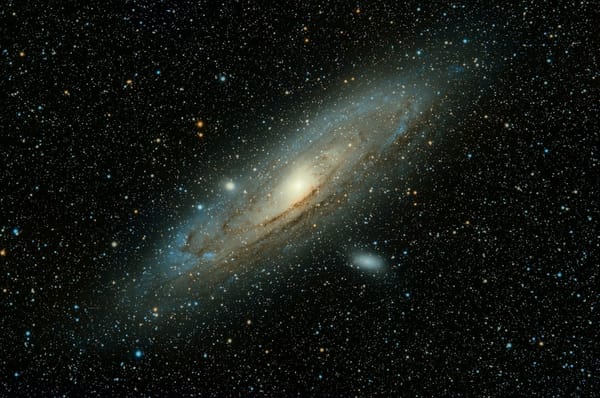
Scientific Research
How Astronomers Rebuilt Andromeda Without Photoshop: The 223-Exposure Secret to Clarity
The Andromeda Galaxy, scientifically designated as M31, looms as our nearest major galactic neighbor. It offers a profound window into the structure and scale of our local universe. Yet capturing its true essence remains a formidable challenge for both amateur and professional a…
Read More...
Scientific Research
La Palma: How the LST-1 Telescope Captured a Perseid Meteor Reflection Against the Milky Way
On August 15, the night sky above the Canary Islands offered a stunning visual intersection of cosmic phenomena. A bright meteor from the Perseid shower streaked across the darkness above the Observatorio del Roque de los Muchachos on La Palma, Spain. The resulting image capture…
Read More...