
See NASA's New Lunar Health Risk Data: What Changes for Astronauts on 30, 180, and 400+ Day Missions
We compile, generate and translate using Artificial Intelligence from the below given source. Macro Micro News is responsible for its editorial publication.
Washington, D.C., Source :.
What happens when an astronaut needs medical help and Earth is more than 200,000 miles away? NASA has a simulation for that. The new Integrated Medical Model runs for lunar orbit and lunar surface missions give mission planners something they have wanted for a while: a numbers-based way to match health risks with mission design.
The model pulls together clinical evidence, mission timelines, vehicle constraints, and medical supply data. It then estimates the likelihood of different medical conditions and how those conditions could affect mission objectives. The latest release sorts the findings by mission duration, which makes sense because a 10-day flight and a 400-day expedition are very different medical challenges.
For short missions, the analysis covers a 10.5-day Orion optimization, a 2024 lunar scenario, and a cis-lunar orbiter docked probabilistic risk assessment. That term refers to a spacecraft in the region between Earth and the Moon. These runs produce duration-based medical risk estimates, detailed lunar risk figures, and aggregate risk results for a single cis-lunar orbiter mission and for five cis-lunar missions. The same data also helps validate the Orion medical kit, so it aligns with the conditions most likely to show up during early Artemis flights.
The docked cis-lunar scenario is one of the more interesting additions. Picture Orion attached to a small orbiting station near the Moon. If a medical issue appears, the crew cannot simply turn around and head back the way they would from low Earth orbit. The model captures that constraint, which helps planners see which conditions become mission-critical when a quick return is not an option.
The next range covers missions from 31 to 180 days. Here the focus shifts to longer lunar expeditions, including an Artemis 32-day Design Reference Mission. That profile represents a more extended stay in the lunar environment. It shows how cumulative medical risk starts to climb when the crew remains beyond that initial short window. The repeated five-mission cis-lunar analysis in this group lets planners compare different mission classes and see whether a series of flights adds meaningful risk on top of each individual trip.
When you move into the 181 to 400+ day group, the emphasis changes again. These runs continue to refine duration-based risk and multi-mission risk for cis-lunar operations. Long-duration lunar flights need different medical capabilities than short Orion missions. More time in space means more exposure to microgravity, radiation, and isolation, all of which influence the type and severity of conditions the model has to consider. These runs fold those factors into the probabilities and clinical outcomes mission planners rely on.
The transparency here comes from Clinical Finding Forms, or CliFFs. Each form describes how a medical condition is recognized, what clinical findings are expected, and how the condition is represented in the simulation. For example, there is a lower extremity stress fracture CliFF, a condition that makes sense given the physical demands of walking and working on the lunar surface. With these forms, space medicine professionals can look at the model outputs with a consistent clinical lens and actually see the reasoning behind the numbers.
NASA reminds teams to use the results with care and weigh the credibility of each output. The IMM gives space medicine professionals a common baseline to compare scenarios, test medical kits, and set mission requirements. It works together with clinical judgment, and it makes the underlying assumptions easier to examine.
The current resource also includes a low Earth orbit category. Martian orbit and surface runs, plus deep space exploration scenarios, are listed as coming soon. When they arrive, they will use the same Integrated Medical Model framework. That means the structure being used to support lunar missions today will already be in place for another giant leap toward Mars.
This new set of IMM runs is one more sign of how seriously NASA treats the human side of exploration. By pairing clinical evidence with mission-specific constraints and probabilistic risk analysis, the agency can make smarter choices about medical supplies, crew training, and operational rules. As Artemis evolves from quick trips to longer stays around the Moon, these models will help make sure the right support is there, even when Earth is far away.
Related in Scientific Research

Scientific Research
PLOS Climate: How Open Access is Reshaping Global Warming Research
The landscape of scientific communication is shifting rapidly. Integrity and accessibility are no longer just nice-to-haves but essential pillars of modern research. PLOS Climate stands at the center of this transformation. This journal from the Public Library of Science in Cali…
Read More...
Scientific Research
PLOS Climate: Navigating Broken Links to Access Critical Global Warming Research
The digital landscape of scientific publishing is shifting rapidly. For researchers and enthusiasts alike, the ability to access peer-reviewed work without barriers is essential. PLOS, a nonprofit based in California, has long championed open access. Their journal PLOS Climate f…
Read More...
Scientific Research
How PLOS Climate Is Reshaping Global Science: The Open Access Advantage
In the fast-moving world of scientific communication, open access journals are doing more than just sharing papers. They are breaking down walls that have long kept knowledge out of reach. PLOS Climate stands at the center of this shift. As a key part of the Public Library of Sc…
Read More...
Scientific Research
PLOS Climate: How Open Science is Reshaping Global Data Access
The digital landscape of scientific publishing is undergoing a profound transformation. This shift is driven by the urgent need for transparency and rapid dissemination of critical research. PLOS Climate stands at the forefront of this movement. It is a specialized journal dedic…
Read More...
Scientific Research
PLOS Climate 404 Errors: How Link Rot Threatens Scientific Trust and What You Can Do
The digital landscape of scientific communication is shifting rapidly. For researchers, policymakers, and educators, the integrity of open-access journals like PLOS Climate is not just a convenience but a necessity. Yet, even the most robust platforms face technical hurdles. A r…
Read More...
Scientific Research
PLOS Climate: How Open Access is Reshaping Global Warming Solutions
The landscape of scientific publishing is shifting beneath our feet. Accessibility and transparency are no longer just nice-to-have features; they are the bedrock upon which we address the most pressing challenges of our time. The Public Library of Science (PLOS), a nonprofit ba…
Read More...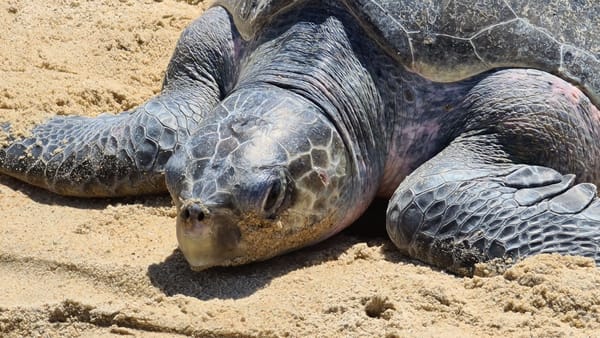
Scientific Research
California Beaches See First Olive Ridley Nesting: What This Means for Sea Turtle Conservation
Marine biologists are witnessing a historic shift in ocean ecology. On September 16, 2026, an olive ridley sea turtle laid eggs on a beach near Seal Beach in Orange County, California. This event marks the first confirmed nesting of this species on the U.S. West Coast. Historica…
Read More...
Scientific Research
PLOS Climate: Why Broken Links Threaten Global Science Access
The digital landscape of scientific communication is shifting beneath our feet. As climate research accelerates, the integrity and accessibility of this data have become paramount. Specialized journals like PLOS Climate face constant challenges regarding content availability and…
Read More...
Scientific Research
Why Climate Data Links Fail: The Open Access Fix You Need Now
Imagine clicking a link to the latest climate study only to hit a dead end. That frustrating 'Page Not Found' error is more than a technical glitch. It represents a significant barrier in the fight against misinformation and delayed action. When vital research on global warming…
Read More...
Scientific Research
What Color Is the Universe? The Surprising Beige Answer from Johns Hopkins
For centuries humanity has gazed into the night sky captivated by vibrant nebulae and dying stars. Yet a deceptively simple question remains elusive to the naked eye. What is the average color of the entire universe? The answer defies expectations of deep cosmic blues or brillia…
Read More...