
Solar Storms 101: What Dr. Richard Fisher Wants You to Know About Space Weather and Your Everyday Technology
We compile, generate and translate using Artificial Intelligence from the below given source. Macro Micro News is responsible for its editorial publication.
Washington, D.C., Source :
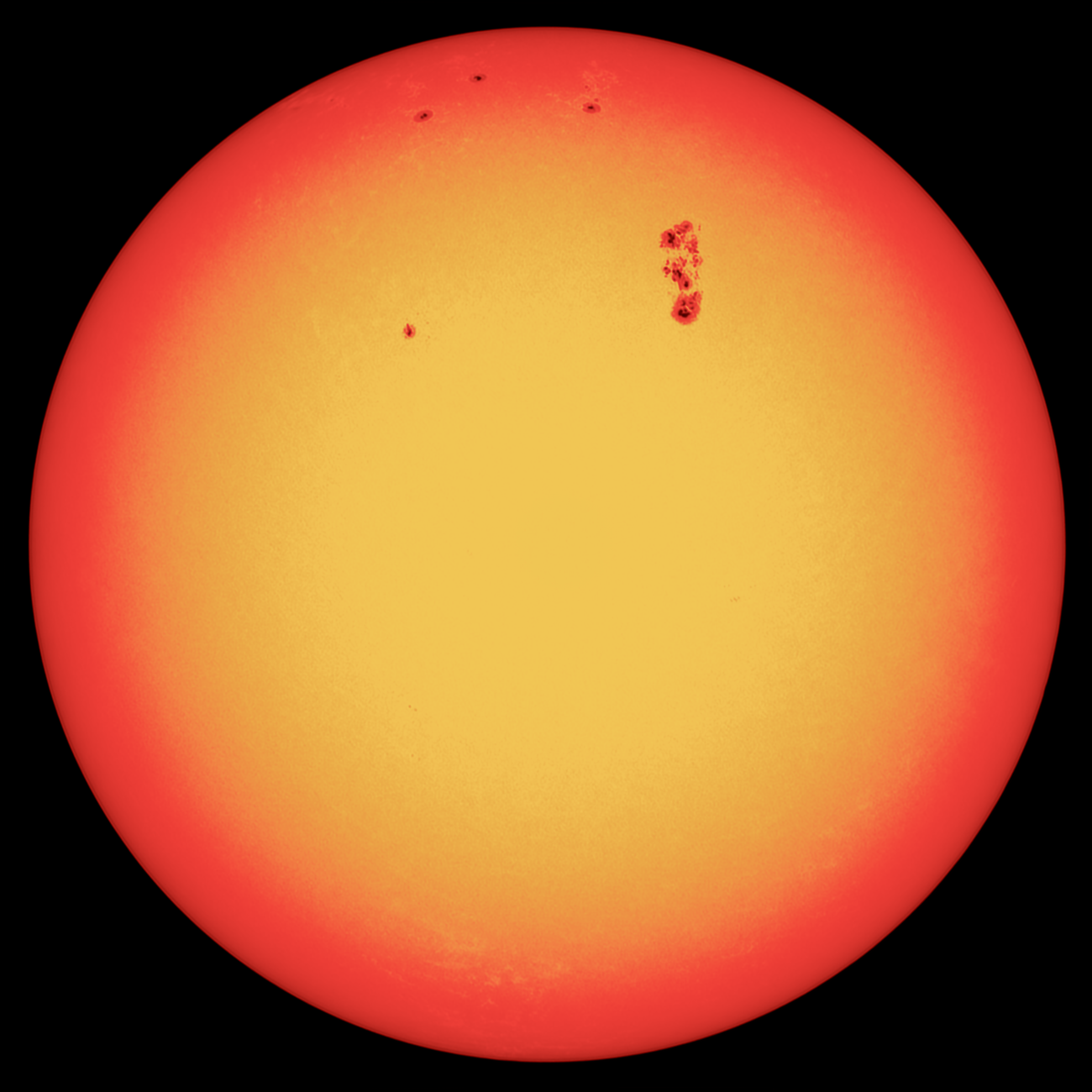
You might picture the Sun as a steady golden disc. Up close, it never sits still. It constantly pushes charged particles and magnetic fields outward in all directions. When that stream reaches Earth, we call it space weather. Dr. Richard Fisher knows this landscape well. He spent years leading NASA's heliophysics research, and in the Space Weather Living History interview he opens up about how solar activity shapes our world.
The interview is part of a free educational package for grades 6 through 12 and beyond. It includes a 21.85 MB MPEG audio file, a 29.23 KB transcript, and a short biography. The materials match NGSS standards ESS3, PS1, and PS2. They also reflect the core ideas of heliophysics. The Sun is an active, magnetic star made of plasma. It is the primary source of light and energy for Earth. And it constantly changes.
One part of the Sun that fascinates Fisher is the corona, the outer atmosphere that appears as a soft white halo during a total eclipse. Here is a puzzle for you. The corona is much hotter than the Sun's surface. The surface sits around 10,000 degrees Fahrenheit, while the corona reaches millions of degrees. How can that be? Fisher points to magnetic fields. Plasma churns below the surface, twisting and stretching the Sun's magnetic field lines. When those lines reconnect, they release enormous energy in the form of solar flares and coronal mass ejections.
A single coronal mass ejection can toss billions of tons of plasma into space. If that cloud travels toward Earth, it meets the magnetosphere, the magnetic bubble around our planet. The impact creates a geomagnetic storm. Auroras are the visual high point of these storms. The same event can interact with satellites, radio communications, GPS signals, and power grids. That interaction gives researchers a strong reason to watch the Sun so closely.
Consider the Carrington Event of 1859. A powerful solar storm produced auroras so bright that people near the equator could read at night. Telegraph stations crackled with energy. Today, a storm of that scale would present a serious workout for modern networks. Scientists study historical storms like this one to improve their forecasts and keep infrastructure informed.
NASA's current missions give Fisher's explanations a technological backbone. The Solar Dynamics Observatory observes the Sun's magnetic field and corona in vivid detail. The twin STEREO spacecraft watch coronal mass ejections from two different angles, creating a three-dimensional picture of how these structures travel. The Magnetospheric Multiscale mission, known as MMS, investigates magnetic reconnection near Earth. Every mission adds a piece to the puzzle.
What makes the Living History interview special is the human element. Fisher talks about the long stretches of research, the surprises in the data, and the excitement of seeing a theory become clear. The transcript supports close reading, and the mission examples connect to classroom topics like Earth and Human Activity and Motion and Stability. It is a primary source that brings a complex science down to Earth.
Space weather is relevant to anyone who uses satellites, follows navigation, or relies on electricity. That includes most of us. Astronauts work with space weather in mind. Power companies plan around geomagnetic storms. Engineers design satellites to survive them. Understanding the Sun is a practical skill, and Fisher's recorded conversation captures a key chapter in NASA's story. It also invites the next generation to listen, learn, and discover what a star can do. Once you hear his story, daylight will feel a little more alive.
Related in Scientific Research
Scientific Research
PLOS Climate: How Open Access is Reshaping Global Warming Research
The landscape of scientific communication is shifting rapidly. Integrity and accessibility are no longer just nice-to-haves but essential pillars of modern research. PLOS Climate stands at the center of this transformation. This journal from the Public Library of Science in Cali…
Read More...
Scientific Research
PLOS Climate: Navigating Broken Links to Access Critical Global Warming Research
The digital landscape of scientific publishing is shifting rapidly. For researchers and enthusiasts alike, the ability to access peer-reviewed work without barriers is essential. PLOS, a nonprofit based in California, has long championed open access. Their journal PLOS Climate f…
Read More...
Scientific Research
How PLOS Climate Is Reshaping Global Science: The Open Access Advantage
In the fast-moving world of scientific communication, open access journals are doing more than just sharing papers. They are breaking down walls that have long kept knowledge out of reach. PLOS Climate stands at the center of this shift. As a key part of the Public Library of Sc…
Read More...
Scientific Research
PLOS Climate: How Open Science is Reshaping Global Data Access
The digital landscape of scientific publishing is undergoing a profound transformation. This shift is driven by the urgent need for transparency and rapid dissemination of critical research. PLOS Climate stands at the forefront of this movement. It is a specialized journal dedic…
Read More...
Scientific Research
PLOS Climate 404 Errors: How Link Rot Threatens Scientific Trust and What You Can Do
The digital landscape of scientific communication is shifting rapidly. For researchers, policymakers, and educators, the integrity of open-access journals like PLOS Climate is not just a convenience but a necessity. Yet, even the most robust platforms face technical hurdles. A r…
Read More...
Scientific Research
PLOS Climate: How Open Access is Reshaping Global Warming Solutions
The landscape of scientific publishing is shifting beneath our feet. Accessibility and transparency are no longer just nice-to-have features; they are the bedrock upon which we address the most pressing challenges of our time. The Public Library of Science (PLOS), a nonprofit ba…
Read More...
Scientific Research
California Beaches See First Olive Ridley Nesting: What This Means for Sea Turtle Conservation
Marine biologists are witnessing a historic shift in ocean ecology. On September 16, 2026, an olive ridley sea turtle laid eggs on a beach near Seal Beach in Orange County, California. This event marks the first confirmed nesting of this species on the U.S. West Coast. Historica…
Read More...
Scientific Research
PLOS Climate: Why Broken Links Threaten Global Science Access
The digital landscape of scientific communication is shifting beneath our feet. As climate research accelerates, the integrity and accessibility of this data have become paramount. Specialized journals like PLOS Climate face constant challenges regarding content availability and…
Read More...
Scientific Research
Why Climate Data Links Fail: The Open Access Fix You Need Now
Imagine clicking a link to the latest climate study only to hit a dead end. That frustrating 'Page Not Found' error is more than a technical glitch. It represents a significant barrier in the fight against misinformation and delayed action. When vital research on global warming…
Read More...
Scientific Research
What Color Is the Universe? The Surprising Beige Answer from Johns Hopkins
For centuries humanity has gazed into the night sky captivated by vibrant nebulae and dying stars. Yet a deceptively simple question remains elusive to the naked eye. What is the average color of the entire universe? The answer defies expectations of deep cosmic blues or brillia…
Read More...