
Vitamin C and Cancer: Linus Pauling's Legacy Deserves a Serious Second Look
We compile, generate and translate using Artificial Intelligence from the below given source. Macro Micro News is responsible for its editorial publication.
Corvallis, Oregon, MMN Correspondent: Linus Pauling stood at the summit of twentieth century science. He earned two Nobel Prizes, one for chemistry and one for peace, and his research on chemical bonds and protein structure helped build modern molecular biology. Then, in his final decades, he turned his attention to vitamin C. His claim that massive doses could treat cancer generated intense debate among oncologists and drew strong support from patients seeking new options.
When Pauling died of cancer at 93, the response was mixed. Some observers saw the loss as a caution that fame can overextend a scientist's influence. Others saw the same loss as evidence that no single nutrient could reverse every disease. In that moment, the full picture was easy to miss.
A few decades later, the vitamin C story has come back to life. Scientists are not trying to prove that Pauling was right. They are asking a more focused question: Can vitamin C, delivered in a specific way and at a specific dose, influence cancer cells? The early answers are unexpectedly interesting.
The original experiment took shape in the 1970s. Pauling worked alongside Scottish physician Ewan Cameron, treating advanced cancer patients with very high doses of vitamin C. The treatment began intravenously and continued with oral doses. The two men reported longer survival times and a better quality of life for their patients. Those results attracted attention because the patients involved had few other options left.
When the Mayo Clinic put the idea to the test, the results did not match. Patients who swallowed vitamin C pills saw no survival advantage. For most medical teams, that closed the conversation. The topic moved out of mainstream cancer research, and Pauling's campaign became a case study in scientific disagreement.
What nobody paid enough attention to at the time was the difference between swallowing and infusing. The stomach and intestine can absorb only so much vitamin C. Past that limit, extra pills simply pass through. Blood levels stay nearly flat, no matter how large the dose. Pauling and Cameron had started with intravenous therapy, which bypasses that ceiling entirely.
Intravenous vitamin C reaches blood concentrations that are dramatically higher than anything oral tablets can produce. Those concentrations are not just high. At those levels, the substance starts doing something different.
Under ordinary conditions, vitamin C behaves as an antioxidant. It neutralizes free radicals and protects healthy tissue. In the presence of certain tumors, at pharmacological doses, it can generate hydrogen peroxide. That molecule is a reactive oxygen species, and it places sudden stress on cells already struggling with high levels of oxidative damage.
Cancer cells are often running on reserve. They divide quickly, grow in difficult environments, and carry a heavy internal burden of reactive molecules. Their antioxidant systems are already stretched. When vitamin C infusions add hydrogen peroxide to that mixture, the result can be damaged DNA, disrupted mitochondria, and cell death. Normal cells have more protective capacity and tend to survive the surge.
This is a different mechanism from the gentle antioxidant story most people have heard. It is more like a selective chemotherapy agent. And it only appears at the extreme concentrations that intravenous administration can provide.
Current clinical research remains cautious and early. Small studies have included patients with pancreatic, lung, and ovarian cancers. Many have received intravenous vitamin C several times each week. Most patients tolerate it well. Those with kidney disease or glucose-6-phosphate dehydrogenase deficiency need special attention. This is not a benign wellness drip, and it should not be treated as one.
Some trials show modest gains. Patients who receive vitamin C alongside standard chemotherapy may live slightly longer or face fewer side effects. Other trials show no clear survival benefit. The consistent signal is quality of life. People report less fatigue, less pain, and less nausea during treatment. For someone confronting advanced cancer, that matters a great deal.
In the laboratory, vitamin C continues to reveal unexpected layers. It participates in epigenetic regulation, which determines how genes are expressed. It also influences cell division and responses to low oxygen. In many experiments, high concentrations of vitamin C slow cancer cell growth and increase sensitivity to other therapies. Researchers are exploring whether it can also help immune cells recognize tumors. Those are early days, and the direction is promising.
So where does this leave Pauling's legacy? He was not entirely correct. Oral vitamin C pills do not cure cancer, and large clinical trials never showed that swallowing supplements extends life for people with established disease. He also overreached by recommending vitamin C for a broad range of conditions. None of that has changed.
At the same time, he was onto something genuine. He had a reason to insist that intravenous dosing would behave differently from oral dosing, long before the scientific framework existed to explain the mechanism. That intuition has now received substantial experimental support. High dose intravenous vitamin C is not a magic bullet. It is a promising area of study that deserves careful, well-designed trials.
What remains missing is the definitive experiment. Large randomized controlled trials with enough patients to provide clear answers have not yet been completed. Until they are, intravenous vitamin C should stay inside the boundaries of research and supervised medical care. It should not be sold as an immune boost in wellness clinics, and it should not be seen as a replacement for established treatment.
The story of vitamin C and cancer is far from over. It weaves through brilliance, error, debate, and quiet scientific discovery. Pauling may never receive full vindication. His ability to see a tiny thread of truth, before the rest of the world could follow it, is exactly the kind of instinct science needs more of.
Related in Scientific Research

Scientific Research
PLOS Climate: How Open Access is Reshaping Global Warming Research
The landscape of scientific communication is shifting rapidly. Integrity and accessibility are no longer just nice-to-haves but essential pillars of modern research. PLOS Climate stands at the center of this transformation. This journal from the Public Library of Science in Cali…
Read More...
Scientific Research
PLOS Climate: Navigating Broken Links to Access Critical Global Warming Research
The digital landscape of scientific publishing is shifting rapidly. For researchers and enthusiasts alike, the ability to access peer-reviewed work without barriers is essential. PLOS, a nonprofit based in California, has long championed open access. Their journal PLOS Climate f…
Read More...
Scientific Research
How PLOS Climate Is Reshaping Global Science: The Open Access Advantage
In the fast-moving world of scientific communication, open access journals are doing more than just sharing papers. They are breaking down walls that have long kept knowledge out of reach. PLOS Climate stands at the center of this shift. As a key part of the Public Library of Sc…
Read More...
Scientific Research
PLOS Climate: How Open Science is Reshaping Global Data Access
The digital landscape of scientific publishing is undergoing a profound transformation. This shift is driven by the urgent need for transparency and rapid dissemination of critical research. PLOS Climate stands at the forefront of this movement. It is a specialized journal dedic…
Read More...
Scientific Research
PLOS Climate 404 Errors: How Link Rot Threatens Scientific Trust and What You Can Do
The digital landscape of scientific communication is shifting rapidly. For researchers, policymakers, and educators, the integrity of open-access journals like PLOS Climate is not just a convenience but a necessity. Yet, even the most robust platforms face technical hurdles. A r…
Read More...
Scientific Research
PLOS Climate: How Open Access is Reshaping Global Warming Solutions
The landscape of scientific publishing is shifting beneath our feet. Accessibility and transparency are no longer just nice-to-have features; they are the bedrock upon which we address the most pressing challenges of our time. The Public Library of Science (PLOS), a nonprofit ba…
Read More...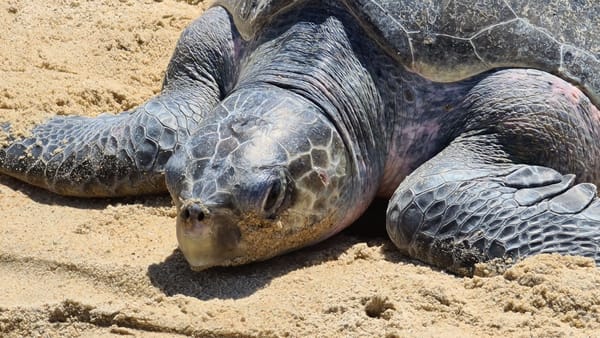
Scientific Research
California Beaches See First Olive Ridley Nesting: What This Means for Sea Turtle Conservation
Marine biologists are witnessing a historic shift in ocean ecology. On September 16, 2026, an olive ridley sea turtle laid eggs on a beach near Seal Beach in Orange County, California. This event marks the first confirmed nesting of this species on the U.S. West Coast. Historica…
Read More...
Scientific Research
PLOS Climate: Why Broken Links Threaten Global Science Access
The digital landscape of scientific communication is shifting beneath our feet. As climate research accelerates, the integrity and accessibility of this data have become paramount. Specialized journals like PLOS Climate face constant challenges regarding content availability and…
Read More...
Scientific Research
Why Climate Data Links Fail: The Open Access Fix You Need Now
Imagine clicking a link to the latest climate study only to hit a dead end. That frustrating 'Page Not Found' error is more than a technical glitch. It represents a significant barrier in the fight against misinformation and delayed action. When vital research on global warming…
Read More...
Scientific Research
What Color Is the Universe? The Surprising Beige Answer from Johns Hopkins
For centuries humanity has gazed into the night sky captivated by vibrant nebulae and dying stars. Yet a deceptively simple question remains elusive to the naked eye. What is the average color of the entire universe? The answer defies expectations of deep cosmic blues or brillia…
Read More...