
Voyager 2 at Neptune: The Last Look from the Edge of Our Solar System
We compile, generate and translate using Artificial Intelligence from the below given source. Macro Micro News is responsible for its editorial publication.

Washington, United States, Source:
On November 21, 2026, NASA’s Astronomy Picture of the Day showcases a breathtaking composite image of Neptune. This visual record comes from Voyager 2, the only spacecraft to ever visit this ice giant during its historic flyby. The image stands as a powerful testament to human ingenuity and the enduring legacy of deep-space exploration. It offers a rare perspective of the solar system’s most distant planet from an interplanetary vantage point.
Voyager 2 achieved its closest approach to Neptune on August 25, 1989. During this brief but critical encounter, the probe captured high-resolution images that revealed the planet’s complex atmospheric dynamics. These visuals also highlighted its faint ring system and its largest moon, Triton. The data gathered during this mission fundamentally transformed our understanding of the outer solar system. Neptune shifted from a distant, blurry point of light to a world defined by dynamic weather patterns and geological activity.
The featured image presents a unique view from just beyond Neptune’s orbit, looking back toward the Sun. In this composition, Neptune and Triton appear as thin crescents, illuminated by the distant sun. The image captures distinct features such as a dark band circling Neptune’s south polar region and a cloudy vortex situated above the pole. These atmospheric details were first imaged by Voyager during the flyby, providing scientists with crucial insights into the planet’s meteorological behavior.
Additionally, the image includes parts of Neptune’s ring system, along with three bright ring arcs. While the faintest segments are modeled in this composited picture, the bright arcs were directly observed by Voyager. This marked a significant discovery in planetary science, revealing structures that were previously unknown. The background starfield spans 7.5 degrees and is composed from sky survey data centered on the constellation Camelopardalis. This corresponds to the outbound view of Voyager 2 as it continued its journey into interstellar space.
As of 2026, Voyager 2 continues to cruise through the heliosheath. It sends back data about the boundary between our solar system and interstellar space. Its continued operation underscores the durability of its design and the importance of long-term scientific missions. This image not only celebrates a historical milestone but also reminds us of the vastness of the cosmos and the technological achievements that allow us to explore it.
The Voyager missions have provided invaluable data that continue to inform current research on planetary formation, atmospheric physics, and the structure of the heliosphere. As we look to the future, the legacy of Voyager 2 inspires new generations of astronomers and engineers to push the boundaries of human knowledge further into the unknown.
Related in Space Tech
Space Tech
Pegasus Galaxy Collision: What Happens When NGC 7771 Merges?
The cosmos operates on a scale that defies human intuition. Galaxies are not static objects floating in void but dynamic entities engaged in a slow-motion dance spanning billions of years. The NGC 7771 group offers a striking glimpse into this celestial choreography. Located app…
Read More...
Space Tech
Lynds 1251: How Dark Dust Clouds Ignite New Stars in the Cosmos
The cosmos often feels like a silent void, but that darkness is actually a canvas waiting for creation. On November 23, 2026, the Astronomy Picture of the Day featured Lynds 1251, a dark nebula affectionately called the Rotten Fish Nebula. This image does more than show empty sp…
Read More...
Space Tech
Jupiter's Color Code: How Juno Deciphers the Gas Giant's Atmospheric Palette
The gas giant Jupiter has long captivated astronomers with its dynamic atmosphere, a swirling canvas of storms and bands that have been observed for centuries. However, the precise chemical mechanisms behind the planet's vibrant hues remain one of astrophysics' enduring enigmas.…
Read More...
Space Tech
Voyager 1 Enters Interstellar Space: The Historic Milestone of November 2026
On November 20, 2026, the astronomical community marked a profound milestone as NASA’s Astronomy Picture of the Day highlighted the historic journey of Voyager 1. The featured image, captured by the Emirates Astronomical Observatory, depicts a time-exposure photograph where Mors…
Read More...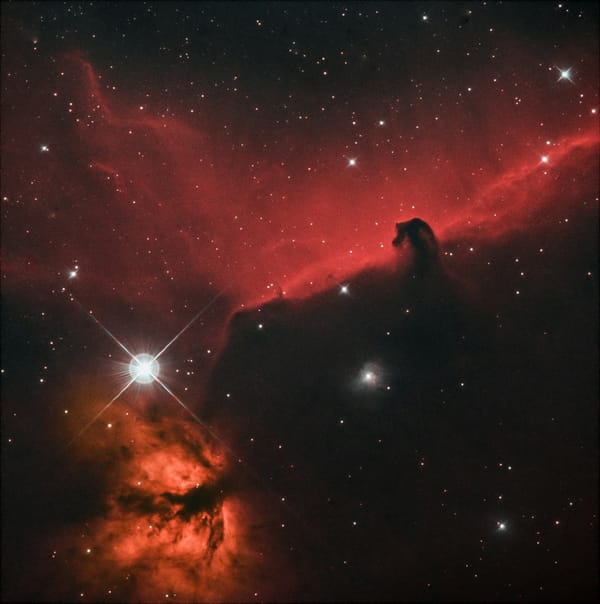
Space Tech
Orion's Cosmic Canvas: Horsehead and Flame Nebulas Revealed in Stunning Detail
The night sky often serves as a canvas for some of the most breathtaking natural artistry in the universe. Few images capture this essence quite like the combined view of the Horsehead and Flame Nebulas. This celestial scene offers a profound glimpse into the dynamic processes o…
Read More...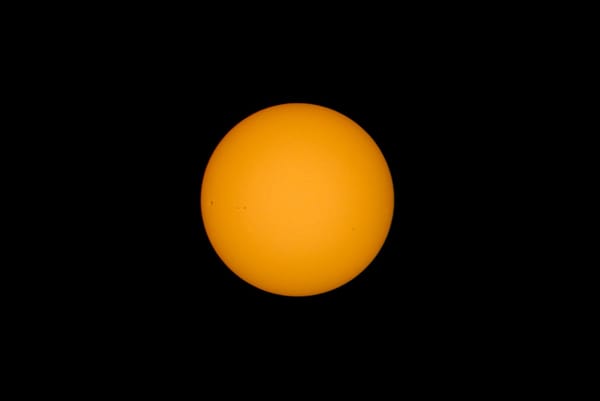
Space Tech
M-Class Solar Flare: How NASA's New Image Reveals the Sun's Extreme Heat Mystery
On November 18, 2026, NASA’s Astronomy Picture of the Day shared a striking image captured on May 14, 2025. This visual record highlights an M-class solar flare and invites you to look closer at the dynamic processes shaping our star. The photograph displays bright loops of plas…
Read More...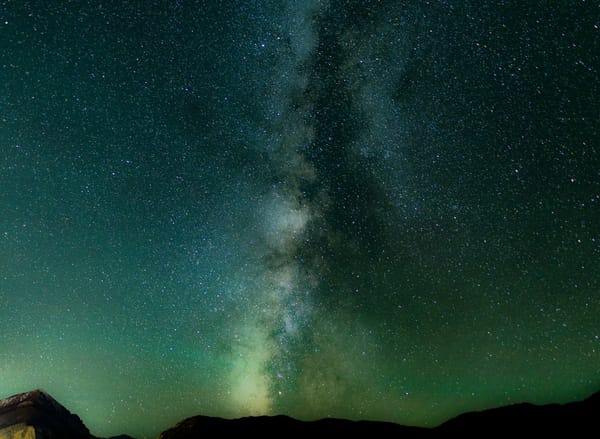
Space Tech
Milky Way Meets Aurora: The Rare Sky Event of November 17, 2026
On November 17, 2026, the night sky presented a breathtaking spectacle that blurred the lines between the distant cosmos and our immediate atmospheric environment. Captured in northern regions, an image revealed two majestic arches dominating the heavens, creating a visual illus…
Read More...
Space Tech
Webb Telescope Reveals NGC 7129: How Violent Jets Sculpt New Stars
The James Webb Space Telescope has delivered a stunning new view of NGC 7129, a star-forming region located about 3,000 light-years away in the constellation Cepheus. This celestial nursery offers astronomers a rare chance to study how stars are born within chaotic and turbulent…
Read More...
Space Tech
NASA Chandra Data Reveals Why Massive Star AT 2016blu Keeps Exploding
Astronomers have used NASA’s Chandra X-ray Observatory to uncover the reasons behind the erratic behavior of a massive star named AT 2016blu. This discovery offers a clearer picture of how unstable stars evolve and release energy in violent bursts. The star resides in the spiral…
Read More...
Space Tech
NGC 206: Andromeda's Massive Star Nursery Revealed
Deep within the swirling arms of our nearest galactic neighbor lies a celestial jewel that offers a rare glimpse into the vibrant processes of star birth. NGC 206 is a massive stellar association nestled within the spiral structure of the Andromeda Galaxy (M31). This region stan…
Read More...