
Watch Venus Disappear: The Rare Daytime Moon Occultation of September 15, 2026
We compile, generate and translate using Artificial Intelligence from the below given source. Macro Micro News is responsible for its editorial publication.
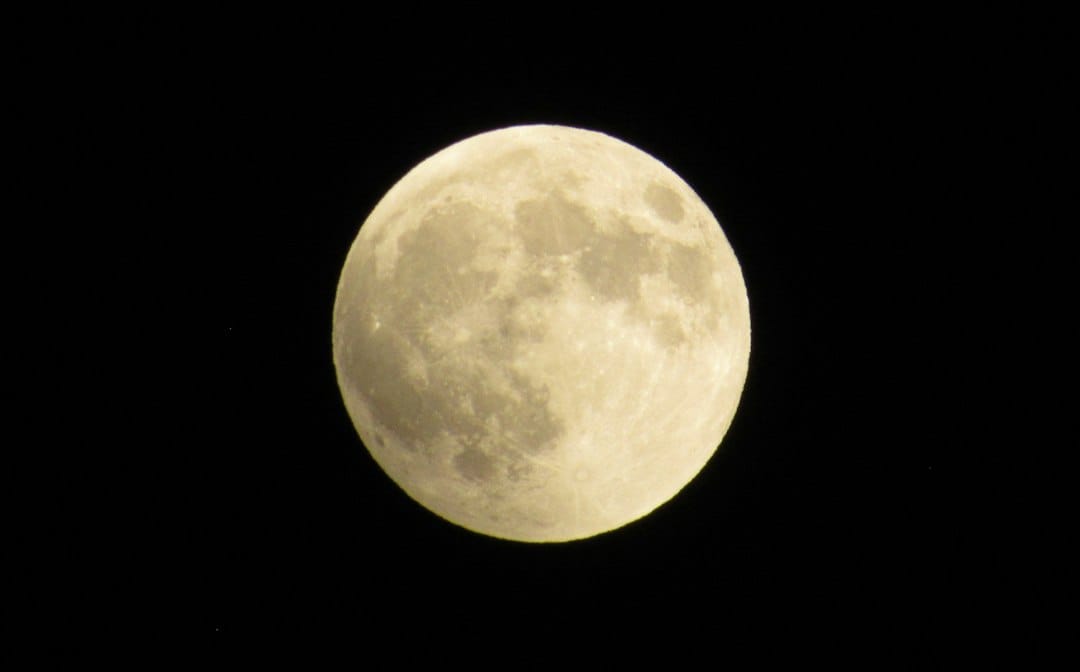
Global, Source: On September 15, 2026, skywatchers around the world witnessed a rare and captivating celestial event. The Moon passed directly in front of the bright planet Venus during daylight hours. This phenomenon is often called a daytime eclipse. It temporarily hid Venus from view against the backdrop of the daytime sky. While such events happen in astronomical terms, seeing them with the naked eye during the day is significantly more challenging due to the glare of the Sun. The event took place around noon local time. This timing made visibility particularly difficult for observers in many regions. In some areas near small villages where cloud cover was present, the initial sighting required close inspection. However, as the alignment progressed, the moment became unmistakable. A bright dot suddenly emerged from behind the dark limb of the Moon. This revealed Venus reappearing into view. This dramatic entrance highlighted the precision of orbital mechanics. Both bodies appeared to show specific phase characteristics visible through telescopic observation or high-quality imaging. Detailed analysis of the event revealed interesting contrasts between the two celestial bodies. The Moon was in a waning crescent phase. Only about 10 percent of its face was illuminated by sunlight. Venus displayed approximately 25 percent illumination. Despite being less fully lit than the Moon, Venus appeared significantly brighter. This counterintuitive brightness is due to two main factors. Venus's proximity to the Sun enhances its apparent luminosity. Its highly reflective cloud tops scatter sunlight more efficiently than the Moon's dusty, rocky surface. Historically, daytime occultations of Venus are visible to only about 10 percent of the global population under ideal conditions. The September 15, 2026 event presented unique challenges. Much of the viewing area experienced overcast skies. This limited direct visual confirmation for many. For those who did witness it, the event served as a powerful reminder of the dynamic nature of our solar system. Such occurrences provide valuable opportunities for amateur astronomers and educators to demonstrate planetary motions and the geometry of the inner solar system. The successful capture of this event, documented in single-frame imagery, underscores the importance of precise timing and clear atmospheric conditions in observational astronomy. As we look toward future celestial alignments, events like this remind us of the intricate dance of planets and moons that continues to inspire scientific curiosity and public engagement with space exploration.
Related in Scientific Research
Scientific Research
NASA Physics of the Cosmos: Third Early Career Workshop for Astrophysicists in September 2026
NASA’s Physics of the Cosmos Program has announced its Third Early Career Workshop, scheduled for September 22 to 24, 2026. This fully virtual event aims to support graduate students, postdoctoral researchers, and early-career scientists by providing critical insights into astro…
Read More...
Scientific Research
Houston Japan Festival 2026: NASA and JAXA Unite to Inspire Future Explorers
On September 12-13, 2026, Hermann Park in Houston buzzed with a unique energy that blended cultural celebration with the thrill of space exploration. The city’s 33rd Annual Japan Festival became more than just a showcase of heritage; it transformed into a hub for international c…
Read More...
Scientific Research
Callanish Stones: How Earth's Orbit Creates a Figure-Eight Sky Over Ancient Scotland
The night sky has long served as a canvas for humanity’s oldest questions. On September 20, 2026, the Astronomy Picture of the Day offers a unique perspective on how our planet moves through space. The featured image captures an analemma, a figure-eight pattern formed by the Sun…
Read More...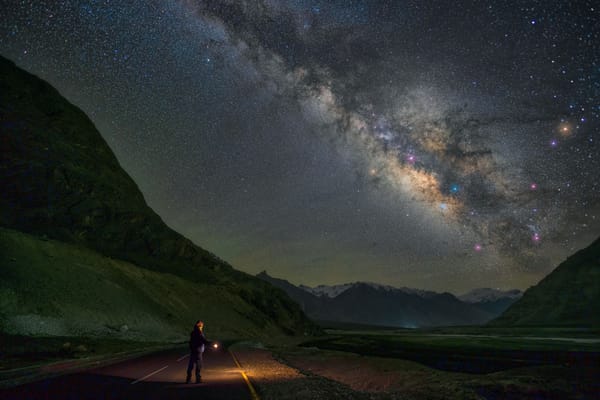
Scientific Research
Ladakh Night Sky: Witness the Zodiacal Light Phenomenon at Hanle Reserve
On September 19, 2026, the night sky over Ladakh, India, offered a breathtaking demonstration of the zodiacal light. This phenomenon remains invisible to most urban dwellers but captivates astronomers and astrophotographers worldwide. Captured at the Hanle Dark Sky Reserve, this…
Read More...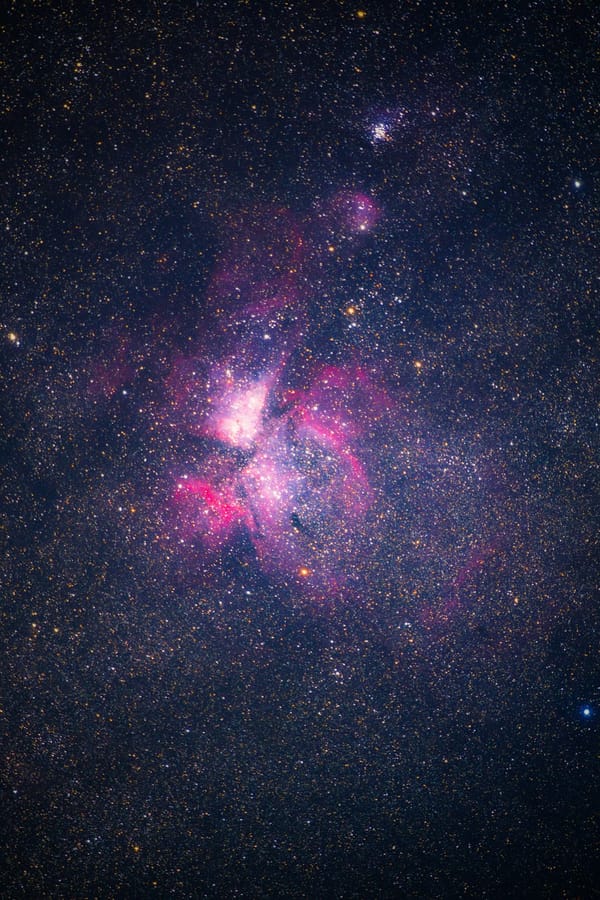
Scientific Research
M33: The Triangulum Galaxy's Star-Forming Secrets and Cosmic Role
Deep within the northern constellation of Triangulum lies one of the most magnificent face-on spiral galaxies in our local cosmic neighborhood. Messier 33, widely known as the Triangulum Galaxy, stands as a testament to the grandeur of spiral structures in the universe. With a d…
Read More...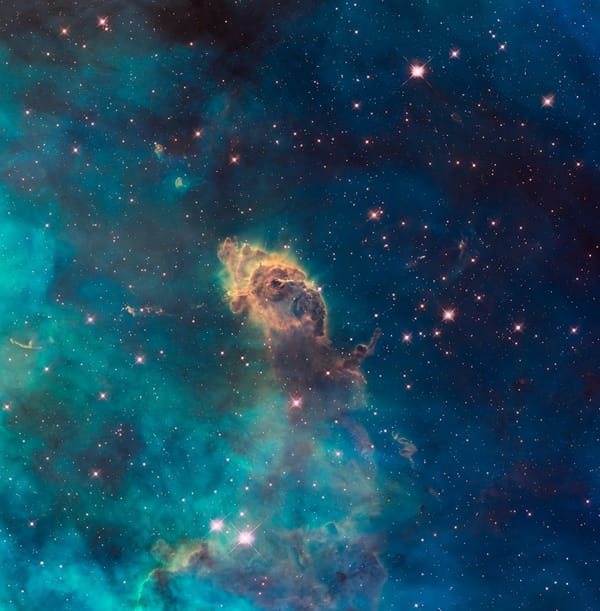
Scientific Research
Carina Nebula: Inside the Stellar Nursery Shaping Giant Stars
Deep within the southern sky, roughly 7,500 light-years from Earth, lies one of the most active star-forming regions in our galaxy. The Carina Nebula stands out as a vast cloud of gas and dust that acts like a cosmic treasure chest. It hides a dense cluster of young stars that a…
Read More...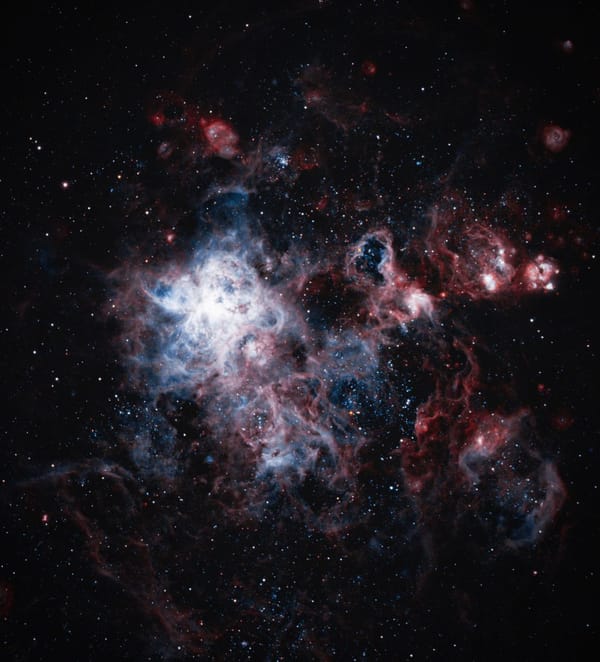
Scientific Research
Webb Telescope Reveals M64's Counter-Rotating Gas: A Galaxy Merger Story
The James Webb Space Telescope has offered astronomers a striking new view of Messier 64, often called the Black Eye Galaxy. This spiral galaxy sits about 17 million light-years away in the constellation Coma Berenices. It is well known for its dark dust band that hides part of…
Read More...
Scientific Research
NASA AI/ML STIG: LLM Agent Foundations for Space Science in September 2026
The convergence of astrophysics and artificial intelligence is poised to take center stage on September 14, 2026. NASA’s Cosmic Origins program will host a pivotal lecture that highlights the integration of advanced computational tools into space science. This event focuses spec…
Read More...
Scientific Research
Comet NEOWISE Over the Adriatic: A Stunning Dawn Display Captured in 2026
On September 13, 2026, the night sky provided a vivid reminder of our solar system's dynamic nature. A stunning composite image of Comet NEOWISE rising over the Adriatic Sea was featured as the Astronomy Picture of the Day by NASA Science. This visual record highlights one of th…
Read More...
Scientific Research
Apollo 11: How One Foil Sheet Captured the Sun's Breath for Science
Global, Source On September 12, 2026, NASA’s Astronomy Picture of the Day brought attention to a pivotal moment from the Apollo 11 mission. The featured image titled "Apollo 11: Catching Some Sun" shows astronaut Buzz Aldrin deploying a specialized device on the lunar surface. T…
Read More...