
XMM-Newton AO-26 Call for Proposals Is Open Until 9 October 2026: Your Rare Invitation to the X-Ray Cosmos
We compile, generate and translate using Artificial Intelligence from the below given source. Macro Micro News is responsible for its editorial publication.
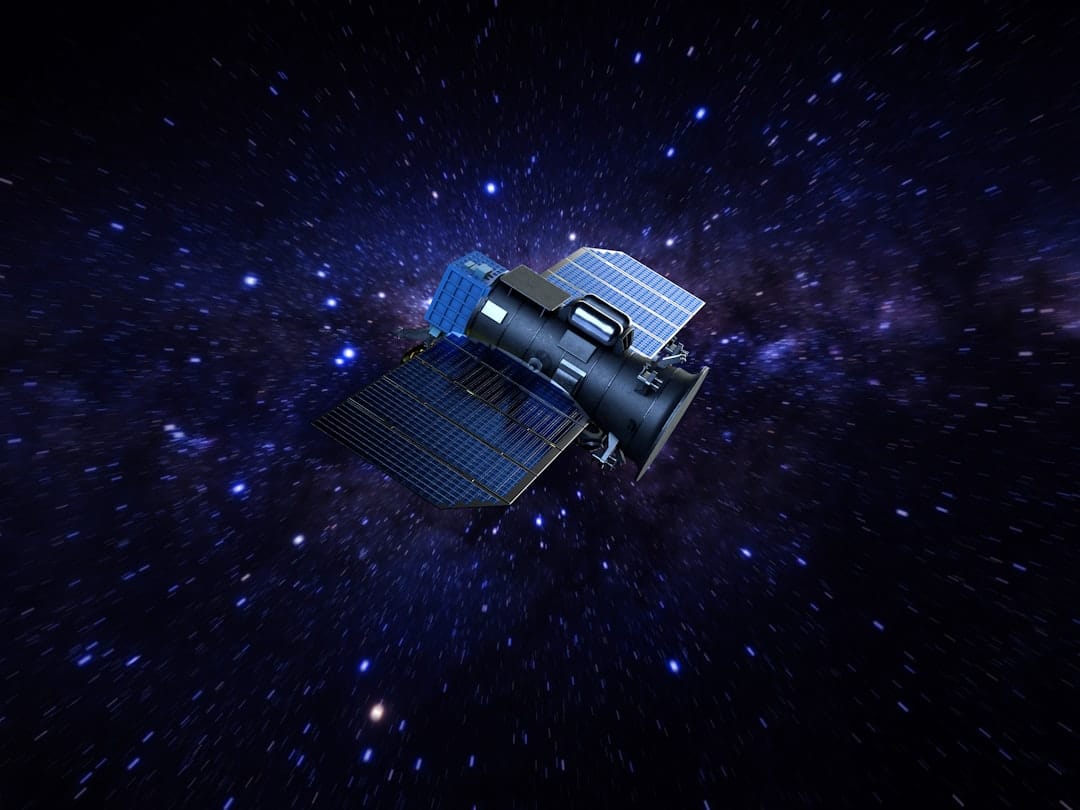
Paris, France, Source :. Astronomers, this one is for you. The European Space Agency, with significant NASA participation, has opened AO-26, the 26th call for XMM-Newton observing proposals. Submissions close on Friday, 9 October 2026 at 12:00 UTC, and the official announcement went out on 19 August 2026. That gives you a solid window to design a program that could answer some of the biggest questions in high-energy astrophysics.
What makes this worth your time? XMM-Newton has been delivering on that promise since December 1999. The X-ray Multi-Mirror Mission, named after Isaac Newton, uses three large telescopes with nested, gold-coated mirrors. Those mirrors are designed to capture X-rays from the most extreme environments in the cosmos. Think of black holes pulling in gas, neutron stars with magnetic fields so strong they reshape matter nearby, supernova remnants moving at thousands of kilometers per second, and galaxy clusters filled with superheated gas. The X-rays from these objects carry information about temperature, density, and motion. XMM-Newton reads that information and gives scientists a way to understand what is happening in places beyond the reach of ordinary telescopes.
Earth's atmosphere absorbs X-rays, so this kind of exploration is reserved for orbit. That makes every XMM-Newton observation a look at processes in the high-energy sky that are otherwise hidden from ground-based instruments. More than that, it makes the observatory a perfect platform for discovering what is changing, what is brightening, and what is moving in that sky.
There is also an unusually broad set of partnerships in this cycle. The XMM-Newton Project has arranged joint observation programs with the Very Large Telescope, NRAO's VLA, GBT, and VLBA, the Hubble Space Telescope, JWST, and the ground-based gamma-ray telescopes HESS and MAGIC. On the X-ray side, proposals can coordinate with Chandra, NuSTAR, Swift, XRISM, and, new for this cycle, IXPE. In practical terms, an approved XMM-Newton program can become part of a true multiwavelength campaign. The same source could appear in radio, optical, infrared, ultraviolet, gamma rays, and multiple X-ray bands, all from one proposal. Some approved programs may even receive observing time on partner facilities through XMM-Newton's own allocation. That is a major advantage if your science depends on correlating activity across the entire spectrum.
The route to those observations is straightforward. You propose specific targets and explain what the data would reveal about extreme gravity, matter under intense conditions, or the formation and evolution of large-scale cosmic structures. A peer review panel then ranks proposals based on scientific priority and technical feasibility. XMM-Newton's high collecting area and long, uninterrupted visibility make it especially well suited to faint-source spectroscopy, timing studies of compact objects, and deep surveys that aim at distant, low-luminosity sources. If your idea needs one of these strengths, the telescope is designed for it.
The formal invitation from ESA's Director of Science has already been distributed, and full details about instrument status, target visibility, and partner observatory procedures are in the official announcement. All proposals must be submitted electronically before the deadline. The cutoff is Friday, 9 October 2026 at 12 noon UTC, or 8 a.m. Eastern Time and 5 a.m. Pacific Time in the United States. With IXPE newly included and coordination opportunities spanning nearly every major telescope in operation, AO-26 could be one of the most competitive and consequential X-ray observing seasons in recent memory. If you have a question that only the X-ray universe can answer, this is your chance to ask it.
Related in Scientific Research

Scientific Research
PLOS Climate: How Open Access is Reshaping Global Warming Research
The landscape of scientific communication is shifting rapidly. Integrity and accessibility are no longer just nice-to-haves but essential pillars of modern research. PLOS Climate stands at the center of this transformation. This journal from the Public Library of Science in Cali…
Read More...
Scientific Research
PLOS Climate: Navigating Broken Links to Access Critical Global Warming Research
The digital landscape of scientific publishing is shifting rapidly. For researchers and enthusiasts alike, the ability to access peer-reviewed work without barriers is essential. PLOS, a nonprofit based in California, has long championed open access. Their journal PLOS Climate f…
Read More...
Scientific Research
How PLOS Climate Is Reshaping Global Science: The Open Access Advantage
In the fast-moving world of scientific communication, open access journals are doing more than just sharing papers. They are breaking down walls that have long kept knowledge out of reach. PLOS Climate stands at the center of this shift. As a key part of the Public Library of Sc…
Read More...
Scientific Research
PLOS Climate: How Open Science is Reshaping Global Data Access
The digital landscape of scientific publishing is undergoing a profound transformation. This shift is driven by the urgent need for transparency and rapid dissemination of critical research. PLOS Climate stands at the forefront of this movement. It is a specialized journal dedic…
Read More...
Scientific Research
PLOS Climate 404 Errors: How Link Rot Threatens Scientific Trust and What You Can Do
The digital landscape of scientific communication is shifting rapidly. For researchers, policymakers, and educators, the integrity of open-access journals like PLOS Climate is not just a convenience but a necessity. Yet, even the most robust platforms face technical hurdles. A r…
Read More...
Scientific Research
PLOS Climate: How Open Access is Reshaping Global Warming Solutions
The landscape of scientific publishing is shifting beneath our feet. Accessibility and transparency are no longer just nice-to-have features; they are the bedrock upon which we address the most pressing challenges of our time. The Public Library of Science (PLOS), a nonprofit ba…
Read More...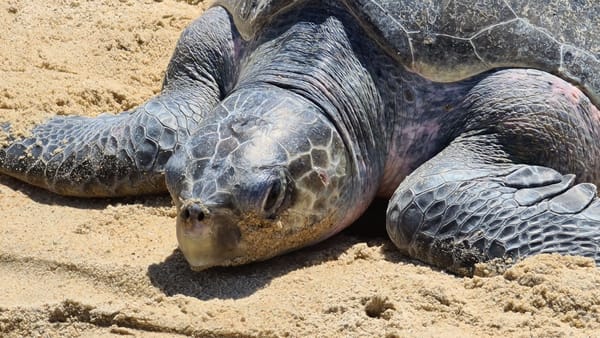
Scientific Research
California Beaches See First Olive Ridley Nesting: What This Means for Sea Turtle Conservation
Marine biologists are witnessing a historic shift in ocean ecology. On September 16, 2026, an olive ridley sea turtle laid eggs on a beach near Seal Beach in Orange County, California. This event marks the first confirmed nesting of this species on the U.S. West Coast. Historica…
Read More...
Scientific Research
PLOS Climate: Why Broken Links Threaten Global Science Access
The digital landscape of scientific communication is shifting beneath our feet. As climate research accelerates, the integrity and accessibility of this data have become paramount. Specialized journals like PLOS Climate face constant challenges regarding content availability and…
Read More...
Scientific Research
Why Climate Data Links Fail: The Open Access Fix You Need Now
Imagine clicking a link to the latest climate study only to hit a dead end. That frustrating 'Page Not Found' error is more than a technical glitch. It represents a significant barrier in the fight against misinformation and delayed action. When vital research on global warming…
Read More...
Scientific Research
What Color Is the Universe? The Surprising Beige Answer from Johns Hopkins
For centuries humanity has gazed into the night sky captivated by vibrant nebulae and dying stars. Yet a deceptively simple question remains elusive to the naked eye. What is the average color of the entire universe? The answer defies expectations of deep cosmic blues or brillia…
Read More...