
Your Brain’s Craving Center: How Ozempic Helped Researchers Find It
We compile, generate and translate using Artificial Intelligence from the below given source. Macro Micro News is responsible for its editorial publication.
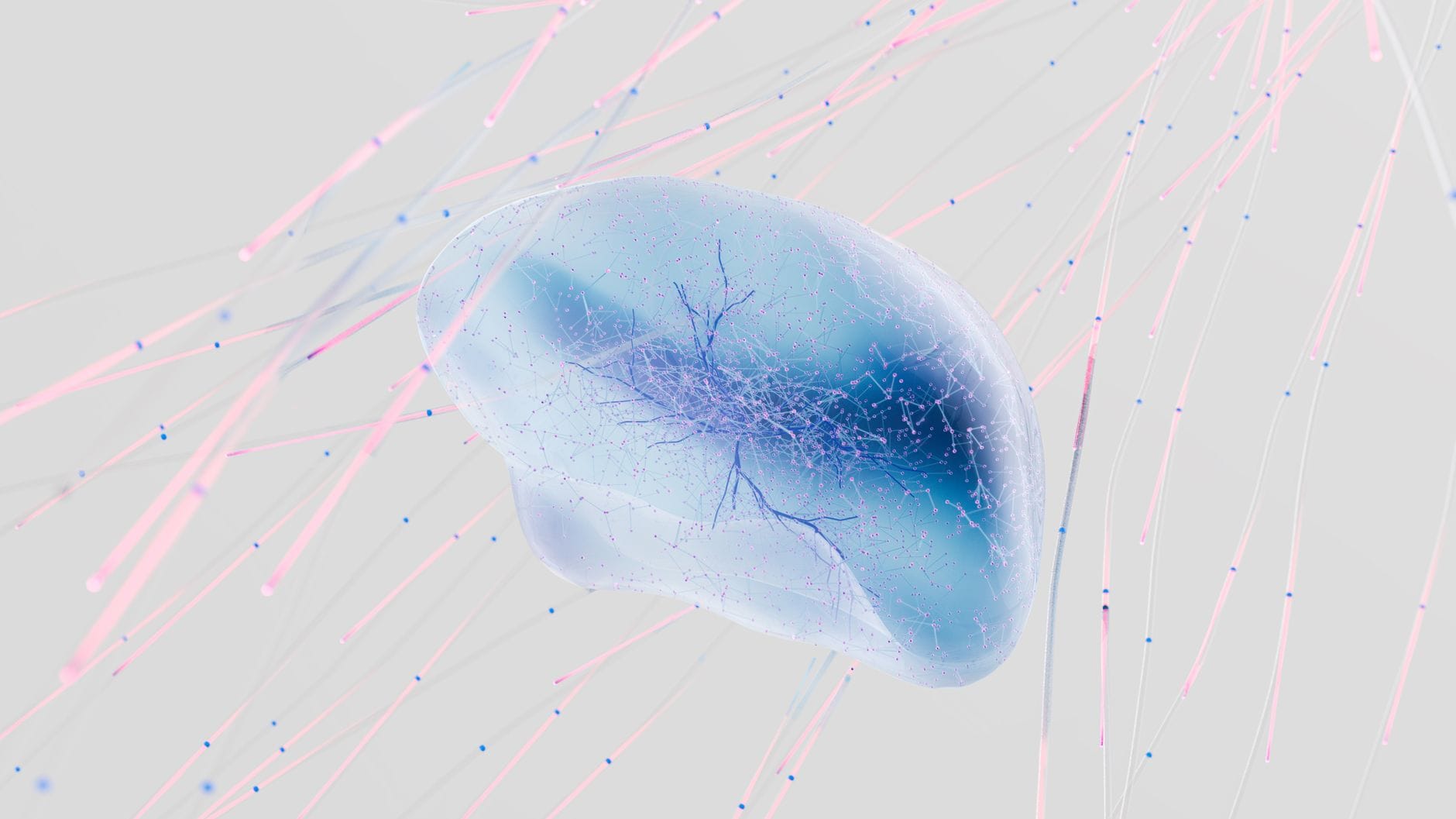
New York, MMN Correspondent: Picture this. You are walking down a familiar street, and the smell of fresh pizza drifts through the air. A memory appears, followed by a strong sense that you want some. That moment, when a thought becomes an urge, is one of the brain's most remarkable abilities. It helps us find food, water, and other essentials. But when that urge grows too loud, it can lead to compulsive patterns like overeating, alcohol dependence, and other addictive behaviors.
For decades, scientists have searched for the neurological switch behind this process. They have explored dopamine pathways, reward centers, and many related regions. Now, a popular class of diabetes drugs has given them an unexpected lead. Ozempic and Wegovy, both GLP-1 receptor agonists, were designed to control blood sugar. They also reduced body weight in surprising ways. And then something even more interesting appeared: people with decreased appetite noticed changes in other cravings as well.
Patients on these medications reported less interest in alcohol and tobacco. Preclinical studies supported those observations. GLP-1 agonists reduced alcohol intake, nicotine consumption, and even cocaine seeking in animals. This raised a fascinating question. Where in the brain do these drugs act to quiet cravings?
The usual suspects came first. The ventral tegmental area and nucleus accumbens have dominated addiction research for years. These dopamine rich regions are essential for reward processing. Yet GLP-1 receptors are sparse there. This discrepancy sent researchers looking in another direction, toward a lesser known structure called the lateral septum.
The lateral septum is not a newcomer to neuroscience. In 1953, Joseph Brady and Walle Nauta noticed that animals with damage there became extremely reactive and aggressive. They called the effect septal rage. Stimulating the area, on the other hand, produced calmness. Later work connected the lateral septum to emotional control. Its possible role in reward stayed mostly unseen until better tools came along.
The modern view places the lateral septum at the heart of a network connecting the hippocampus with the brain's reward machinery. The hippocampus supplies information about location and time through place cells. It tells you where you are and what part of a routine you are in. The lateral septum receives that input and adds another layer. Its own place cells respond to the rewarding value of a location. So the signal becomes something like “this place is good, come back here.” That combined message travels to dopamine regions and turns into motivation and desire.
This puts the lateral septum in an ideal position to influence craving. It is also densely covered with GLP-1 receptors, which makes it a direct target for drugs like Ozempic. Recent animal studies fit the picture. Activating GLP-1 receptors in the lateral septum reduced alcohol consumption. The same intervention lowered food intake. Additional lab experiments have shown that GLP-1 drugs change the firing patterns of lateral septum neurons in ways that may reduce their ability to send craving signals forward.
The implications reach far beyond weight loss. If this region can be precisely modulated, the same principle might apply to alcohol use disorder, nicotine addiction, and other compulsive behaviors. A therapy aimed at the lateral septum could address craving itself at the neural level. That is a completely different way of thinking about addiction.
More research is needed. The lateral septum is a complex structure with multiple cell types, local circuits, and long range projections. Scientists are now working to map which parts matter most for reward. Clinical trials are already testing GLP-1 medicines in people with alcohol use disorder, and early reads are encouraging. If the results hold, these medications may open a new chapter in addiction care.
For anyone who has ever wondered at the intensity of a craving, this discovery offers a helpful explanation. Cravings are generated by specific brain circuits, and the lateral septum sits at the center. That knowledge moves the conversation away from blame and toward biology. With this map in hand, researchers are getting closer to treatments that match the underlying process. The route from a diabetes medication to a possible addiction therapy is an impressive reminder of how science sometimes finds its most valuable answers in unexpected places.
Related in Scientific Research

Scientific Research
PLOS Climate: How Open Access is Reshaping Global Warming Research
The landscape of scientific communication is shifting rapidly. Integrity and accessibility are no longer just nice-to-haves but essential pillars of modern research. PLOS Climate stands at the center of this transformation. This journal from the Public Library of Science in Cali…
Read More...
Scientific Research
PLOS Climate: Navigating Broken Links to Access Critical Global Warming Research
The digital landscape of scientific publishing is shifting rapidly. For researchers and enthusiasts alike, the ability to access peer-reviewed work without barriers is essential. PLOS, a nonprofit based in California, has long championed open access. Their journal PLOS Climate f…
Read More...
Scientific Research
How PLOS Climate Is Reshaping Global Science: The Open Access Advantage
In the fast-moving world of scientific communication, open access journals are doing more than just sharing papers. They are breaking down walls that have long kept knowledge out of reach. PLOS Climate stands at the center of this shift. As a key part of the Public Library of Sc…
Read More...
Scientific Research
PLOS Climate: How Open Science is Reshaping Global Data Access
The digital landscape of scientific publishing is undergoing a profound transformation. This shift is driven by the urgent need for transparency and rapid dissemination of critical research. PLOS Climate stands at the forefront of this movement. It is a specialized journal dedic…
Read More...
Scientific Research
PLOS Climate 404 Errors: How Link Rot Threatens Scientific Trust and What You Can Do
The digital landscape of scientific communication is shifting rapidly. For researchers, policymakers, and educators, the integrity of open-access journals like PLOS Climate is not just a convenience but a necessity. Yet, even the most robust platforms face technical hurdles. A r…
Read More...
Scientific Research
PLOS Climate: How Open Access is Reshaping Global Warming Solutions
The landscape of scientific publishing is shifting beneath our feet. Accessibility and transparency are no longer just nice-to-have features; they are the bedrock upon which we address the most pressing challenges of our time. The Public Library of Science (PLOS), a nonprofit ba…
Read More...
Scientific Research
California Beaches See First Olive Ridley Nesting: What This Means for Sea Turtle Conservation
Marine biologists are witnessing a historic shift in ocean ecology. On September 16, 2026, an olive ridley sea turtle laid eggs on a beach near Seal Beach in Orange County, California. This event marks the first confirmed nesting of this species on the U.S. West Coast. Historica…
Read More...
Scientific Research
PLOS Climate: Why Broken Links Threaten Global Science Access
The digital landscape of scientific communication is shifting beneath our feet. As climate research accelerates, the integrity and accessibility of this data have become paramount. Specialized journals like PLOS Climate face constant challenges regarding content availability and…
Read More...
Scientific Research
Why Climate Data Links Fail: The Open Access Fix You Need Now
Imagine clicking a link to the latest climate study only to hit a dead end. That frustrating 'Page Not Found' error is more than a technical glitch. It represents a significant barrier in the fight against misinformation and delayed action. When vital research on global warming…
Read More...
Scientific Research
What Color Is the Universe? The Surprising Beige Answer from Johns Hopkins
For centuries humanity has gazed into the night sky captivated by vibrant nebulae and dying stars. Yet a deceptively simple question remains elusive to the naked eye. What is the average color of the entire universe? The answer defies expectations of deep cosmic blues or brillia…
Read More...