
Your Cosmic View Is Expanding: NASA's Roman Space Telescope Reaches Orbit With 100x Hubble Power
We compile, generate and translate using Artificial Intelligence from the below given source. Macro Micro News is responsible for its editorial publication.

Kennedy Space Center, Florida, Source : NASA's newest space telescope is officially on its way. The Nancy Grace Roman Space Telescope lifted off aboard a SpaceX Falcon Heavy and reached orbit on Aug. 30, 2026. The spacecraft separated from the rocket's second stage as planned, and mission teams are now beginning a new phase of checks and preparations.
The launch came after more than a decade of design, testing, and anticipation. In a postlaunch news conference at Kennedy Space Center, NASA Administrator Jared Isaacman joined project leaders and launch directors to confirm a successful start. The mood was optimistic, and for good reason. Roman is now ready to begin the journey toward a stable observing spot about one million miles from Earth, a location known as Sun-Earth Lagrange point 2.
This telescope carries a 2.4-meter primary mirror similar in size to Hubble's. The real power comes from its massive field of view. Roman can capture sections of the sky up to 100 times wider than Hubble in a single image. That means scanning vast stretches of the infrared universe at a pace no previous observatory could match. Astronomers describe this as turning a keyhole into a panoramic window. Roman is that window.
What will it do with such a wide view? The mission is designed to map billions of galaxies. These observations will help scientists study dark energy, the mysterious force that appears to be speeding up the expansion of the universe. Roman will also trace dark matter by measuring how its gravity bends light from distant galaxies. The telescope's coronagraph instrument will take direct images of exoplanets and examine their atmospheres, offering clues about worlds beyond our solar system.
By looking billions of years into the past, Roman will help answer big questions about how galaxies form, how stars evolve, and how black holes grow. Every deep field image will contain thousands of objects at different distances, creating a dataset that astronomers will be mining for years. This is not just a telescope mission. It is a cosmic time machine in the making.
Now that launch and payload separation are complete, Roman has entered its checkout phase. Teams will verify spacecraft health, switch on the instruments, and run calibration sequences. Once the telescope reaches its orbit around Lagrange point 2, the real science begins. All-sky surveys will map enormous areas of the universe with a clarity and speed that sets a new standard for discovery.
This moment marks the start of something remarkable. Roman's wide-field vision will complement the work of existing observatories by collecting huge amounts of data in a single pointing. Scientists around the world will get access to a treasure trove of images and spectra, opening doors to fresh discoveries across every branch of astronomy. From nearby exoplanets to galaxies at the edge of the observable universe, Roman is ready to reshape what we know about the cosmos.
Related in Scientific Research

Scientific Research
PLOS Climate: How Open Access is Reshaping Global Warming Research
The landscape of scientific communication is shifting rapidly. Integrity and accessibility are no longer just nice-to-haves but essential pillars of modern research. PLOS Climate stands at the center of this transformation. This journal from the Public Library of Science in Cali…
Read More...
Scientific Research
PLOS Climate: Navigating Broken Links to Access Critical Global Warming Research
The digital landscape of scientific publishing is shifting rapidly. For researchers and enthusiasts alike, the ability to access peer-reviewed work without barriers is essential. PLOS, a nonprofit based in California, has long championed open access. Their journal PLOS Climate f…
Read More...
Scientific Research
How PLOS Climate Is Reshaping Global Science: The Open Access Advantage
In the fast-moving world of scientific communication, open access journals are doing more than just sharing papers. They are breaking down walls that have long kept knowledge out of reach. PLOS Climate stands at the center of this shift. As a key part of the Public Library of Sc…
Read More...
Scientific Research
PLOS Climate: How Open Science is Reshaping Global Data Access
The digital landscape of scientific publishing is undergoing a profound transformation. This shift is driven by the urgent need for transparency and rapid dissemination of critical research. PLOS Climate stands at the forefront of this movement. It is a specialized journal dedic…
Read More...
Scientific Research
PLOS Climate 404 Errors: How Link Rot Threatens Scientific Trust and What You Can Do
The digital landscape of scientific communication is shifting rapidly. For researchers, policymakers, and educators, the integrity of open-access journals like PLOS Climate is not just a convenience but a necessity. Yet, even the most robust platforms face technical hurdles. A r…
Read More...
Scientific Research
PLOS Climate: How Open Access is Reshaping Global Warming Solutions
The landscape of scientific publishing is shifting beneath our feet. Accessibility and transparency are no longer just nice-to-have features; they are the bedrock upon which we address the most pressing challenges of our time. The Public Library of Science (PLOS), a nonprofit ba…
Read More...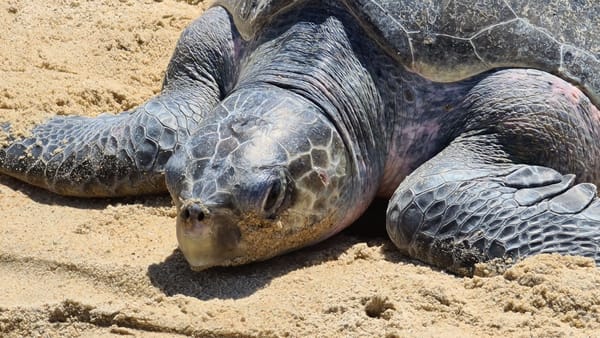
Scientific Research
California Beaches See First Olive Ridley Nesting: What This Means for Sea Turtle Conservation
Marine biologists are witnessing a historic shift in ocean ecology. On September 16, 2026, an olive ridley sea turtle laid eggs on a beach near Seal Beach in Orange County, California. This event marks the first confirmed nesting of this species on the U.S. West Coast. Historica…
Read More...
Scientific Research
PLOS Climate: Why Broken Links Threaten Global Science Access
The digital landscape of scientific communication is shifting beneath our feet. As climate research accelerates, the integrity and accessibility of this data have become paramount. Specialized journals like PLOS Climate face constant challenges regarding content availability and…
Read More...
Scientific Research
Why Climate Data Links Fail: The Open Access Fix You Need Now
Imagine clicking a link to the latest climate study only to hit a dead end. That frustrating 'Page Not Found' error is more than a technical glitch. It represents a significant barrier in the fight against misinformation and delayed action. When vital research on global warming…
Read More...
Scientific Research
What Color Is the Universe? The Surprising Beige Answer from Johns Hopkins
For centuries humanity has gazed into the night sky captivated by vibrant nebulae and dying stars. Yet a deceptively simple question remains elusive to the naked eye. What is the average color of the entire universe? The answer defies expectations of deep cosmic blues or brillia…
Read More...