
Your Future Ride May Be an eVTOL Air Taxi: NASA’s National Campaign Is Testing It Now
We compile, generate and translate using Artificial Intelligence from the below given source. Macro Micro News is responsible for its editorial publication.
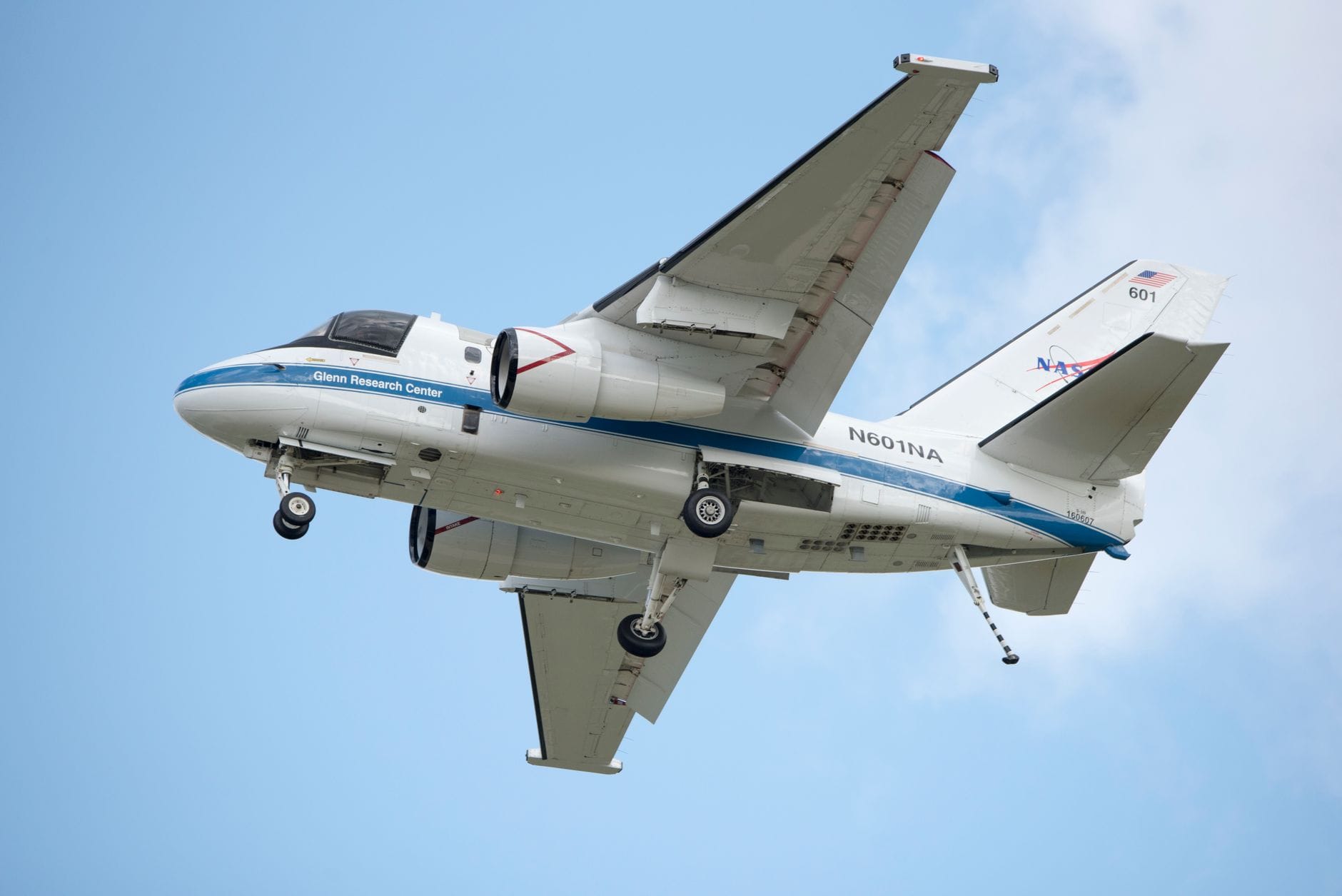
Moffett Field, California, Source :
Imagine a quiet aircraft easing down onto a city landing pad, picking up a passenger, and lifting into the sky. That future is closer than it might seem. NASA’s National Campaign is helping to build the foundation for electric air taxis, cargo drones, and other Advanced Air Mobility vehicles to safely join the U.S. National Airspace System.
For years, NASA has studied how crewed and uncrewed aircraft can share the same skies. Now, with the Federal Aviation Administration and a growing list of industry partners, the agency is moving from research into real-world flight testing. The National Campaign is creating the blueprint that will guide AAM operations for years to come.
The heart of this movement is an expanding ecosystem of electric vertical takeoff and landing aircraft, often called eVTOL, and autonomous systems. These vehicles are meant to carry passengers and cargo through urban, suburban, rural, and regional environments. They can also support missions like infrastructure inspection. The work happening now is about making sure these new aircraft fit smoothly into an airspace system originally built around traditional piloted aviation.
NASA’s Airspace Operations Laboratory, or AOL, at NASA’s Ames Research Center led the integration and testing efforts for the campaign. The lab builds on NASA’s earlier air traffic management work and its successful Unmanned Aircraft Systems Traffic Management research. During simulations and live flight tests, the AOL served as the base of operations. It connected NASA’s UTM-inspired architecture, test range ground infrastructure, and software from NASA’s Aviation Systems Division into one working environment.
The team also developed automation tools that support operator negotiations, air traffic service coordination, and new displays for people inside the system. Human factors evaluations played a major role as well. Pilots and air traffic controllers need technology that feels clear and intuitive, and the tests showed exactly how those interactions can work.
The research had clear objectives from the beginning. One was to demonstrate an airspace system architecture based on NASA’s UTM concept. Another was to develop flight procedure guidelines for AAM operations. The campaign also reviewed communication, navigation, and surveillance options. And it collected early perspectives from passengers and local communities on ground noise, cabin sound, and ride quality. Every piece of data supports the FAA with lessons that can inform decisions on safety, certification, operations, and airspace integration.
Over two years, the Airspace Operations Lab took part in seven National Campaign flight tests with government and industry partners. A defining moment came when NASA and Joby Aviation conducted the first flight test with an all-electric vertical takeoff and landing aircraft. The test demonstrated that a piloted eVTOL could operate in a realistic environment while connected to prototype airspace management systems. That kind of connection will be essential when multiple air taxis and delivery drones are moving through the same airspace.
The campaign also strengthened ground infrastructure. The AOL evaluated a new Mobile Operations Facility, or MOF, at NASA’s Armstrong Research Center. This portable command-and-control hub allows researchers to bring advanced airspace management tools directly to remote flight test ranges. Later, the lab put those tools to work in a Follow-On Flight Test that refined earlier results and explored additional operational concepts.
By blending live flight tests with human-in-the-loop simulations, NASA is creating the evidence needed to make AAM safe, efficient, and scalable. That evidence is already shaping the way vehicle systems, airspace management, and ground infrastructure come together. Manufacturers, operators, and regulators now have a shared foundation to build on, and every flight test adds something valuable to it. The era of air taxis has moved beyond concept. It is being tested, measured, and prepared for real life.
Related in Scientific Research

Scientific Research
PLOS Climate: How Open Access is Reshaping Global Warming Research
The landscape of scientific communication is shifting rapidly. Integrity and accessibility are no longer just nice-to-haves but essential pillars of modern research. PLOS Climate stands at the center of this transformation. This journal from the Public Library of Science in Cali…
Read More...
Scientific Research
PLOS Climate: Navigating Broken Links to Access Critical Global Warming Research
The digital landscape of scientific publishing is shifting rapidly. For researchers and enthusiasts alike, the ability to access peer-reviewed work without barriers is essential. PLOS, a nonprofit based in California, has long championed open access. Their journal PLOS Climate f…
Read More...
Scientific Research
How PLOS Climate Is Reshaping Global Science: The Open Access Advantage
In the fast-moving world of scientific communication, open access journals are doing more than just sharing papers. They are breaking down walls that have long kept knowledge out of reach. PLOS Climate stands at the center of this shift. As a key part of the Public Library of Sc…
Read More...
Scientific Research
PLOS Climate: How Open Science is Reshaping Global Data Access
The digital landscape of scientific publishing is undergoing a profound transformation. This shift is driven by the urgent need for transparency and rapid dissemination of critical research. PLOS Climate stands at the forefront of this movement. It is a specialized journal dedic…
Read More...
Scientific Research
PLOS Climate 404 Errors: How Link Rot Threatens Scientific Trust and What You Can Do
The digital landscape of scientific communication is shifting rapidly. For researchers, policymakers, and educators, the integrity of open-access journals like PLOS Climate is not just a convenience but a necessity. Yet, even the most robust platforms face technical hurdles. A r…
Read More...
Scientific Research
PLOS Climate: How Open Access is Reshaping Global Warming Solutions
The landscape of scientific publishing is shifting beneath our feet. Accessibility and transparency are no longer just nice-to-have features; they are the bedrock upon which we address the most pressing challenges of our time. The Public Library of Science (PLOS), a nonprofit ba…
Read More...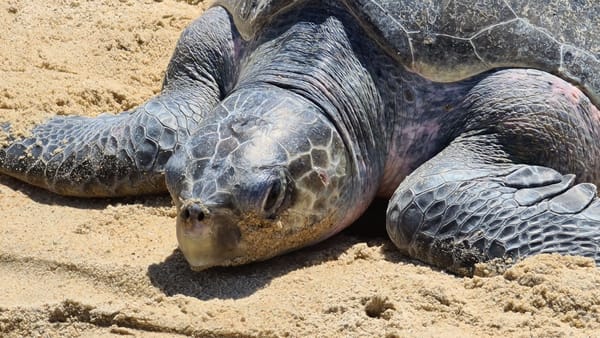
Scientific Research
California Beaches See First Olive Ridley Nesting: What This Means for Sea Turtle Conservation
Marine biologists are witnessing a historic shift in ocean ecology. On September 16, 2026, an olive ridley sea turtle laid eggs on a beach near Seal Beach in Orange County, California. This event marks the first confirmed nesting of this species on the U.S. West Coast. Historica…
Read More...
Scientific Research
PLOS Climate: Why Broken Links Threaten Global Science Access
The digital landscape of scientific communication is shifting beneath our feet. As climate research accelerates, the integrity and accessibility of this data have become paramount. Specialized journals like PLOS Climate face constant challenges regarding content availability and…
Read More...
Scientific Research
Why Climate Data Links Fail: The Open Access Fix You Need Now
Imagine clicking a link to the latest climate study only to hit a dead end. That frustrating 'Page Not Found' error is more than a technical glitch. It represents a significant barrier in the fight against misinformation and delayed action. When vital research on global warming…
Read More...
Scientific Research
What Color Is the Universe? The Surprising Beige Answer from Johns Hopkins
For centuries humanity has gazed into the night sky captivated by vibrant nebulae and dying stars. Yet a deceptively simple question remains elusive to the naked eye. What is the average color of the entire universe? The answer defies expectations of deep cosmic blues or brillia…
Read More...