
Your Interactive Mars Journey Begins Now: Inside NASA’s 2026 Eyes Platform Update
We compile, generate and translate using Artificial Intelligence from the below given source. Macro Micro News is responsible for its editorial publication.
Houston, Texas, Source :
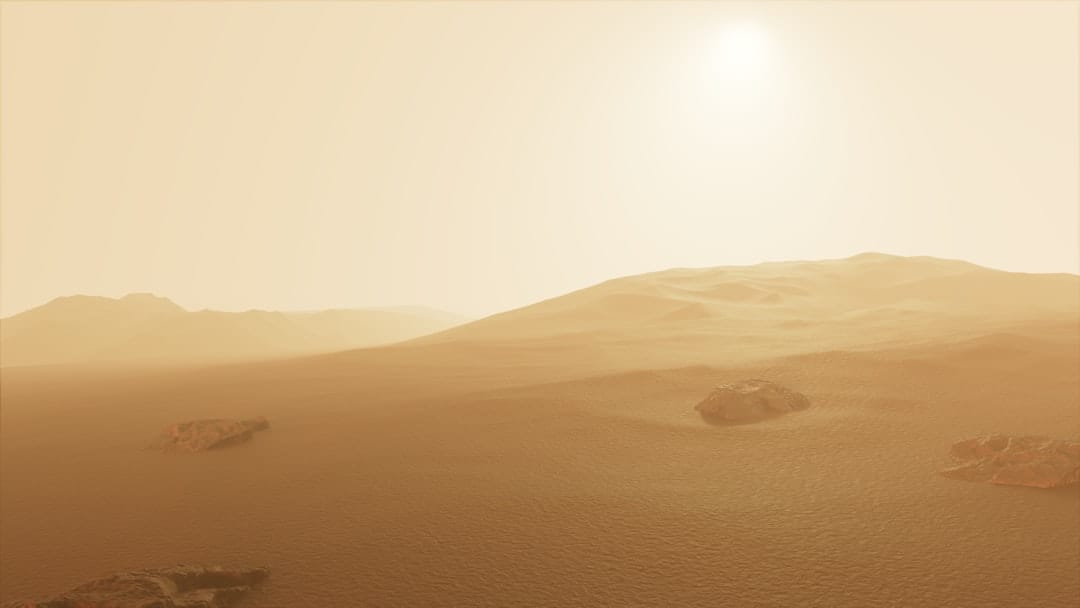
Have you ever wondered what it feels like to walk across the rust colored dunes of Mars without leaving your desk? The latest release of NASA’s Eyes software turns that imagination into a hands on experience. Press the k key and watch your screen shift from a distant orbital perspective to a ground level view where every crater and valley comes alive. You control the movement with familiar keyboard shortcuts, gliding across ancient riverbeds and historic rover paths at your own pace. This free flight mode opens up the entire solar system database, letting you trace mission trajectories and explore celestial bodies with complete freedom.
What happens when you look beyond our home planet? The platform now tracks deep space missions with remarkable precision. The Nancy Grace Roman Space Telescope appears in your timeline ahead of its August launch window, ready to display real time trajectory adjustments the moment engines ignite. You can also position your virtual camera at the Sun Earth L1 Lagrange point, a gravitational sweet spot that keeps observatories perfectly aligned with our star. These locations offer stable viewing platforms for next generation astronomy, and the software makes it easy to visualize the delicate balance of forces that keep satellites in place.
Earth observation receives a major upgrade through the NISAR mission data arriving in late August. Fifteen meter resolution imagery paints a detailed picture of our oceans and coastlines, updating every twelve days. You will notice individual ships moving through busy ports and coastal structures shifting with seasonal tides. This level of clarity connects orbital radar technology directly to everyday logistics and environmental planning. The continuous scanning cycle provides a living record of planetary changes, giving researchers and students a dynamic tool to track resource distribution and infrastructure development over time.
Behind the smooth visuals lies a carefully engineered rendering pipeline built on modern web standards. The system processes massive geospatial datasets while maintaining steady performance across standard computers. Collision detection algorithms guide your descent safely over uneven Martian topography, and atmospheric models adjust lighting to match the actual conditions of each world. Open source trajectory libraries sit alongside official NASA ephemeris data, creating a shared workspace where independent analysts can verify calculations and contribute to orbital mechanics research. This collaborative framework supports educators and hobbyists who want to dive deeper into space science using standard desktop setups.
As commercial launches increase and lunar return programs move toward active operations, transparent tracking tools become essential for everyone following these milestones. The updated Eyes platform stands ready to grow alongside these developments, offering a reliable foundation for learning and discovery. You can download the software today and begin mapping your own path through the stars. What celestial destination will you visit first?
Related in Scientific Research

Scientific Research
PLOS Climate: How Open Access is Reshaping Global Warming Research
The landscape of scientific communication is shifting rapidly. Integrity and accessibility are no longer just nice-to-haves but essential pillars of modern research. PLOS Climate stands at the center of this transformation. This journal from the Public Library of Science in Cali…
Read More...
Scientific Research
PLOS Climate: Navigating Broken Links to Access Critical Global Warming Research
The digital landscape of scientific publishing is shifting rapidly. For researchers and enthusiasts alike, the ability to access peer-reviewed work without barriers is essential. PLOS, a nonprofit based in California, has long championed open access. Their journal PLOS Climate f…
Read More...
Scientific Research
How PLOS Climate Is Reshaping Global Science: The Open Access Advantage
In the fast-moving world of scientific communication, open access journals are doing more than just sharing papers. They are breaking down walls that have long kept knowledge out of reach. PLOS Climate stands at the center of this shift. As a key part of the Public Library of Sc…
Read More...
Scientific Research
PLOS Climate: How Open Science is Reshaping Global Data Access
The digital landscape of scientific publishing is undergoing a profound transformation. This shift is driven by the urgent need for transparency and rapid dissemination of critical research. PLOS Climate stands at the forefront of this movement. It is a specialized journal dedic…
Read More...
Scientific Research
PLOS Climate 404 Errors: How Link Rot Threatens Scientific Trust and What You Can Do
The digital landscape of scientific communication is shifting rapidly. For researchers, policymakers, and educators, the integrity of open-access journals like PLOS Climate is not just a convenience but a necessity. Yet, even the most robust platforms face technical hurdles. A r…
Read More...
Scientific Research
PLOS Climate: How Open Access is Reshaping Global Warming Solutions
The landscape of scientific publishing is shifting beneath our feet. Accessibility and transparency are no longer just nice-to-have features; they are the bedrock upon which we address the most pressing challenges of our time. The Public Library of Science (PLOS), a nonprofit ba…
Read More...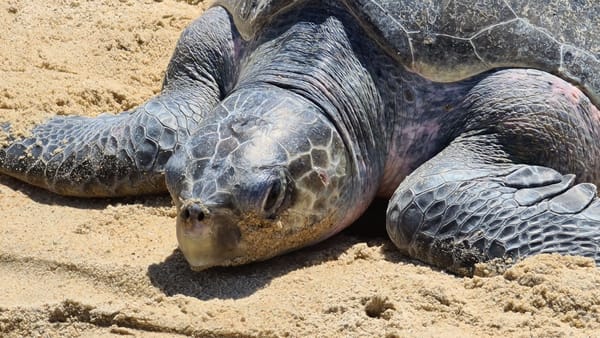
Scientific Research
California Beaches See First Olive Ridley Nesting: What This Means for Sea Turtle Conservation
Marine biologists are witnessing a historic shift in ocean ecology. On September 16, 2026, an olive ridley sea turtle laid eggs on a beach near Seal Beach in Orange County, California. This event marks the first confirmed nesting of this species on the U.S. West Coast. Historica…
Read More...
Scientific Research
PLOS Climate: Why Broken Links Threaten Global Science Access
The digital landscape of scientific communication is shifting beneath our feet. As climate research accelerates, the integrity and accessibility of this data have become paramount. Specialized journals like PLOS Climate face constant challenges regarding content availability and…
Read More...
Scientific Research
Why Climate Data Links Fail: The Open Access Fix You Need Now
Imagine clicking a link to the latest climate study only to hit a dead end. That frustrating 'Page Not Found' error is more than a technical glitch. It represents a significant barrier in the fight against misinformation and delayed action. When vital research on global warming…
Read More...
Scientific Research
What Color Is the Universe? The Surprising Beige Answer from Johns Hopkins
For centuries humanity has gazed into the night sky captivated by vibrant nebulae and dying stars. Yet a deceptively simple question remains elusive to the naked eye. What is the average color of the entire universe? The answer defies expectations of deep cosmic blues or brillia…
Read More...