
Brazilian Women's Football: The Exact Physical Shifts From U14 to Pro That Define Success
We compile, generate and translate using Artificial Intelligence from the below given source. Macro Micro News is responsible for its editorial publication.
Porto Alegre, Brazil, Source:
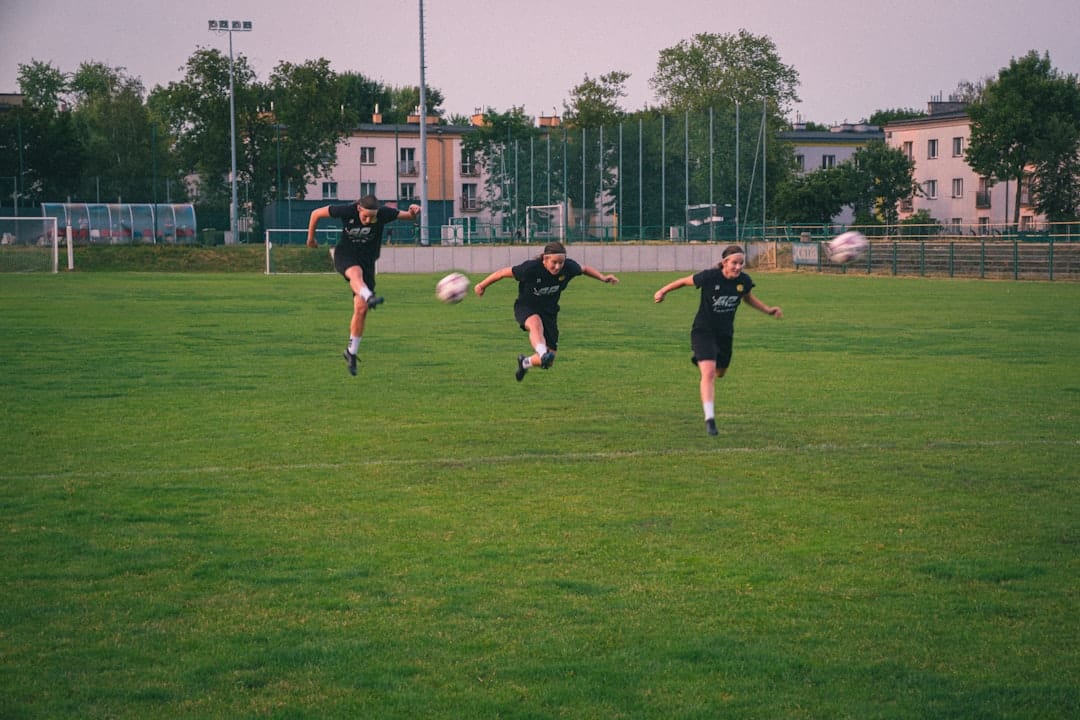
The path from youth academy to professional football is often imagined as a straight line of steady athletic growth. New research into Brazilian women’s football suggests the reality is far more complex. A comprehensive study involving 119 outfield players across Under-14, Under-16, Under-18, and professional levels reveals that the physical traits separating these stages are not uniform. Instead, each transition point demands a specific set of physiological markers.
Researchers from the Federal University of Rio Grande do Sul and partner institutions assessed vertical jump power, linear sprint speed, change-of-direction agility, and intermittent endurance. Their findings challenge the idea of a single benchmark for all developmental stages. This insight suggests that coaching staff should prioritize different physical attributes depending on the player's current competitive tier rather than applying a one-size-fits-all approach.
When moving from U14 to U16, the most significant differentiator turns out to be intermittent aerobic capacity. Measured via the Yo-Yo Intermittent Recovery Test Level 1, U16 players covered an average of 491.82 meters more than their younger counterparts. This substantial gap highlights that early adolescent development is heavily influenced by conditioning history, maturation, and accumulated training exposure. Interestingly, no significant differences were found in jumping or sprinting abilities between these two younger groups, pointing to endurance as the key hurdle at this stage.
As players advance to the U18 level, the focus shifts dramatically toward neuromuscular power. The comparison between U16 and U18 players showed clear advantages in both squat jumps and countermovement jumps. U18 athletes demonstrated approximately 3 to 4 centimeters greater height in these tests. This indicates that late adolescence is a critical period for developing lower-limb force production. While change-of-direction performance showed moderate improvements, it did not reach statistical significance after adjusting for multiple comparisons, suggesting that vertical power is the primary driver of performance gains at this stage.
The leap from U18 to professional status presents a different profile entirely. Here, professionals outperformed U18 players in vertical jumps and, most notably, in change-of-direction tests. The difference in the 20-meter change-of-direction test was the largest observed effect, with professionals completing the course 0.24 seconds faster. This underscores the importance of multidirectional speed, braking, and reacceleration capabilities in elite play. Contrary to expectations, linear sprint times and intermittent endurance did not significantly distinguish the U18 group from professionals, likely due to ceiling effects or the specific demands of the testing protocol.
These insights provide a nuanced roadmap for talent identification and physical preparation. By recognizing that U14-to-U16 transitions rely on endurance, U16-to-U18 on power, and U18-to-Pro on agility and power, practitioners can tailor monitoring programs more effectively. This capacity-specific approach ensures that young athletes are developed holistically, addressing the exact physical deficits that matter most at each step of their career trajectory.
Related in Sport

Sport
How Night Games Disrupt Baseball Sleep: The GDL Metric Explained
In the high-stakes arena of professional sports, we often focus on physical training and raw talent. Yet a recent cross-sectional study involving Japanese professional baseball players reveals that scheduling logistics play a critical role in athlete well-being. The research int…
Read More...
Sport
Hungary Study: How Coach-Athlete Bonds Build Confidence and Mental Health
Mental health stands as a vital pillar of athletic achievement, yet it often remains in the shadows compared to physical training. Athletes navigate intense pressure from performance expectations, injury risks, and career instability, which can increase vulnerability to anxiety…
Read More...
Sport
How Heart Rate Zones Determine Victory in Kick Light: A 2026 Physiological Breakdown
Kickboxing has transformed from a niche martial art into a globally recognized Olympic discipline. Yet the specific physiological demands of its technical sub-styles remain underexplored. A groundbreaking exploratory study published in September 2026 sheds light on the cardiovas…
Read More...
Sport
Sedentary Habits vs. Athletic Recovery: New Insights into Sleep Quality in Young Men
A recent exploratory study published in September 2026 by researchers from the University of Cassino and Lazio Meridionale has shed new light on the relationship between physical activity, sedentary behavior, and sleep quality among young adult males. The research specifically c…
Read More...
Sport
How 500mg of Citrus Extract Boosts Jump Height and Strength in Female Basketball Players
In the competitive arena of women's basketball, athletes constantly search for marginal gains that can tip the scales. A recent investigation published in September 2026 by researchers from the Universidad de León and Universidad Isabel I offers a compelling look at one such str…
Read More...
Sport
Campania Schools: How 10-Minute Movement Breaks Transform Student Focus
Teenagers today face a unique challenge. Digital distractions and sedentary habits are becoming the norm, making it harder for students to maintain focus in class. A recent study from Southern Italy offers a straightforward solution that might just change how we view classroom b…
Read More...
Sport
Youth Football Talent: Why Dual-Task Testing Reveals the Real Difference in Player Performance
Football scouts often focus heavily on physical metrics and technical drills. They look for speed, agility, and precise ball control. Yet a recent study published in Sports (MDPI) suggests that the true marker of elite potential lies elsewhere. It is not just about what players…
Read More...
Sport
Sled Sprint Training: Why Distance, Load, and Surface Dictate Your Speed Gains
Resisted sled sprint training has long been a cornerstone for elite athletes looking to sharpen their explosive power. From track sprinters refining their block clearance to rugby players building raw strength, the practice is ubiquitous. Yet a comprehensive systematic review an…
Read More...
Sport
Can Expectation Extend Your Cycling Endurance? The 1.6% Caffeine Placebo Data Every Rider Needs
[Extracted Location], Source : Sports science continues to explore how mental expectations shape physical output. Caffeine remains a staple among endurance athletes seeking reliable performance support. Riders across cycling disciplines regularly incorporate this compound into t…
Read More...
Sport
Your Mind on the Pitch: 4 Mental Resilience Shifts Every Woman in Soccer Needs Now
The modern women’s soccer landscape continues to evolve at an impressive pace, bringing global visibility and elevated performance standards to every level of play. As athletes step onto increasingly demanding stages, a fascinating shift occurs behind the scenes. Psychological w…
Read More...