
Core Training Boosts Balance and Strength in Young Female Tennis Players
We compile, generate and translate using Artificial Intelligence from the below given source. Macro Micro News is responsible for its editorial publication.
Basel, Switzerland, Source:
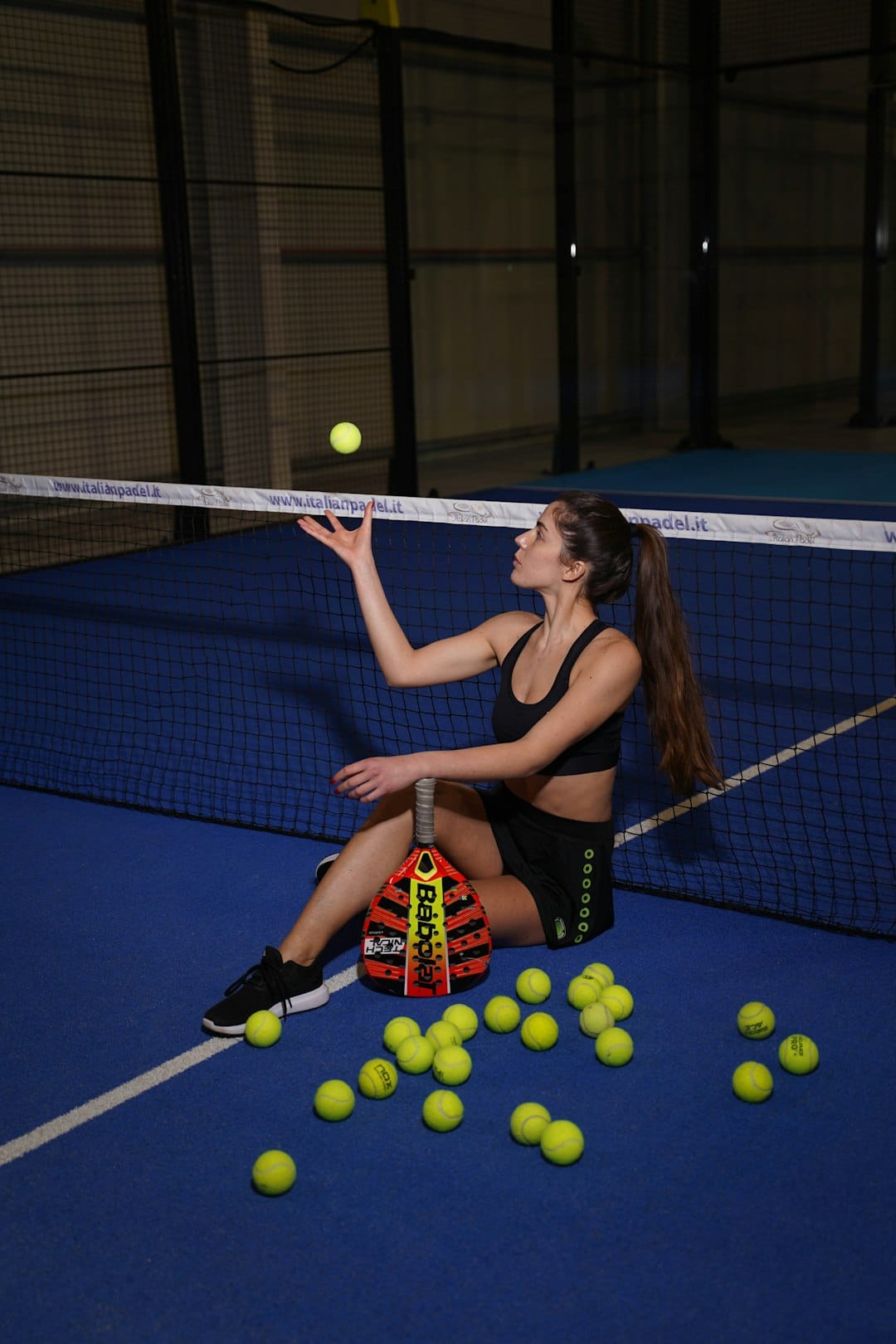
Tennis demands explosive power and precise control. The core acts as the central hub that transfers energy from the legs to the arms. For girls aged 13 to 14 this stage offers a unique window for neuromuscular growth. A recent study explores how specific core exercises can improve balance and rotational strength. This approach adds value beyond standard technical practice.
Researchers worked with 24 right-dominant female tennis players. They divided the athletes into two groups. One group followed an eight-week core training program. The other group continued with regular technical drills of equal duration. The core routine focused on progressive overload. It moved from static holds to dynamic movements. Heart rates stayed between 60% and 70% of maximum during these sessions.
The team used the Star Excursion Balance Test to measure dynamic balance. They also used digital dynamometry to assess trunk rotation strength. These measurements were taken during simulated forehand and backhand swings. The data collection provided clear metrics for comparison.
The results showed notable improvements in the experimental group. Right-foot dynamic balance increased by 0.83%. This change carried large effect sizes. Static trunk rotation strength also rose significantly. Forehand rotation strength grew by 13.41%. Backhand rotation strength improved by 12.00%. These gains highlight the physical benefits of targeted conditioning.
The control group relied only on technical tennis training. They did not show statistically significant improvements in any measured variables. This contrast suggests that skill refinement alone does not build foundational rotational power. Core work provides a distinct physiological advantage for performance.
Biomechanical analysis reveals why this matters. Ground-reaction forces and trunk kinematics drive racket head speed. Isolating core training helps athletes generate more torque. It also maintains postural control during complex multi-planar movements. This stability is crucial for young females who face higher risks of trunk-related injuries. Lumbar spine issues account for up to 39% of injuries in this demographic.
Strengthening the lumbopelvic-hip complex serves a dual purpose. It boosts performance metrics like rotational force. It also acts as a preventive strategy against overuse injuries. The study acknowledges limitations such as the lack of direct injury outcome measurement. Retrospective trial registration was also noted. Despite these factors the data supports integrating structured core conditioning into youth tennis regimens.
Future research will expand on these findings. Scientists plan to assess biological maturation and left-handed players. They will also look at actual stroke performance. These steps aim to validate the clinical and sport-specific benefits of core-focused interventions. The current evidence points toward enhanced on-court agility and power through dedicated core work.
Related in Sport

Sport
Why You See Access Denied on MDPI: The Real Story Behind Scholarly Paywalls
The phrase "Access Denied" often feels like a digital brick wall. It is more than a simple technical glitch. It represents the complex intersection of intellectual property rights and global information accessibility. When you encounter a 403 Forbidden error on platforms like MD…
Read More...
Sport
Why You Are Blocked: The Real Reasons Behind Access Denied Errors
In the vast landscape of digital information, few experiences are as frustrating or ubiquitous as encountering an 'Access Denied' error. This message, often accompanied by cryptic reference numbers and server warnings, represents a fundamental barrier between users and the conte…
Read More...
Sport
Aging and Muscle Protection: What the Repeated Bout Effect Reveals About Your Future Strength
The repeated bout effect describes a fascinating physiological phenomenon where a single session of eccentric exercise provides lasting protection against muscle damage during future similar activities. This adaptive response allows muscles to recover faster and suffer less stru…
Read More...
Sport
Elite Handball: How Anaerobic Power Drives Match Success
Team handball at the highest level demands more than just stamina. It requires explosive power and the ability to change direction instantly. Recent reviews point out that success in this intermittent sport hinges on anaerobic capacity. Players need to accelerate fast, shoot wit…
Read More...
Sport
Why You See Access Denied: The Real Story Behind Academic Paywalls
That frustrating "Access Denied" message is more than just a technical hiccup. It stands at the crossroads of intellectual property rights and global information equity. When you hit a 403 Forbidden error on platforms like MDPI, you are seeing the academic publishing ecosystem i…
Read More...
Sport
Hungarian Soccer Data: How MD-3 and MD-2 Training Loads Predict Match Wins
In the high-stakes arena of professional football, victory is often attributed to tactical brilliance or individual skill. However, emerging research suggests that the timing and distribution of physical training loads throughout the week may be a critical yet overlooked predict…
Read More...
Sport
How Synchronized Drives Team Unity: New Data on Junior Handball Cohesion
Success in youth sports often gets pinned on individual brilliance. Yet a new perspective suggests that the invisible glue holding a team together matters just as much. A recent six-month study tracking 64 junior handball players aged 12 to 14 reveals that coordination training…
Read More...
Sport
How Elite CrossFit Athletes Taper: The 8-Week Load Management Blueprint for Peak Performance
CrossFit has transformed from a niche fitness trend into a rigorous sport that demands seamless integration of weightlifting, gymnastics, and metabolic conditioning. For elite athletes, victory depends less on raw power alone and more on the precise orchestration of training loa…
Read More...
Sport
How Digital Platforms Can Transform Elite Athlete Career Transitions and Mental Health Support
The journey from elite sports to post-athletic life presents one of the most psychologically and socially demanding phases in an athlete's career. A comprehensive cross-sectional study involving 136 European elite athletes reveals a critical disconnect between the high value ath…
Read More...
Sport
Liraglutide and Exercise: The Real Impact on Body Composition for Sustainable Weight Loss
Obesity is increasingly recognized as a chronic, relapsing disease with significant cardiometabolic risks, necessitating treatment strategies that go beyond simple weight reduction. Recent real-world data from a prospective cohort study conducted in Belgrade highlights the nuanc…
Read More...