
Caribbean Drought Crisis: What El Niño and Climate Change Mean for Your Water Future
We compile, generate and translate using Artificial Intelligence from the below given source. Macro Micro News is responsible for its editorial publication.
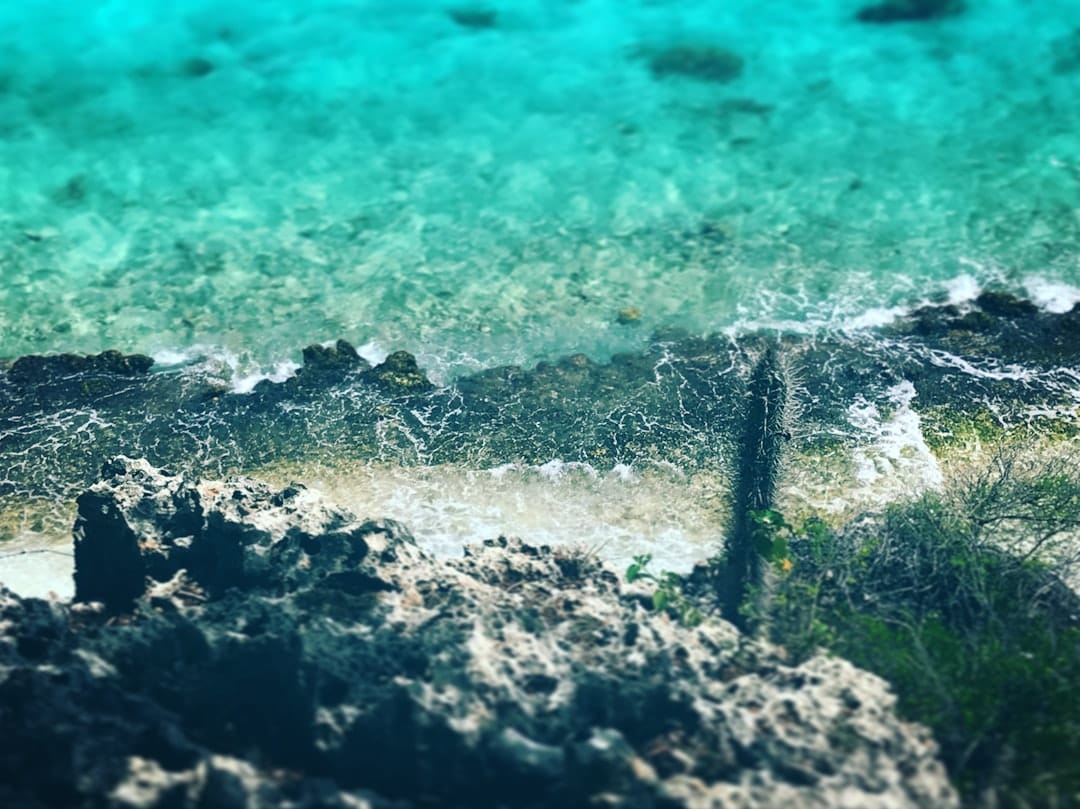
San Juan, Puerto Rico, MMN Correspondent: The sun is doing more than shining here. It is pressing down on the islands, and the heat is only part of the story. Taps are running dry. Rain clouds are staying away. And across the Caribbean, the sound of a drought is the sound of buckets hitting concrete.
El Niño has arrived, and it is strong. It also walked into a world that is already warmer, with oceans that are already hotter. That changes everything about how this dry season unfolds. Climate models now suggest that 2027 could bring the first monthly global temperature reading more than 2°C above pre-industrial levels. For the Caribbean, 2°C does not exist on a map. It exists in the air you breathe and in the water you cannot find.
In Puerto Rico, thermometers have climbed past 38°C. The heat index makes it feel like 43°C. In Cuba, blackouts have left millions without fans or air conditioning. The simplest protection from extreme heat, a cool room, is not available to everyone. It is easy to say stay inside and drink water. It is harder to do that when you work outdoors, when your water is delivered by truck, or when your home has no power.
Water rationing has already begun in some municipalities. More communities are waiting to see if the sky changes. If it does not, families will carry buckets up stairs again, just like in 2015 and 2016, when water arrived only two days a week. A drought is a slow emergency. It does not announce itself with sirens. It just keeps taking.
The quiet danger is the one that arrives inside your own body. Hundreds of thousands of elderly people live alone on these islands. Carrying water up a flight of stairs can hurt them. Sitting in a hot, still room can exhaust them. And when water is stored in open containers, mosquitoes find it. With heat speeding up their breeding cycle, dengue fever has more chances to spread. The most vulnerable need the most support.
On land, crops are drying before they can be picked. In Cuba, fuel shortages have already cut agricultural production by 60%, and a prolonged dry spell makes it nearly impossible to recover. At sea, sargassum seaweed is piling up on beaches. In La Parguera, Puerto Rico, the seaweed has grown so thick that boats cannot move freely. The town lives on tourism, and tourism depends on water that looks and feels healthy. These are not separate problems. They are all connected to the same overheated system.
Attribution science is helping the world understand exactly how connected. The National Academies of Sciences, Engineering, and Medicine says these methods have advanced significantly. Findings are precise enough to show up in legal cases where communities and governments seek accountability from fossil fuel companies. The science is not vague anymore. It is a measuring stick.
The Caribbean is not alone. Parts of Asia and Africa are also drying out. The world often treats droughts as natural disasters that simply happen. And these disasters are influenced by choices made over decades. Humanitarian aid is necessary. Long-term investment in climate resilience, renewable energy, and sustainable water management is essential. The islands need systems that can hold water through a dry season. They need energy that does not collapse when temperatures spike. They need preparation that starts well before the next dry season arrives.
This drought is a preview, and it is taking place right now. The Caribbean is living through it. For everyone on these islands and everyone watching from somewhere else, the time to act is not tomorrow. It is today.
Related in Global Warming
Scientific Research
How PLOS Climate Is Reshaping Global Science: The Open Access Advantage
In the fast-moving world of scientific communication, open access journals are doing more than just sharing papers. They are breaking down walls that have long kept knowledge out of reach. PLOS Climate stands at the center of this shift. As a key part of the Public Library of Sc…
Read More...
Scientific Research
PLOS Climate: How Open Access is Reshaping Global Warming Solutions
The landscape of scientific publishing is shifting beneath our feet. Accessibility and transparency are no longer just nice-to-have features; they are the bedrock upon which we address the most pressing challenges of our time. The Public Library of Science (PLOS), a nonprofit ba…
Read More...
Scientific Research
PLOS Climate: Why Broken Links Threaten Global Science Access
The digital landscape of scientific communication is shifting beneath our feet. As climate research accelerates, the integrity and accessibility of this data have become paramount. Specialized journals like PLOS Climate face constant challenges regarding content availability and…
Read More...
Scientific Research
Why Climate Data Links Fail: The Open Access Fix You Need Now
Imagine clicking a link to the latest climate study only to hit a dead end. That frustrating 'Page Not Found' error is more than a technical glitch. It represents a significant barrier in the fight against misinformation and delayed action. When vital research on global warming…
Read More...
Scientific Research
PLOS Climate: The Open Access Frontier for Global Warming Research
The landscape of scientific publishing is shifting rapidly. Accessibility and transparency are no longer just ideals but necessities. PLOS, a nonprofit organization based in California, stands at the forefront of this movement. They champion open access to peer-reviewed research…
Read More...
Global Warming
COP17 Mongolia: The Desertification Summit Deciding Your Food and Water Future
Around 10,000 people are heading into a national park near Ulaanbaatar this week. They've gathered for COP17, the seventeenth Conference of Parties to the United Nations Convention to Combat Desertification. The meeting runs from August 17 to 28, and it could determine how farms…
Read More...
Global Warming
Plastics Treaty Draft Leaves Out Production Cuts: What It Means for You and the Planet
The newest draft of the global plastics treaty has arrived, and it is missing something many countries consider essential. Chilean ambassador Julio Cordano, the diplomat chairing the United Nations talks, released the document as an informal reference text. It reads a lot like a…
Read More...
Global Warming
What You Need to Know About South Africa’s Offshore Oil Court Battle: Communities Take On Shell and TotalEnergies
Layers of red dust still coat Saldanha Bay, a reminder of the iron ore exports that transformed a quiet coastal fishing town in the 1970s. Today, the same bay is being prepared for a different role. The South African government wants to turn it into the country's oil and gas hub…
Read More...
Global Warming
UK Wildfire Crisis 2026: 71% of England in Drought and Firefighters Overwhelmed, Are We Ready for What's Next?
The United Kingdom is living through a fire emergency that keeps growing. Dry landscapes, repeated heatwaves, and shifting wind patterns have turned large parts of the country into a potential tinderbox. Firefighters are working long shifts to contain flames in Hampshire, Nottin…
Read More...
Global Warming
Canada’s Out-of-Control Wildfires: 22,000 Flee British Columbia, and What That Means for Your Community
Summerland received its evacuation order with little time to spare. Across British Columbia, around 22,000 people have now left their homes as 102 active wildfires spread through the province. Nearly half of those fires are listed as uncontrolled. The Bald Range fire grew to mor…
Read More...