
Chief State Solicitor’s Office Closed 11,829 Files in 2025: Here’s What You Need to Know
We compile, generate and translate using Artificial Intelligence from the below given source. Macro Micro News is responsible for its editorial publication.

Dublin, Ireland, MMN Correspondent: The Chief State Solicitor’s Office closed 11,829 legal files in 2025. New correspondence received by Aontú Leader Peadar Tóibín TD shows the office closed more than double the 5,023 files it closed in 2024 and well above the 5,480 closed in 2023. The figures have prompted questions about what changed in one of the State’s biggest legal operations.
The CSSO acts for the State, its departments and public bodies. Its caseload covers civil litigation, conveyancing, commercial matters, constitutional cases and more. The office spent €54.8 million in 2025, including almost €18.5 million on counsel fees. Those numbers ensure the jump in closures stands out.
Tóibín called the increase extraordinary. He said closing 11,829 files in a single year naturally raises questions. "Such a dramatic shift does not happen without a reason," he noted. The response he received does not give that reason.
The data also shows a clear difference between new and closed files. The CSSO opened 5,009 new files in 2025. By the end of the year, 20,654 files remained active. That means the office worked through a large part of its existing caseload. The correspondence offers no detail on which files were closed or why.
Could this be a backlog reduction exercise? A review of long-running files? A change in administrative practice? A new management strategy? Tóibín asked all of these questions. The correspondence does not address what lay behind the change. Anyone reviewing the figures is left to consider the possibilities.
There are several plausible explanations. A determined push to clear dormant files may have produced a wave of closures. A shift toward earlier settlements or alternative dispute resolution might also have sped up resolutions. Digital tools and better record keeping could have made it simpler for staff to close files that were effectively finished. Any of these would be a positive development. None have been confirmed.
Numbers alone don’t tell the full story. Timing does. A jump this large usually follows a management decision, a technology change, or a policy push. Without visibility into which one, the figures remain open to interpretation. The official response has not yet addressed this.
The spending side adds to the importance of these numbers. The CSSO’s €54.8 million budget includes staff salaries, expert witnesses and other legal costs, not just counsel fees. The office also confirmed that it cannot readily provide information on the average duration of cases, the longest active case, the longest concluded case, or the average and median cost per case. No formal analysis has been done on the relationship between prolonged litigation and legal costs.
Tóibín made the same point in his comments. The office manages tens of thousands of files and spends tens of millions of euro annually. Important information regarding case duration, case costs and the impact of lengthy litigation is not readily available. For a body that plays such a central role in State legal affairs, meaningful oversight requires more detail.
The implications go beyond the CSSO. The office handles personal injury claims, judicial reviews, employment disputes and property transactions. A large reduction in active files could signal a new approach to litigation, perhaps favouring quicker resolutions or more aggressive case management. It could also mean that many files were closed without full resolution, which might create issues further down the line. The public interest lies in knowing which is the case.
Tóibín has asked for a detailed explanation. He said understanding what drove the change could offer valuable insight into how legal files are managed across Government and why such a substantial reduction was achieved in one year. He is likely to pursue the matter through parliamentary questions or freedom of information requests.
In the meantime, legal professionals and policy analysts are examining the data for clues. Some suspect new case management software made it easier to spot inactive files. Others believe there may have been a deliberate shift toward settling cases earlier. These are reasonable hypotheses. Official confirmation has not arrived.
The CSSO is central to how the State handles its legal business. Its efficiency affects the delivery of justice and the management of public resources. The 2025 closure numbers are a significant moment. Whether they represent a genuine streamlining of the system or a change in how files are recorded is still an open question. A clear, public explanation would settle that question and offer a more complete picture for everyone watching.
Related in Politics
Politics
Europe's New Aid Strategy: How Team Europe Is Protecting Workers and Fixing Supply Chains in 240 Million Crisis Zones
European Commissioner Lahbib Zouarhi recently took the stage at the Foreign Affairs Council to unveil a bold new vision for humanitarian aid. The message was clear. Europe must step up as "Team Europe" to tackle the growing number of global crises. With nearly 240 million people…
Read More...
Politics
Germany's Growth Mirage: Weidel Exposes the Debt Trap Behind Official Projections
The German federal government recently unveiled its autumn economic projections for October 2026, highlighting a projected growth rate of 1.3 percent for the current year. This optimistic forecast suggests a notable upswing in national economic activity. However, Alice Weidel, c…
Read More...
Politics
EU-Mexico Trade Alliance 2026: How This Partnership Is Reshaping Global Supply Chains
The European Union and Mexico have always been strong partners in multilateral cooperation. By September 2026 their relationship has become a key test for global economic resilience. Trade tensions are rising in many parts of the world. The EU-Mexico partnership offers stability…
Read More...
Politics
Ireland's EU Presidency: How Humanitarian Aid and Preparedness Build a Safer Future
As Ireland takes the helm of the Council of the European Union, Commissioner Lahbib highlights a pivotal moment for global engagement. Europe now faces a dual mandate that requires both moral leadership through humanitarian aid and strengthened internal resilience against a comp…
Read More...
Politics
Saxony-Anhalt Breaks Tradition: AfD's Tobias Rausch Takes Landtag Presidency
German politics witnessed a defining moment on October 6, 2026, when the newly constituted state parliament of Saxony-Anhalt elected Tobias Rausch as its Landtag President. This event marks the first time in the history of the Federal Republic that a member of the Alternative fo…
Read More...
Politics
Von der Leyen's Balkan Strategy: Why EU Expansion is a Mutual Transformation
Ursula von der Leyen has made it clear that the European Union’s path forward involves more than just opening borders. Her recent visits to the Western Balkans highlight a strategic shift where enlargement is treated as a mutual transformation rather than a one-sided gift from B…
Read More...
Politics
EU-Mexico Trade Shift 2026: What Nearshoring and Green Tech Mean for Your Business
The relationship between the European Union and Mexico is undergoing a significant transformation as we navigate through 2026. This partnership has evolved from traditional trade agreements into a robust framework focused on sustainable development digital innovation and diploma…
Read More...
Politics
Germany's 52% State Share: What This Record Means for Your Wallet and Economy
In early October 2026, Germany reached a notable economic milestone. The federal government projected a state share of 52 percent for the current year. This figure marks a new all-time high. It signals a substantial shift in how public expenditure relates to national economic ou…
Read More...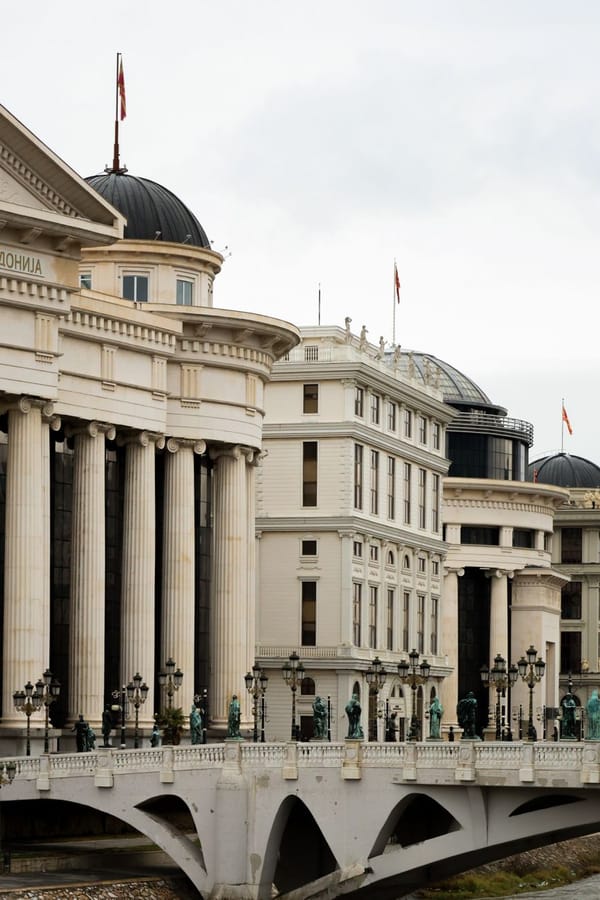
Politics
North Macedonia's EU Path: Security, Economy, and Institutional Readiness
In a significant diplomatic engagement held in Skopje, European leadership reaffirmed its commitment to North Macedonia’s accession to the European Union, highlighting the nation’s pivotal role in regional security and economic stability. The dialogue underscored North Macedonia…
Read More...
Politics
Germany's Subsidy Crisis: Why Taxpayers Are Demanding Fiscal Reform Now
In October 2026, the Bund der Steuerzahler released its annual "Black Book," a detailed report exposing state-funded waste and inefficient subsidy programs across Germany. This publication has sparked a significant conversation about fiscal responsibility, revealing how public f…
Read More...