
Croatia’s Mediterranean Pivot: What You Need to Know About the EU’s Connectivity, Readiness and Competitiveness Priorities
We compile, generate and translate using Artificial Intelligence from the below given source. Macro Micro News is responsible for its editorial publication.
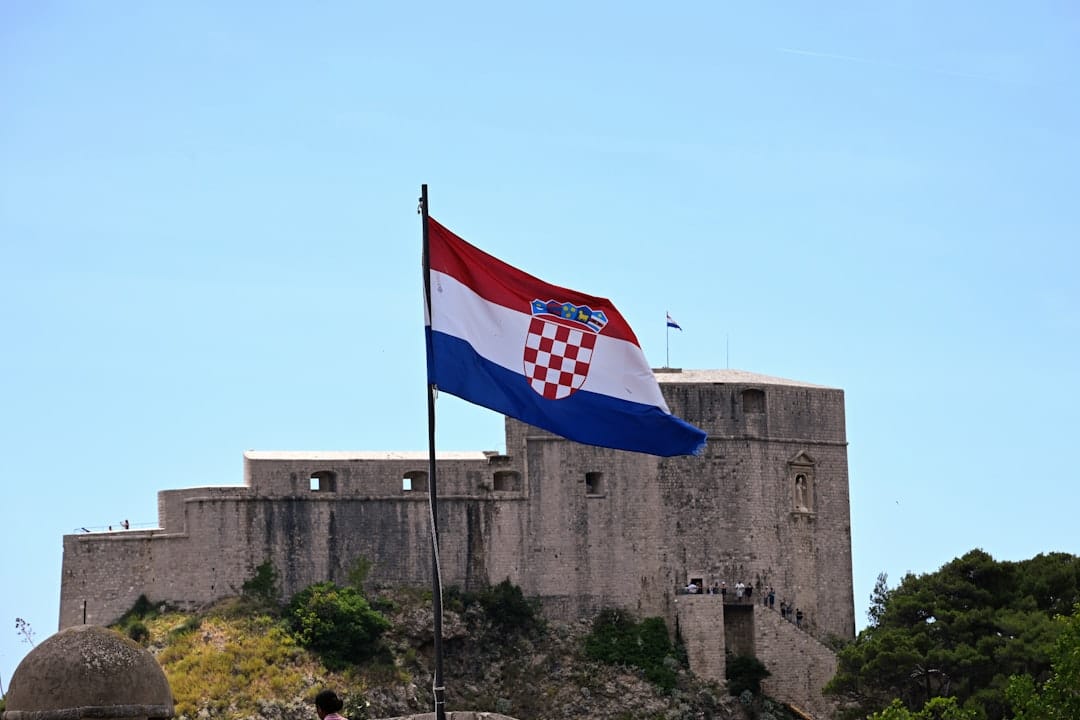
Zagreb, Croatia, Source : One question hovered in the hall as Croatia’s ambassadors, consuls general, consuls and military attachés gathered for their annual conference: how can a country in the middle of Europe’s map turn its position into influence? European Commissioner for the Mediterranean Dubravka Šuica answered with three words: connectivity, readiness and competitiveness.
That answer did not come from a textbook. It came from a summer that tested the entire region. Intense heatwaves, wildfires, migration pressure around Ceuta and fresh geopolitical competition all arrived at once. None of these stays neatly in its own box. They move through energy systems, supply chains, border security and everyday life. The Mediterranean, Šuica argued, is part of the core European story, and Croatia is inside that story.
Here is what makes Croatia’s position interesting. It is Mediterranean, Adriatic, Central European and European at the same time. That sounds like a list of adjectives. In diplomacy, it becomes a strategic asset. It means Croatia can connect policies that often live in separate rooms. For a newer EU member state, influence grows when national interests and European interests overlap. The key is to spot that overlap and concentrate political and diplomatic capital there.
The past months show that this method works. Croatia held the presidency of MED9, the group of nine southern EU member states, and of the Three Seas Initiative, a platform of twelve nations stretching from the Adriatic to the Baltic and Black Seas. Consistent, focused diplomacy lifted Croatia’s profile and turned its priorities into European agenda points. The Three Seas Initiative also proved a second point: connectivity has an economic dimension. Strong business participation showed that political cooperation and competitiveness go hand in hand.
Šuica turned those experiences into a clear set of EU priorities, viewed through the Mediterranean lens.
Connectivity comes first. It is now a strategic condition for both competitiveness and security. Croatia can use its geography, its infrastructure and its access to the single market to strengthen transport and digital links, modernise energy systems and connect Europe more closely with the Adriatic and the Mediterranean. That means new economic opportunities for Croatia, more diversified supply routes and better energy security for Europe. At EU level, the Global Gateway initiative is moving in this direction with flagship projects like MEDUSA and Blue Raman, investments in ports and maritime trade, and energy cooperation through T-MED. The Pact for the Mediterranean, presented late last year, adds another layer with a first action plan that includes 21 activities designed to deliver measurable results. Connectivity is also expected to be one of the priorities in the next long-term EU budget.
Readiness follows. This is about institutions having the people, knowledge and financial resources to turn decisions into results quickly. It also means being innovative, dynamic and adaptable in how those decisions are made. The situation in Ceuta is a practical reminder that migration management involves more than border control. Šuica said she remained in contact with Moroccan Minister Bourita, who described the crisis as a chain of intertwined circumstances and misinterpreted decisions by Spanish courts. Security services are still working to understand what or who lay behind it. Morocco cooperated with Spain and continues to cooperate, especially on minors still in Ceuta. The EU regards Morocco as an important strategic partner, particularly in the fight against migrant smuggling and irregular migration. Work is under way with Moroccan authorities to build a stronger, long-term and comprehensive partnership.
Migration is global, and the global scale makes cooperation essential among origin, transit and destination countries. The European Commission is strengthening migration diplomacy by connecting migration policy with visa policy, trade, investment and financial support. This work covers all dimensions of the Pact on Migration and Asylum, from border management and returns to protection, legal pathways and migration governance. The funding matches the ambition: 222 million euros secured up to 2024, 190 million euros planned by 2027, and regional programmes adding further support.
Last week, Commissioner Magnus Brunner visited Croatia to discuss migration and security with Deputy Prime Minister Davor Božinović. His visit to Split Airport, which processed nearly 770,000 passengers in July alone, illustrated a simple point: European security, Croatian connectivity and economic prosperity are directly linked.
Competitiveness completes the trio. To be competitive, a country or a union must be able to absorb shocks, adapt and keep functioning. The EU already leads in investing in climate adaptation, climate resilience and sustainable resource management, and it remains committed to the green transition. Competitiveness reaches further. It includes energy security, reducing dependence on a single energy source or supplier. It includes resilient transport, energy, digital and communications systems. And it includes people. Croatia knows that competitiveness ultimately depends on attracting and retaining talent, supporting families, developing skills and reducing labour shortages. These are Croatian priorities and European priorities at the same time. The same logic applies to security and defence. Europe must strengthen its capacity to protect citizens, borders and critical infrastructure.
Šuica made one more point: these three areas belong together in relations with the southern neighbourhood and Gulf states. The Gulf countries are becoming increasingly important strategic partners. They face many of the same pressures and they value reliability and consistency. The second EU Gulf Cooperation Council summit, scheduled in Riyadh at the end of October, offers a chance to deepen cooperation on connectivity, competitiveness, security and defence. It is also a chance to connect Gulf partners with the wider framework of the Pact for the Mediterranean.
The potential in that partnership is considerable. It ranges from Syria’s economic recovery and Lebanon’s banking-sector reform to Jordan’s economic development and the goal of a just and lasting peace between Israelis and Palestinians. On Gaza, the Team Gaza initiative brought EU member states, international institutions and key partners into one structure. It mobilised nearly 900 million euros for early recovery, created a European Board of Peace and opened cooperation with American partners. This is what strategic partnership looks like when political influence, financial resources and international partners are linked around concrete goals.
The western Balkans remain an essential part of Croatia’s diplomatic identity, especially Bosnia and Herzegovina. Croatian diplomacy has contributed to stability and progress there for a long time. MEP Davor Stier works to keep Bosnia and Herzegovina’s European perspective high on the EU agenda. Ambassador Irena Andrassy, Croatia’s Permanent Representative to the EU, plays a decisive role in negotiations and in representing Croatian interests in Brussels.
The conclusion from Zagreb was direct. Croatia can shape European strategy through its chairmanships, through its engagement in the western Balkans and through its Mediterranean role. The remaining months of Croatia’s MED9 presidency offer a diplomatic finale. They are an opportunity to bring partners together around shared themes and to connect those themes with broader European priorities. The task now is to strengthen partnerships, connect what is often treated separately and stay prepared for what comes next. That, Šuica said, is how Europe remains a strong, reliable and strategically relevant actor. She thanked Croatia’s diplomatic network for its professionalism, noting that daily work turns strategic goals into results on the ground.
Related in Politics
Politics
Europe's New Aid Strategy: How Team Europe Is Protecting Workers and Fixing Supply Chains in 240 Million Crisis Zones
European Commissioner Lahbib Zouarhi recently took the stage at the Foreign Affairs Council to unveil a bold new vision for humanitarian aid. The message was clear. Europe must step up as "Team Europe" to tackle the growing number of global crises. With nearly 240 million people…
Read More...
Politics
Germany's Growth Mirage: Weidel Exposes the Debt Trap Behind Official Projections
The German federal government recently unveiled its autumn economic projections for October 2026, highlighting a projected growth rate of 1.3 percent for the current year. This optimistic forecast suggests a notable upswing in national economic activity. However, Alice Weidel, c…
Read More...
Politics
EU-Mexico Trade Alliance 2026: How This Partnership Is Reshaping Global Supply Chains
The European Union and Mexico have always been strong partners in multilateral cooperation. By September 2026 their relationship has become a key test for global economic resilience. Trade tensions are rising in many parts of the world. The EU-Mexico partnership offers stability…
Read More...
Politics
Ireland's EU Presidency: How Humanitarian Aid and Preparedness Build a Safer Future
As Ireland takes the helm of the Council of the European Union, Commissioner Lahbib highlights a pivotal moment for global engagement. Europe now faces a dual mandate that requires both moral leadership through humanitarian aid and strengthened internal resilience against a comp…
Read More...
Politics
Saxony-Anhalt Breaks Tradition: AfD's Tobias Rausch Takes Landtag Presidency
German politics witnessed a defining moment on October 6, 2026, when the newly constituted state parliament of Saxony-Anhalt elected Tobias Rausch as its Landtag President. This event marks the first time in the history of the Federal Republic that a member of the Alternative fo…
Read More...
Politics
Von der Leyen's Balkan Strategy: Why EU Expansion is a Mutual Transformation
Ursula von der Leyen has made it clear that the European Union’s path forward involves more than just opening borders. Her recent visits to the Western Balkans highlight a strategic shift where enlargement is treated as a mutual transformation rather than a one-sided gift from B…
Read More...
Politics
EU-Mexico Trade Shift 2026: What Nearshoring and Green Tech Mean for Your Business
The relationship between the European Union and Mexico is undergoing a significant transformation as we navigate through 2026. This partnership has evolved from traditional trade agreements into a robust framework focused on sustainable development digital innovation and diploma…
Read More...
Politics
Germany's 52% State Share: What This Record Means for Your Wallet and Economy
In early October 2026, Germany reached a notable economic milestone. The federal government projected a state share of 52 percent for the current year. This figure marks a new all-time high. It signals a substantial shift in how public expenditure relates to national economic ou…
Read More...
Politics
North Macedonia's EU Path: Security, Economy, and Institutional Readiness
In a significant diplomatic engagement held in Skopje, European leadership reaffirmed its commitment to North Macedonia’s accession to the European Union, highlighting the nation’s pivotal role in regional security and economic stability. The dialogue underscored North Macedonia…
Read More...
Politics
Germany's Subsidy Crisis: Why Taxpayers Are Demanding Fiscal Reform Now
In October 2026, the Bund der Steuerzahler released its annual "Black Book," a detailed report exposing state-funded waste and inefficient subsidy programs across Germany. This publication has sparked a significant conversation about fiscal responsibility, revealing how public f…
Read More...