
EU September 2026: Merger Approvals, Green Funding, and Diplomatic Moves You Need to Know
We compile, generate and translate using Artificial Intelligence from the below given source. Macro Micro News is responsible for its editorial publication.
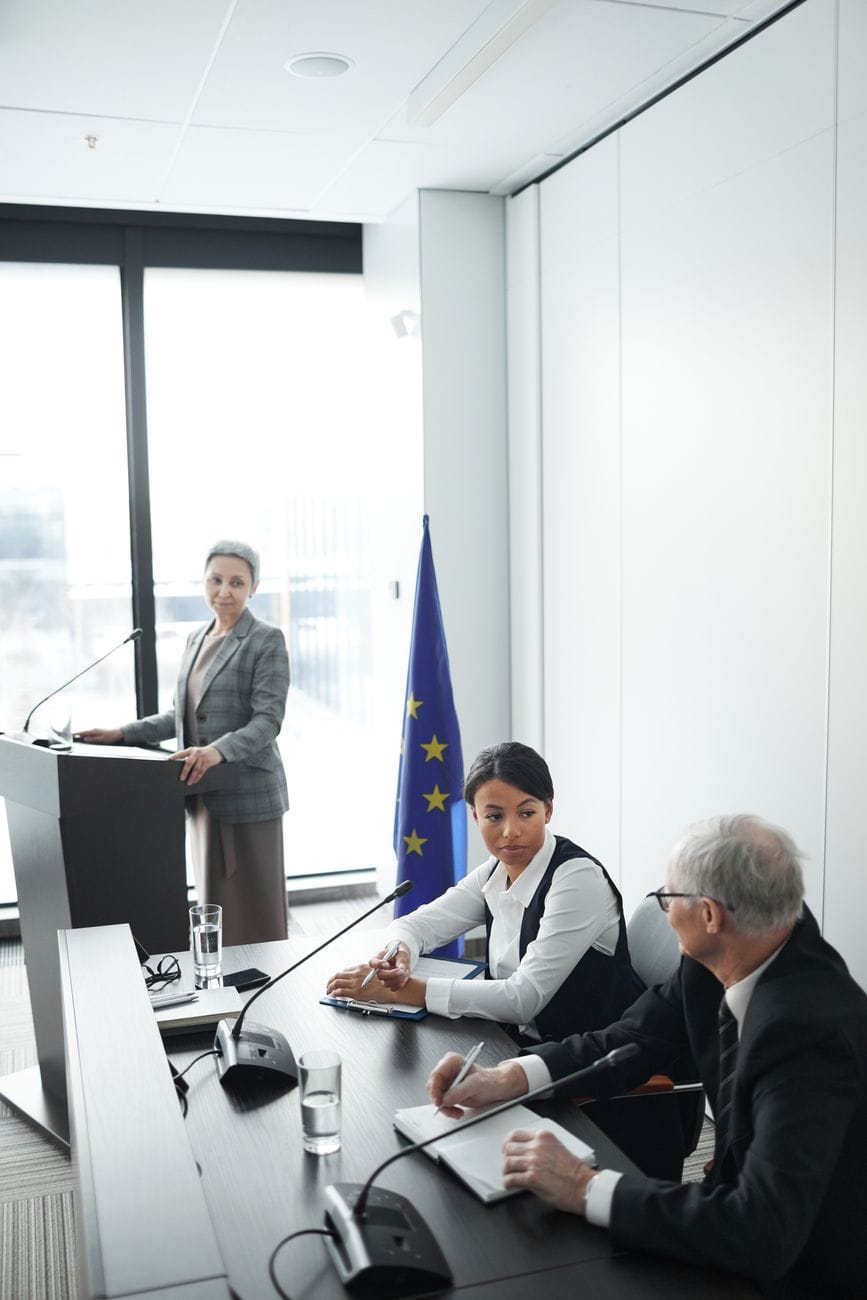
Brussels, Belgium, Source:
In late September 2026, the European Commission stepped into a busy week defined by regulatory precision, economic support, and global engagement. The agenda covered legal compliance, sustainable investment, agricultural resilience, and international diplomacy. This period highlighted the EU's dedication to maintaining standards while fostering stability across member states and beyond.
The Commission moved forward with formal infringement proceedings against several Member States that had not yet transposed EU directives into national law by the required deadlines. Letters of formal notice were issued, giving these nations two months to align their legislation or face further legal steps such as reasoned opinions. This action reinforces the bloc's commitment to the rule of law and harmonized standards across the region.
At the same time, the Commission cleared three major corporate acquisitions under the EU Merger Regulation. This decision signals a streamlined approach to market consolidation when competition concerns are minimal. Genstar Capital Partners and Stone Point Capital received approval to acquire joint control of Ascensus LLC, a provider of tax-advantaged savings services. In the manufacturing sector, M&G Investment Management and Arini Capital secured approval for the joint acquisition of Reno de Medici S.p.A., an Italian cardboard producer. Finnish retailer Kesko Oyj also received clearance to acquire sole control of the Dahl Group’s operations in Denmark, Norway, and Sweden, focusing on technical distribution in civil engineering and HEPAC sectors. All transactions underwent simplified review procedures due to their low competitive impact.
On the economic front, the Commission positively assessed Luxembourg’s third payment request for €92.2 million under the NextGenerationEU facility. This funding supports critical reforms in healthcare, biodiversity protection, digitalization, clean transport, and renewable energy. It marks significant progress in Luxembourg’s recovery and resilience plan, demonstrating how targeted investments can drive structural improvements.
Addressing urgent agricultural challenges, the Commission mobilized over €73 million from the EU agricultural reserve to support Italian farmers affected by avian flu and African swine fever outbreaks. The aid includes €61 million for poultry and egg producers impacted between September 2022 and March 2025, and €12.5 million for pigmeat farmers dealing with African swine fever from November 2024 to April 2025. Commissioner Christophe Hansen visited Italy to oversee the rapid distribution of these funds, emphasizing the need for robust risk management tools amid increasing climatic and biological threats.
Internationally, EU representatives engaged heavily at the UN General Assembly in New York. High Representative Kaja Kallas and various Commissioners advocated for peace, health resilience, and multilateral cooperation. Notably, Commissioner Dubravka Šuica attended a conference in Toronto on returning Ukrainian children and prisoners of war, reinforcing the EU’s €50 million commitment to child protection and reintegration services. The EU also announced new initiatives for global health resilience and education partnerships.
Domestically, the EU celebrated key cultural and scientific milestones. The European Researchers' Night brought science closer to citizens across 40 countries, while the 26th European Day of Languages promoted linguistic diversity and social cohesion. Commissioner Glenn Micallef participated in the EU Youth Conference in Dublin, engaging young people in shaping future youth policies and information dialogue strategies.
These developments collectively illustrate the EU’s dual focus on internal legal and economic integrity while maintaining active, principled engagement on the global stage. The actions taken in September 2026 reflect a balanced approach to governance, supporting both immediate needs and long-term strategic goals.
Related in Politics
Politics
Germany's Growth Mirage: Weidel Exposes the Debt Trap Behind Official Projections
The German federal government recently unveiled its autumn economic projections for October 2026, highlighting a projected growth rate of 1.3 percent for the current year. This optimistic forecast suggests a notable upswing in national economic activity. However, Alice Weidel, c…
Read More...
Politics
EU-Mexico Trade Alliance 2026: How This Partnership Is Reshaping Global Supply Chains
The European Union and Mexico have always been strong partners in multilateral cooperation. By September 2026 their relationship has become a key test for global economic resilience. Trade tensions are rising in many parts of the world. The EU-Mexico partnership offers stability…
Read More...
Politics
Ireland's EU Presidency: How Humanitarian Aid and Preparedness Build a Safer Future
As Ireland takes the helm of the Council of the European Union, Commissioner Lahbib highlights a pivotal moment for global engagement. Europe now faces a dual mandate that requires both moral leadership through humanitarian aid and strengthened internal resilience against a comp…
Read More...
Politics
Saxony-Anhalt Breaks Tradition: AfD's Tobias Rausch Takes Landtag Presidency
German politics witnessed a defining moment on October 6, 2026, when the newly constituted state parliament of Saxony-Anhalt elected Tobias Rausch as its Landtag President. This event marks the first time in the history of the Federal Republic that a member of the Alternative fo…
Read More...
Politics
Von der Leyen's Balkan Strategy: Why EU Expansion is a Mutual Transformation
Ursula von der Leyen has made it clear that the European Union’s path forward involves more than just opening borders. Her recent visits to the Western Balkans highlight a strategic shift where enlargement is treated as a mutual transformation rather than a one-sided gift from B…
Read More...
Politics
EU-Mexico Trade Shift 2026: What Nearshoring and Green Tech Mean for Your Business
The relationship between the European Union and Mexico is undergoing a significant transformation as we navigate through 2026. This partnership has evolved from traditional trade agreements into a robust framework focused on sustainable development digital innovation and diploma…
Read More...
Politics
Germany's 52% State Share: What This Record Means for Your Wallet and Economy
In early October 2026, Germany reached a notable economic milestone. The federal government projected a state share of 52 percent for the current year. This figure marks a new all-time high. It signals a substantial shift in how public expenditure relates to national economic ou…
Read More...
Politics
North Macedonia's EU Path: Security, Economy, and Institutional Readiness
In a significant diplomatic engagement held in Skopje, European leadership reaffirmed its commitment to North Macedonia’s accession to the European Union, highlighting the nation’s pivotal role in regional security and economic stability. The dialogue underscored North Macedonia…
Read More...
Politics
Germany's Subsidy Crisis: Why Taxpayers Are Demanding Fiscal Reform Now
In October 2026, the Bund der Steuerzahler released its annual "Black Book," a detailed report exposing state-funded waste and inefficient subsidy programs across Germany. This publication has sparked a significant conversation about fiscal responsibility, revealing how public f…
Read More...
Politics
Brussels Confirms €45 Billion Ukraine Aid Package for 2027: What This Means for Your Future
The European Commission and Ukraine have just released a joint statement that signals a major shift in how financial support is structured. Announced on October 1, 2026, this move reinforces transatlantic solidarity while addressing Kyiv's urgent financial needs. The question no…
Read More...