
Europe's Competitiveness Comeback: 6 Battlegrounds Every Business Leader Must Watch
We compile, generate and translate using Artificial Intelligence from the below given source. Macro Micro News is responsible for its editorial publication.
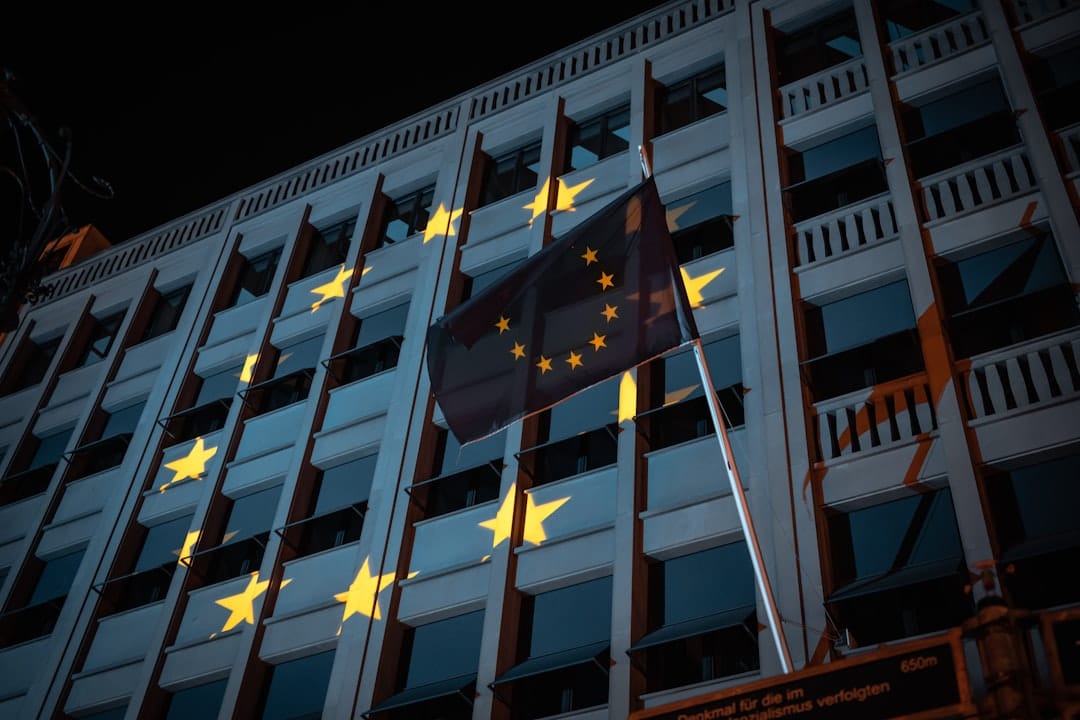
Paris, France, Source :
What happens when the old economic certainties fade? You build new ones. Ursula von der Leyen took the stage at La Rencontre des Entrepreneurs de France, held at Roland Garros, and delivered a straightforward message to business leaders: Europe will produce, invest and protect. The old certainties included cheap imported energy, open world trade, automatic access to China's market, strategic American protection and Western technological dominance. The new direction is built on six battlegrounds, and each one comes with a concrete plan.
Fair competition comes first. European businesses have been paying twice, once for their own rules, and once for competitors who do not face the same costs. The European Commission is targeting a 25% cut in administrative burdens for all companies and 35% for SMEs by 2029. Twelve omnibus simplification packages could save around €17 billion a year. Six are already agreed and saving €6 billion. That is paperwork relief with a direct impact on competitiveness. Member states are also being encouraged to stop gold-plating national rules.
Fair competition starts at home, and extends beyond. Chinese state support for companies can reach eight times the OECD average. Chinese imports into the EU have climbed 45% in five years, while EU exports to China have fallen. The trade deficit now approaches €1 billion a day, and for the first time every EU member state has a deficit with China. More than half of European industrial production faces Chinese competition. The EU has opened more than 30 trade defence investigations in one year, nearly three times the long-term average, and current measures protect more than 600,000 European jobs.
Raw materials are part of the same picture. Europe depends on China for more than 80% of many critical raw materials and 90% of some rare earths. The response is an economic security policy that keeps markets open, with trade defence instruments available when dialogue is not enough.
The second battleground is financing. Europe does not lack capital, and around €10 trillion in household savings is sitting in bank accounts. What if a meaningful share of that capital started flowing into European companies? The Savings and Investment Union is designed to make that happen. Measures on securitisation, bank and insurance investment and market supervision could mobilise up to €470 billion in additional investment. The next EU budget adds more than €450 billion through the European Competitiveness Fund and Horizon Europe, covering research, innovation, prototypes and industrial production.
The third battleground is the single market. Internal barriers in services, energy, telecoms and finance carry an economic weight equivalent to tariffs of 45% on goods and 110% on services. One flagship proposal stands out. A 28th regime called EU Inc. would allow a business to be created in 48 hours, for less than €100, entirely online and with no minimum capital requirement. Imagine that. The Industrial Accelerator Act would speed up permits, create lead markets for steel, cement, aluminium, vehicles, batteries and clean technologies, and use public procurement in a more strategic way.
Skills are part of the single market too. Nearly two in three SMEs say they cannot find the skills they need. The EU will propose a fair labour mobility package, a European Social Security Pass and stronger recognition of qualifications.
Energy is the fourth battleground. Prices in Europe are still two to three times higher than in the United States or China, and more than half of the energy consumed in Europe comes from imported fossil fuels. The Middle East crisis added over €50 billion to that dependence without adding a single extra molecule of energy. Europe already produces more than 70% of its electricity from low-carbon sources, and electricity currently accounts for only a quarter of final energy consumption. The Electrification Action Plan is designed to shift industry, transport and buildings onto clean power.
Grids need urgent attention. Last year, 80 gigawatts of renewable capacity were installed, and six times more capacity is waiting to connect. Ten terawatt-hours of renewable electricity were lost due to insufficient grid or storage capacity, enough to power three million households for a year.
Carbon pricing is also being recalibrated. Free allowances will remain after 2030 for companies that invest in decarbonisation. Industry bills could drop by almost €10 billion by 2030, and from 2027 an Investment Accelerator could mobilise €30 billion. The Industrial Decarbonisation Bank is expected to deploy more than €100 billion by 2030.
Artificial intelligence is the fifth battleground. Europe's strategy is to produce and deploy. To produce, the EU is investing €20 billion in AI gigafactories, and the first call drew 77 proposals from 16 member states across 60 sites. The Cloud and AI Development Act and Chips Act 2.0 will reinforce the chain from components to models. To deploy, AI needs to move into factories, laboratories, hospitals, energy networks, transport and public services.
The sixth battleground is openness, with fair terms. Trade agreements are now tools for diversifying supply chains, securing raw materials and reducing dependence on any single player. CETA, the EU-Canada trade agreement, shows what is possible. French goods exports to Canada have increased by 45% since 2017, and French services exports have more than doubled.
None of this happens without confidence. Europe has 450 million consumers, world-class companies, a highly skilled workforce, 20% of global R&D spending, high levels of savings and the rule of law. In a fragmented world, those assets are rare. The challenge is to combine them with determination, the same tenacity celebrated on the courts of Roland Garros. Victory belongs to the most tenacious.
Related in Politics
Politics
Germany's Growth Mirage: Weidel Exposes the Debt Trap Behind Official Projections
The German federal government recently unveiled its autumn economic projections for October 2026, highlighting a projected growth rate of 1.3 percent for the current year. This optimistic forecast suggests a notable upswing in national economic activity. However, Alice Weidel, c…
Read More...
Politics
EU-Mexico Trade Alliance 2026: How This Partnership Is Reshaping Global Supply Chains
The European Union and Mexico have always been strong partners in multilateral cooperation. By September 2026 their relationship has become a key test for global economic resilience. Trade tensions are rising in many parts of the world. The EU-Mexico partnership offers stability…
Read More...
Politics
Ireland's EU Presidency: How Humanitarian Aid and Preparedness Build a Safer Future
As Ireland takes the helm of the Council of the European Union, Commissioner Lahbib highlights a pivotal moment for global engagement. Europe now faces a dual mandate that requires both moral leadership through humanitarian aid and strengthened internal resilience against a comp…
Read More...
Politics
Saxony-Anhalt Breaks Tradition: AfD's Tobias Rausch Takes Landtag Presidency
German politics witnessed a defining moment on October 6, 2026, when the newly constituted state parliament of Saxony-Anhalt elected Tobias Rausch as its Landtag President. This event marks the first time in the history of the Federal Republic that a member of the Alternative fo…
Read More...
Politics
Von der Leyen's Balkan Strategy: Why EU Expansion is a Mutual Transformation
Ursula von der Leyen has made it clear that the European Union’s path forward involves more than just opening borders. Her recent visits to the Western Balkans highlight a strategic shift where enlargement is treated as a mutual transformation rather than a one-sided gift from B…
Read More...
Politics
EU-Mexico Trade Shift 2026: What Nearshoring and Green Tech Mean for Your Business
The relationship between the European Union and Mexico is undergoing a significant transformation as we navigate through 2026. This partnership has evolved from traditional trade agreements into a robust framework focused on sustainable development digital innovation and diploma…
Read More...
Politics
Germany's 52% State Share: What This Record Means for Your Wallet and Economy
In early October 2026, Germany reached a notable economic milestone. The federal government projected a state share of 52 percent for the current year. This figure marks a new all-time high. It signals a substantial shift in how public expenditure relates to national economic ou…
Read More...
Politics
North Macedonia's EU Path: Security, Economy, and Institutional Readiness
In a significant diplomatic engagement held in Skopje, European leadership reaffirmed its commitment to North Macedonia’s accession to the European Union, highlighting the nation’s pivotal role in regional security and economic stability. The dialogue underscored North Macedonia…
Read More...
Politics
Germany's Subsidy Crisis: Why Taxpayers Are Demanding Fiscal Reform Now
In October 2026, the Bund der Steuerzahler released its annual "Black Book," a detailed report exposing state-funded waste and inefficient subsidy programs across Germany. This publication has sparked a significant conversation about fiscal responsibility, revealing how public f…
Read More...
Politics
Brussels Confirms €45 Billion Ukraine Aid Package for 2027: What This Means for Your Future
The European Commission and Ukraine have just released a joint statement that signals a major shift in how financial support is structured. Announced on October 1, 2026, this move reinforces transatlantic solidarity while addressing Kyiv's urgent financial needs. The question no…
Read More...