
EU’s 28 August 2026 Decisions: €1B+ Defence Payments, Firefighting Airlift, and Trade Surplus You Need To Know
We compile, generate and translate using Artificial Intelligence from the below given source. Macro Micro News is responsible for its editorial publication.
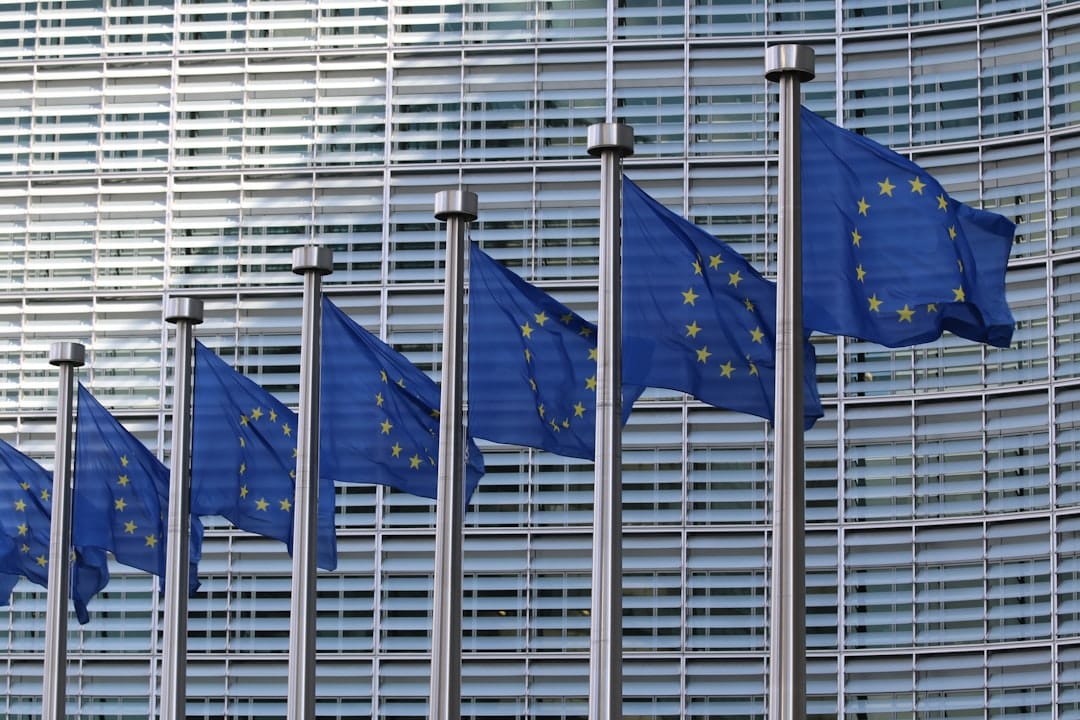
Brussels, Belgium, Source :
What does a single day of EU decision-making actually look like? On 28 August 2026, it looks like this: first defence payments worth over €1 billion, emergency humanitarian funding for Nepal, firefighting helicopters still working in Serbia, a stronger agri-food trade surplus, tighter fisheries enforcement, and merger decisions moving the economy forward. None of these are abstract policy points. They are real actions with real money attached.
Defence took centre stage with the first payouts from the Security Action for Europe instrument, known as SAFE. Bulgaria received €489.3 million and Latvia received €524.7 million, each payment equal to 15% of their total allocations. Those totals are €3.3 billion for Bulgaria and €3.5 billion for Latvia. SAFE is a €150 billion loan instrument designed to finance joint procurement of ammunition, missiles, air defence systems and ground combat equipment produced inside the EU. The structure is smart: the EU borrows on financial markets and passes on competitive, long-duration financing to Member States, using the EU's strong credit rating as the foundation. The aim is to help generate over €800 billion in defence investment across the Union. For Bulgaria and Latvia, the first payments can accelerate priority investments, strengthen readiness and resilience, and modernise military capabilities in line with shared European goals. Commissioner for Defence and Space Andrius Kubilius said the EU is moving quickly and decisively to support the Eastern Flank, improve interoperability and reinforce Europe's defence industrial base.
Humanitarian help also arrived with speed. The EU allocated €2 million in emergency aid for Nepal after severe flash floods left more than 300 people dead. The money covers immediate needs, including food, healthcare, clean water and sanitation. EU humanitarian partners who were already active in Nepal are distributing pre-positioned shelter and relief items. The EU also sent its Rapid Response Coordinator for Asia and activated Copernicus satellite mapping to improve coordination. That support comes on top of nearly €3 million allocated earlier in the year for disaster preparedness. Crisis Management Commissioner Hadja Lahbib said the floods have affected communities that were already rebuilding from past disasters, and she made clear that the EU stands with them by funding urgent healthcare, food, water and shelter.
In Serbia, the EU extended its firefighting assistance until 5 September as wildfires continue to burn in the Deliblato Sands Special Nature Reserve and neighbouring areas. Copernicus data shows around 13,920 hectares affected. Four helicopters from the strategic reserve in Czechia, Romania and Slovakia remain deployed, together with a ground firefighting team from Romania. The sequence of events matters here. Serbia asked for help through the EU Civil Protection Mechanism, and European helicopters were in the air less than 24 hours later. Copernicus satellite mapping has been active since 8 August for emergency assessment and operational planning. A liaison officer is on the ground to coordinate between Serbian authorities and European teams. Lahbib described the mission as European solidarity in action, with aircraft and responders working side by side with Serbian crews to bring the fires under control.
Trade data added to the positive picture. The EU's agri-food surplus for the first half of 2026 reached €23.9 billion, €1.4 billion more than in the same period of 2025. June exports were €20.3 billion, up 5% month-on-month and 6% year-on-year. Over January to June, exports totalled €117.2 billion, a 2% decrease compared with the first half of 2025, with lower export values for cocoa products, pigmeat and olive oil accounting for much of that. Bright spots are visible across several destinations. Exports to Egypt grew by €278 million, a 28% increase driven mainly by wheat. Exports to India rose €174 million, up 26%, and exports to Ukraine increased €247 million, up 12%. Spirits and liqueurs added €405 million in value, a 10% gain. The drop in exports to the United Arab Emirates, down €395 million or 25%, is linked to the closure of the Strait of Hormuz. On the import side, total imports fell to €93.4 billion, down €3.6 billion or 4%, largely because of lower cocoa values. Imports of fruit and nuts increased by €503 million, up 3%.
Fisheries policy became more assertive too. New measures from the North-East Atlantic Fisheries Commission entered into force on 28 August, targeting unsustainable Russian mackerel fishing. Russia had unilaterally increased its 2026 quota to 67,548 tonnes. That equals 22.5% of the Total Allowable Catch and nearly five times its 2004 quota. NEAFC responded with a 1,495-tonne limit on Russian mackerel catches in international waters. The goal is to offset persistent overfishing. NEAFC members are now prohibited from supporting unsustainable Russian mackerel fishing, including transhipment and refuelling of vessels carrying mackerel above the cap. The EU, the United Kingdom and Iceland are also applying port restrictions. The EU has denied port entry to offending vessels since 3 July 2026, so the enforcement effort now has real teeth.
State aid and merger control were part of the same busy day. The Commission approved a €285 million Italian scheme for agricultural, fishing and aquaculture companies dealing with higher fuel and fertiliser prices related to the Middle East crisis. The scheme runs until 31 December 2026 and provides direct grants and tax advantages based on estimated fuel and fertiliser consumption. After review, the Commission found it necessary, appropriate and proportionate under EU State aid rules. In a separate decision, the Commission cleared the acquisition of joint control of Poland's Anwim S.A. by Energy Equation Partners, Ara Partners Group and Stonepeak. Anwim supplies motor fuels through B2B fleet cards in several EU Member States. The transaction raised no competition concerns in the simplified merger review, so it can proceed.
One more moment stood out. Commissioner for Internal Affairs and Migration Magnus Brunner is expected to join a Youth Policy Dialogue at the European Forum Alpbach in Austria. More than 30 young international participants will discuss cross-border crime, asylum and migration management, external borders and labour mobility. The dialogue reflects a growing commitment inside the Commission to bring young voices into policy conversations before decisions are made. That matters, because the issues on the table will shape the next generation's Europe.
Related in Politics
Politics
Europe's New Aid Strategy: How Team Europe Is Protecting Workers and Fixing Supply Chains in 240 Million Crisis Zones
European Commissioner Lahbib Zouarhi recently took the stage at the Foreign Affairs Council to unveil a bold new vision for humanitarian aid. The message was clear. Europe must step up as "Team Europe" to tackle the growing number of global crises. With nearly 240 million people…
Read More...
Politics
Germany's Growth Mirage: Weidel Exposes the Debt Trap Behind Official Projections
The German federal government recently unveiled its autumn economic projections for October 2026, highlighting a projected growth rate of 1.3 percent for the current year. This optimistic forecast suggests a notable upswing in national economic activity. However, Alice Weidel, c…
Read More...
Politics
EU-Mexico Trade Alliance 2026: How This Partnership Is Reshaping Global Supply Chains
The European Union and Mexico have always been strong partners in multilateral cooperation. By September 2026 their relationship has become a key test for global economic resilience. Trade tensions are rising in many parts of the world. The EU-Mexico partnership offers stability…
Read More...
Politics
Ireland's EU Presidency: How Humanitarian Aid and Preparedness Build a Safer Future
As Ireland takes the helm of the Council of the European Union, Commissioner Lahbib highlights a pivotal moment for global engagement. Europe now faces a dual mandate that requires both moral leadership through humanitarian aid and strengthened internal resilience against a comp…
Read More...
Politics
Saxony-Anhalt Breaks Tradition: AfD's Tobias Rausch Takes Landtag Presidency
German politics witnessed a defining moment on October 6, 2026, when the newly constituted state parliament of Saxony-Anhalt elected Tobias Rausch as its Landtag President. This event marks the first time in the history of the Federal Republic that a member of the Alternative fo…
Read More...
Politics
Von der Leyen's Balkan Strategy: Why EU Expansion is a Mutual Transformation
Ursula von der Leyen has made it clear that the European Union’s path forward involves more than just opening borders. Her recent visits to the Western Balkans highlight a strategic shift where enlargement is treated as a mutual transformation rather than a one-sided gift from B…
Read More...
Politics
EU-Mexico Trade Shift 2026: What Nearshoring and Green Tech Mean for Your Business
The relationship between the European Union and Mexico is undergoing a significant transformation as we navigate through 2026. This partnership has evolved from traditional trade agreements into a robust framework focused on sustainable development digital innovation and diploma…
Read More...
Politics
Germany's 52% State Share: What This Record Means for Your Wallet and Economy
In early October 2026, Germany reached a notable economic milestone. The federal government projected a state share of 52 percent for the current year. This figure marks a new all-time high. It signals a substantial shift in how public expenditure relates to national economic ou…
Read More...
Politics
North Macedonia's EU Path: Security, Economy, and Institutional Readiness
In a significant diplomatic engagement held in Skopje, European leadership reaffirmed its commitment to North Macedonia’s accession to the European Union, highlighting the nation’s pivotal role in regional security and economic stability. The dialogue underscored North Macedonia…
Read More...
Politics
Germany's Subsidy Crisis: Why Taxpayers Are Demanding Fiscal Reform Now
In October 2026, the Bund der Steuerzahler released its annual "Black Book," a detailed report exposing state-funded waste and inefficient subsidy programs across Germany. This publication has sparked a significant conversation about fiscal responsibility, revealing how public f…
Read More...