
Here’s the Story of How Mourinho Agreed to Succeed Sir Alex Ferguson at Manchester United Before One Tearful Phone Call Changed Everything
We compile, generate and translate using Artificial Intelligence from the below given source. Macro Micro News is responsible for its editorial publication.
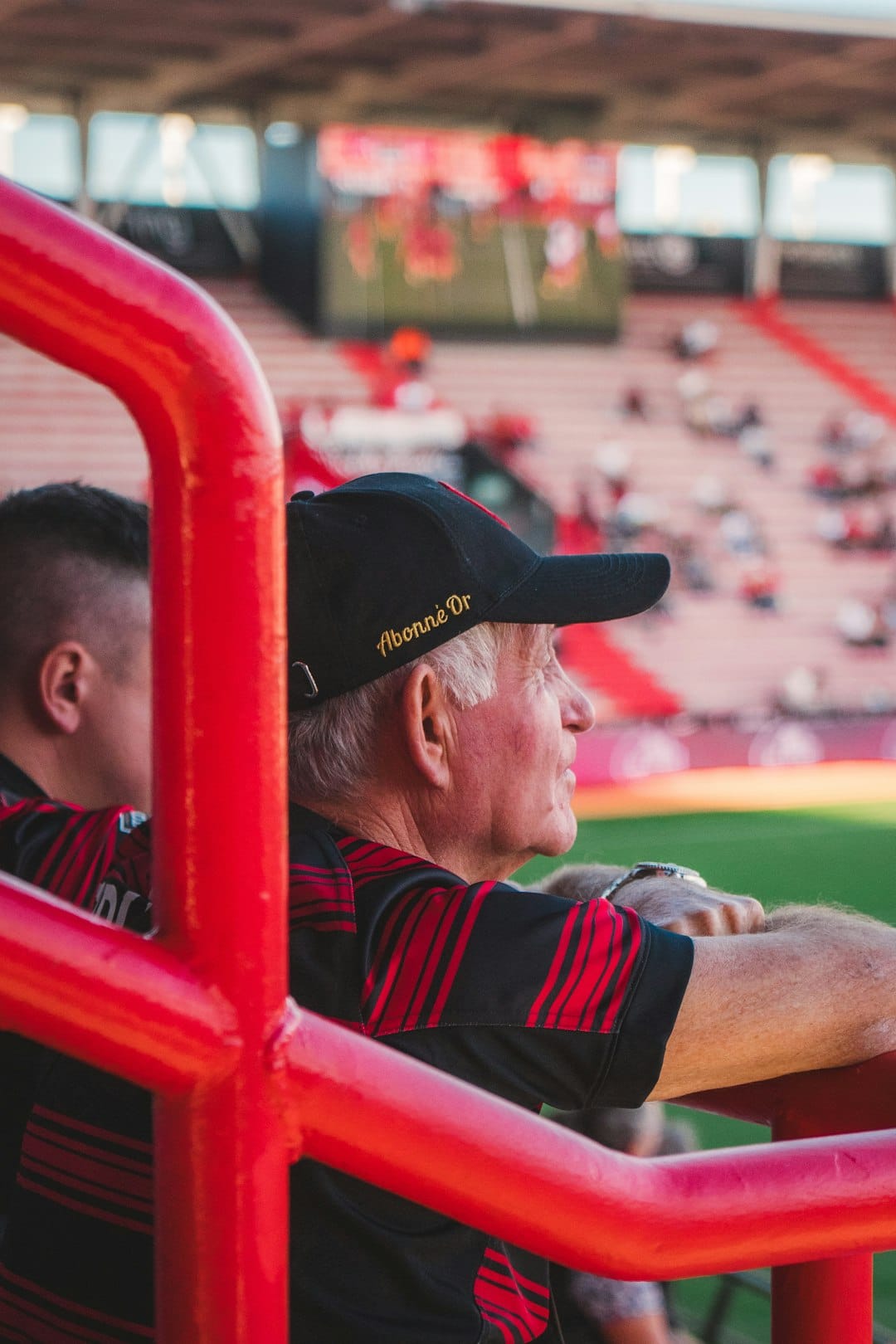
Manchester, MMN Correspondent: For 26 years, the idea of Manchester United without Sir Alex Ferguson was almost impossible to imagine. He had built dynasties, won titles, and made Old Trafford feel untouchable. When he announced his retirement in 2013, the question on everyone's mind was simple. Who could possibly follow him? The public answer was David Moyes. The real answer, as a new Netflix documentary reveals, was Jose Mourinho.
Mourinho, now 63 and back at Real Madrid for a second spell, says it directly. “When I left Real Madrid, I signed to go to Manchester United after Sir Alex.” That single sentence changes how we understand that summer. Ferguson himself backs it up. “He was offered the job, yes. I sat him down and explained the situation. As far as I was concerned, he was accepting. And then, within hours, it changed.”
So what happened in those hours? A phone call. A voice in tears. Ferguson remembers it clearly. “One night, he phoned me and he was crying and he says, 'Alex, I can't take it. I've given my word to Chelsea and I'm not going to break my word.'” Mourinho had already made a promise elsewhere, and his loyalty to that promise outweighed the chance to succeed the greatest manager in the club's history.
Here is where the story gets interesting. Mourinho built his career on preparation, control, and the ability to read a situation before anyone else. In this moment, he let his emotions lead. He explains, “One thing is love for football, another thing is love for a certain club. I think this is more powerful than love for football. After Real Madrid, I needed to feel that I'm loved.” There is something very human about a manager admitting that. He wanted to be somewhere that already knew his value, and Chelsea was that place.
That choice sent English football down a different path. Mourinho returned to Chelsea and delivered another Premier League title in 2015, along with a League Cup. His time there ended in December 2015. The story was far from over. Manchester United tried David Moyes first. He lasted ten months. Then came Louis van Gaal, who lifted the FA Cup but could not build the kind of title challenge the fans were waiting for. In May 2016, Mourinho finally walked through the Old Trafford door. He won the League Cup and the Europa League in his first season, and in December 2018 the journey came to a close. The chance to be the man who followed Ferguson was not the same when it arrived for a second time.
The documentary takes an unflinching look at other defining moments in his career, especially his first spell at Real Madrid. He had been sent to challenge Pep Guardiola's Barcelona, and he succeeded in that mission. His team won La Liga with a record 100 points, plus the Copa del Rey and the Spanish Super Cup. The dressing room was another story. The relationship with Iker Casillas became so tense that the legendary goalkeeper describes it as “very cold.” Sami Khedira paints a picture of a divided squad. “Iker is a Real Madrid legend, loved by every Real Madrid supporter. He benched him, doesn't speak to him, spoke bad about him in the media, so then this locker room was a nightmare, honestly. After that, the relationship between Jose and many, many players was broken like Cristiano Ronaldo and the Spanish guys, Casillas, Sergio Ramos.”
Mourinho's response to that criticism is typical. He tells the documentary about his first three conversations with Casillas, each one a request for something other than football. More holidays, later training, no hotel on matchday. “In a short period of time, I realised they're spoilt,” he says. Casillas remembers it differently, especially when Mourinho's rivalry with Barcelona extended into the Spain team. Mourinho makes no apology. “When you go to the national team, then you can kiss the guy, but not now. This is war.”
The documentary also explores the complicated relationship between Mourinho and Roman Abramovich. The former Chelsea owner hired him and eventually ended that relationship twice. Mourinho describes Abramovich as a man with incredible passion for football. He also says that, when it came to the daily reality at Chelsea, the owner knew nothing about the situation. The signing of Andriy Shevchenko in 2006 is used as an example. Mourinho never wanted the Ukrainian striker. The deal had connections higher up. He wanted Samuel Eto'o instead. Shevchenko's move never lived up to the excitement around it, and that episode added another layer to a bond that always had an edge.
The emotion came to the surface in February 2010. Mourinho had taken over at Inter Milan and drawn Chelsea in the Champions League. Inter won 2-1. Mourinho admits that the match was personal. “I was playing against Roman that game,” he says. “I go home happy and he goes home upset. I needed revenge, because football belongs to people like me. The other ones are the intruders that don't belong.”
What makes this story so compelling is the contradiction at the centre of it. Mourinho built his entire reputation on control and preparation. Then he turned down the most famous job in England because he wanted to feel wanted. He chose Chelsea over the chance to replace Ferguson. He says now that he does not regret it. It was a decision made with his heart, and that is perhaps the most revealing thing he has ever admitted about himself.
The 2013 phone call between two football giants is now part of the public record. It changed the direction of Manchester United, Chelsea, and maybe the entire Premier League. The documentary lets us hear both sides, and it gives fans a new way to understand a moment that has been discussed for years. The story of Mourinho and Ferguson was always going to have a twist. This is it.
Related in Sport
Sport
Beyond Talent: How Interdisciplinary Science is Redefining Elite Sports Performance
In the 21st century, the landscape of competitive sports has undergone a profound transformation. No longer confined to the realms of raw motor skills, intuition, and innate talent, high-level athletics now stands at the intersection of biology, psychology, data science, and man…
Read More...
Sport
Fat Burning Myths Debunked: How Lean Mass Dictates Metabolism for Men and Women
For decades the fitness world has operated on a specific assumption about how men and women burn fuel. The prevailing wisdom suggested that men possess a biological edge in fat oxidation during exercise. This belief was often tied to higher testosterone levels and greater skelet…
Read More...
Sport
How Jump Metrics Predict Clubhead Speed in Sub-Elite Golfers
Driving distance stands as a critical determinant of scoring performance in golf. Even modest increases in yardage can translate to significant strokes saved over the course of a tournament. While clubhead speed remains widely recognized as a primary driver of distance, understa…
Read More...
Sport
Deadlifts Before Cycling: Why Heavy Lifting Fails to Boost Endurance Performance
The concept of Post-Activation Performance Enhancement (PAPE) has long been a staple in strength and conditioning protocols. Athletes frequently utilize heavy resistance exercises, such as squats or deadlifts, immediately prior to explosive movements like sprinting or jumping, u…
Read More...
Sport
How Elite Lifters Use Words to Build Confidence: New Study Reveals Mental Strategies
Competitive weightlifting demands extreme physical precision under intense psychological pressure. Athletes must execute complex movements within strict time limits where a single error can shift the entire competitive landscape. A recent study published in Sports (MDPI) on Octo…
Read More...
Sport
Elite Gymnast Shoulder Strength: Biomechanical Insights for Injury Prevention
Shoulder injuries stand as a primary hurdle in artistic gymnastics. This sport requires extreme ranges of motion and places heavy loads on the upper body. A recent study published in Sports (MDPI) explores the biomechanical advantages held by competitive male gymnasts. The resea…
Read More...
Sport
How Machine Learning Decodes Elite Athletic Success: Key Drivers Revealed
The quest for peak athletic performance has always balanced art and science. Recent advances in artificial intelligence now bring unprecedented clarity to the factors that distinguish good athletes from elite ones. A groundbreaking study published in the journal Sports by resear…
Read More...
Sport
Czech Pro Tennis: The Mental Edge That Wins Matches
Professional tennis is often viewed as a physical contest, but the sport places immense psychological demands on athletes. A recent qualitative study of Czech professional players reveals that mental preparation is critical for managing the intense pressure, rapid decision-makin…
Read More...
Sport
Ultramarathon Pain Science: How Runners Turn Suffering Into Speed
The world of ultramarathon running has exploded in popularity over the last twenty years. These events challenge athletes to cover distances far beyond the standard marathon of 42.195 kilometers. While many participants seek personal growth or simply enjoy the beauty of nature,…
Read More...
Sport
Swimming Data Crisis: Implausible Times and Flawed Metrics Undermine Critical Velocity Analysis
A recent scientific commentary has raised significant concerns regarding the validity of bioenergetic performance data in competitive swimming, specifically targeting a study by Amara et al. published in Sports (2026). The critique highlights two critical methodological flaws th…
Read More...