
How 223 Exposures Reveal Andromeda: The Real Science Behind Your Favorite Galaxy Photos
We compile, generate and translate using Artificial Intelligence from the below given source. Macro Micro News is responsible for its editorial publication.
Global, Source:
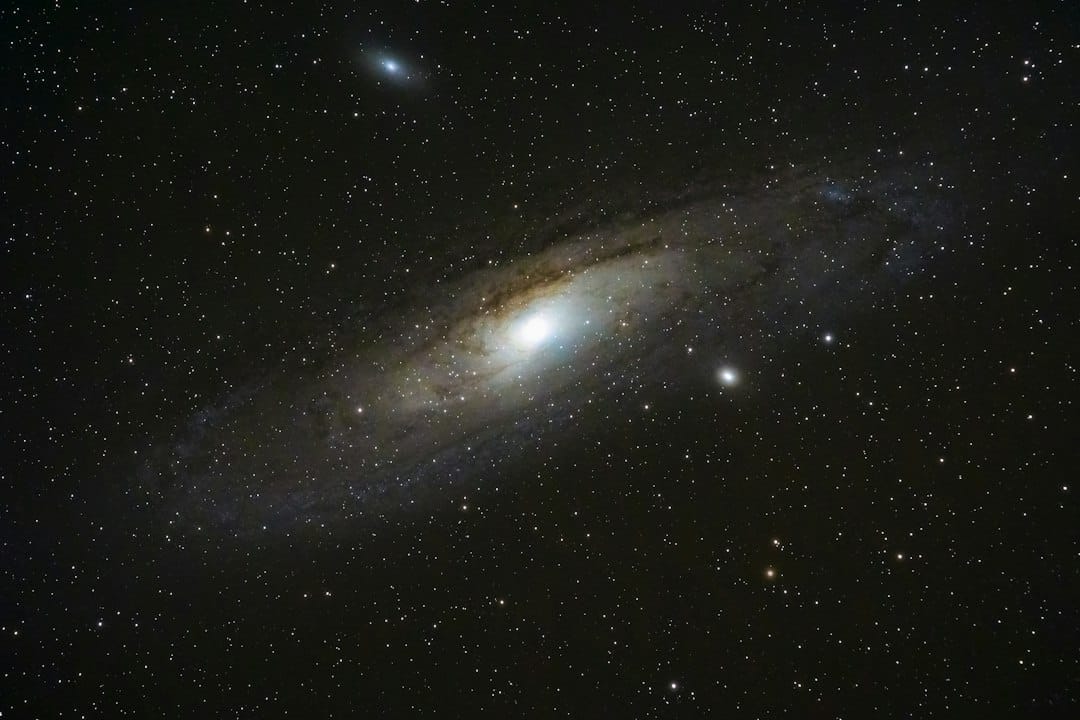
The Andromeda Galaxy, scientifically known as M31, sits about 2.5 million light-years from our Milky Way. It is the closest major galactic neighbor we have. Capturing its image is a significant challenge for both amateur and professional astronomers. The galaxy has low surface brightness, and Earth's atmosphere interferes with clear views. A recent feature from NASA’s Astronomy Picture of the Day highlights the intricate process required to transform raw astronomical data into a clear representation of this cosmic giant. What you see in astrophotography is often the result of sophisticated digital processing rather than simple optical capture.
The featured image was constructed from a stack of 223 individual exposures. Each exposure lasted 300 seconds. These images were taken from a garden observatory during 2019. This setting introduces specific environmental challenges. Unlike space-based telescopes, ground-based observations must contend with light pollution, atmospheric turbulence, and sensor noise. The raw data collected in such conditions contains numerous imperfections. You might find bright parallel lines caused by satellite trails or aircraft. There are also long continuous streaks from star trailing due to tracking errors. Short noise artifacts and other digital anomalies are inherent to consumer-grade cameras.
Contrary to popular belief, the final image does not rely on Photoshop to artificially enhance or fabricate details of the galaxy. Instead, the reduction of these earthly artifacts is achieved through specialized astrophotography software packages. Tools like Astro Pixel Processor, DeepSkyStacker, and PixInsight are used here. These tools utilize complex algorithms to align, calibrate, and combine the multiple exposures. By stacking hundreds of images, random noise is averaged out. The faint signal of the distant galaxy is amplified. This process minimizes Earthly artifacts that have nothing to do with the distant galaxy. It recreates the true likeness of M31 without altering its scientific integrity.
This methodology underscores a critical aspect of modern amateur astronomy. It draws a distinction between artistic enhancement and scientific data reduction. The goal is not to create an image that looks different from reality. The aim is to remove the visual clutter introduced by our planet’s environment. As technology advances, allowing for higher-quality sensors and more efficient processing software, the barrier to capturing high-fidelity images of deep-sky objects continues to lower. This democratization of high-resolution astronomy allows enthusiasts to contribute valuable data to the broader scientific community while sharing the beauty of the universe with the public. The resulting image serves as both a stunning visual record and a testament to the technical precision required to peer beyond our atmosphere.
Related in Space Tech
Space Tech
Lunar Farside Revealed: 15,000 Images Uncover Ancient Moon Terrain
For centuries we have looked up and seen only one face of our nearest celestial neighbor. Tidal locking keeps the far side turned away from Earth, creating a permanent blind spot in human history. Modern orbital technology has now lifted that veil. A detailed mosaic captured by…
Read More...
Space Tech
Stickney Crater: How a Massive Impact Nearly Destroyed Mars' Moon Phobos
Phobos, the innermost moon of Mars, carries a scar that tells a story of cosmic violence. Stickney Crater dominates its surface, a colossal basin named after Angeline Stickney Hall, wife of astronomer Asaph Hall. Hall discovered both Phobos and Deimos in 1877, linking human hist…
Read More...
Space Tech
Saturn's Cosmic Clarity: How One Night Revealed the Ringed Planet's Secrets
On October 8, 2026, the Astronomy Picture of the Day featured a breathtaking composite image titled "The Saturn System Smörgåsbord." This visual feast offers an unprecedented view of the ringed planet and its diverse moons. Astrophotographer Tom Williams captured this exquisite…
Read More...
Space Tech
Artemis II Crew Captures Lunar Impact Flashes: What the Moon Revealed in April 2026
NASA has shared a remarkable dataset from the Artemis II mission that offers fresh perspectives on our lunar neighbor. The journey occurred between April 1 and April 10, 2026, marking the first crewed trip to the Moon's vicinity since the Apollo days. Astronauts Reid Wiseman, Vi…
Read More...
Space Tech
Pa 30: The 845-Year-Old Supernova Mystery That Defies Standard Models
The night sky holds countless stories written in light and dust. Among these celestial narratives, supernova remnants stand as testaments to the violent yet creative end of stellar lives. These expanding shells do more than mark a star's death. They scatter heavy elements across…
Read More...
Space Tech
Earth's Full Aurora Ring Revealed: SMILE Mission Captures Complete View
Scientists have achieved a remarkable first by capturing the entire auroral oval in one continuous shot. The Solar Wind Magnetosphere Ionosphere Link Explorer mission shared this image on October 6, 2026. This perspective offers a fresh look at how our planet interacts with the…
Read More...
Space Tech
Sombrero Galaxy M104: New Deep-Exposure Image Reveals Tidal Streams and Violent History
The Sombrero Galaxy, known scientifically as Messier 104 or M104, has always drawn the eye with its striking resemblance to a wide-brimmed Mexican hat. This massive spiral galaxy features a bright central bulge encircled by a distinctive dark band of interstellar dust. While ast…
Read More...
Space Tech
New Jersey Sky: Witnessing Supernumerary Rainbows and the Wave Nature of Light
On October 4, 2026, the skies above New Jersey presented a rare spectacle that captivated both amateur photographers and meteorology enthusiasts. Following the passage of storm remnants over the Jersey Shore, a standard rainbow appeared in one direction. However, the phenomenon…
Read More...
Space Tech
Mars Rover's New Selfie Reveals Vera Rubin Ridge Secrets
NASA’s Curiosity rover has once again provided humanity with a breathtaking glimpse into the red planet. The vehicle captured a stunning panoramic selfie at the south rim of Vera Rubin Ridge. This image served as the Astronomy Picture of the Day for October 3, 2026. It marks a s…
Read More...
Space Tech
313 Nebulas Captured: The Complete Sharpless Catalog Revealed in Eastern China
On October 2, 2026, NASA’s Astronomy Picture of the Day highlighted a monumental achievement in astrophotography. The complete Sharpless Catalog has been unveiled, showcasing 313 distinct nebulae. This comprehensive collection offers an unprecedented opportunity to explore the d…
Read More...