
How AI Is Reshaping Our View of the Universe: A New Era for Astronomical Data
We compile, generate and translate using Artificial Intelligence from the below given source. Macro Micro News is responsible for its editorial publication.
Washington, United States, Source:
The cosmos presents a vast and intricate puzzle that has long challenged our observational capabilities. For years, astronomers have navigated a difficult trade-off in survey design, often forced to choose between covering wide swaths of sky, detecting faint objects with deep sensitivity, or capturing high-resolution details. This classic dilemma creates an ill-posed inverse problem where traditional deconvolution methods frequently reach their limits. Yet, a transformative shift is now underway as artificial intelligence, particularly deep learning, offers a powerful pathway to enhance astronomical data without the need for new telescope hardware.
On September 8, 2026, the NASA Cosmic Origins program hosted a pivotal seminar within its Galaxies Science Interest Group (SIG). The session featured Shoubaneh Hemmati from Caltech/IPAC, who presented groundbreaking research titled "Learning to See Sharper: Deep Learning for Astronomical Data Enhancement." Her work illustrates how neural networks can transform low-resolution, wide-area surveys into high-fidelity datasets, effectively bridging the gap between broad coverage and fine detail.
Hemmati’s approach cleverly leverages survey overlaps as empirical priors. By training deep learning models on these overlapping regions, algorithms learn direct mappings from low to high resolution. This method allows scientists to enhance existing archives, extracting more information from data that was previously considered too noisy or blurry for precise analysis. The presentation highlighted specialized neural architectures tailored to distinct challenges in modern astrophysics. For instance, generative models are being used to deblend crowded stellar fields and super-resolve infrared observations, revealing structures hidden within dense galactic centers.
Furthermore, the seminar detailed the application of shape-preserving residual networks designed specifically for weak lensing studies. Weak lensing measures the distortion of light from distant galaxies caused by intervening mass, requiring extreme precision in maintaining image shapes. Traditional methods often introduce artifacts, but these AI-driven models preserve structural integrity while enhancing clarity. Additionally, diffusion models are now employed to create realistic survey simulations, helping researchers test hypotheses against synthetic data that mimics real-world conditions with unprecedented accuracy.
One of the most critical advancements discussed was the development of physics-informed models capable of resolving blended spectral emission lines. In spectroscopy, signals from different elements often overlap, making it difficult to identify specific chemical compositions. Physics-informed neural networks integrate known physical laws into their architecture, allowing them to disentangle these complex signals more effectively than purely data-driven approaches. This capability is crucial for understanding the chemical evolution of galaxies across cosmic time.
The overarching theme of the seminar was the importance of matching right-sized architectures to specific scientific measurements. Rather than applying generic AI solutions, astronomers are customizing models to address particular observational constraints. This targeted approach ensures that learned priors scale effectively across next-generation surveys, such as those conducted by the James Webb Space Telescope and future missions like the Nancy Grace Roman Space Telescope. As these technologies mature, they promise to unlock new layers of cosmic history, turning the noise of the universe into a clear signal of discovery.
Related in Scientific Research

Scientific Research
PLOS Climate: How Open Access is Reshaping Global Warming Research
The landscape of scientific communication is shifting rapidly. Integrity and accessibility are no longer just nice-to-haves but essential pillars of modern research. PLOS Climate stands at the center of this transformation. This journal from the Public Library of Science in Cali…
Read More...
Scientific Research
PLOS Climate: Navigating Broken Links to Access Critical Global Warming Research
The digital landscape of scientific publishing is shifting rapidly. For researchers and enthusiasts alike, the ability to access peer-reviewed work without barriers is essential. PLOS, a nonprofit based in California, has long championed open access. Their journal PLOS Climate f…
Read More...
Scientific Research
How PLOS Climate Is Reshaping Global Science: The Open Access Advantage
In the fast-moving world of scientific communication, open access journals are doing more than just sharing papers. They are breaking down walls that have long kept knowledge out of reach. PLOS Climate stands at the center of this shift. As a key part of the Public Library of Sc…
Read More...
Scientific Research
PLOS Climate: How Open Science is Reshaping Global Data Access
The digital landscape of scientific publishing is undergoing a profound transformation. This shift is driven by the urgent need for transparency and rapid dissemination of critical research. PLOS Climate stands at the forefront of this movement. It is a specialized journal dedic…
Read More...
Scientific Research
PLOS Climate 404 Errors: How Link Rot Threatens Scientific Trust and What You Can Do
The digital landscape of scientific communication is shifting rapidly. For researchers, policymakers, and educators, the integrity of open-access journals like PLOS Climate is not just a convenience but a necessity. Yet, even the most robust platforms face technical hurdles. A r…
Read More...
Scientific Research
PLOS Climate: How Open Access is Reshaping Global Warming Solutions
The landscape of scientific publishing is shifting beneath our feet. Accessibility and transparency are no longer just nice-to-have features; they are the bedrock upon which we address the most pressing challenges of our time. The Public Library of Science (PLOS), a nonprofit ba…
Read More...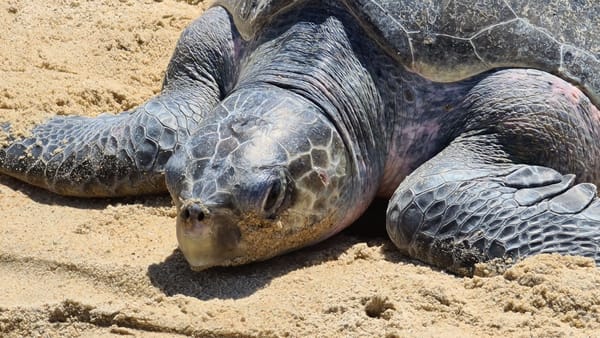
Scientific Research
California Beaches See First Olive Ridley Nesting: What This Means for Sea Turtle Conservation
Marine biologists are witnessing a historic shift in ocean ecology. On September 16, 2026, an olive ridley sea turtle laid eggs on a beach near Seal Beach in Orange County, California. This event marks the first confirmed nesting of this species on the U.S. West Coast. Historica…
Read More...
Scientific Research
PLOS Climate: Why Broken Links Threaten Global Science Access
The digital landscape of scientific communication is shifting beneath our feet. As climate research accelerates, the integrity and accessibility of this data have become paramount. Specialized journals like PLOS Climate face constant challenges regarding content availability and…
Read More...
Scientific Research
Why Climate Data Links Fail: The Open Access Fix You Need Now
Imagine clicking a link to the latest climate study only to hit a dead end. That frustrating 'Page Not Found' error is more than a technical glitch. It represents a significant barrier in the fight against misinformation and delayed action. When vital research on global warming…
Read More...
Scientific Research
What Color Is the Universe? The Surprising Beige Answer from Johns Hopkins
For centuries humanity has gazed into the night sky captivated by vibrant nebulae and dying stars. Yet a deceptively simple question remains elusive to the naked eye. What is the average color of the entire universe? The answer defies expectations of deep cosmic blues or brillia…
Read More...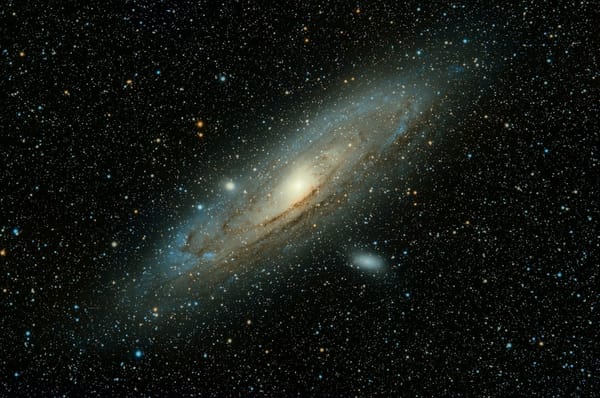
Scientific Research
How Astronomers Rebuilt Andromeda Without Photoshop: The 223-Exposure Secret to Clarity
The Andromeda Galaxy, scientifically designated as M31, looms as our nearest major galactic neighbor. It offers a profound window into the structure and scale of our local universe. Yet capturing its true essence remains a formidable challenge for both amateur and professional a…
Read More...