
How Fault-Aware HIL Verification Secures AUTOSAR Timing Compliance in Modern ECUs
We compile, generate and translate using Artificial Intelligence from the below given source. Macro Micro News is responsible for its editorial publication.
Global, Global, Source:
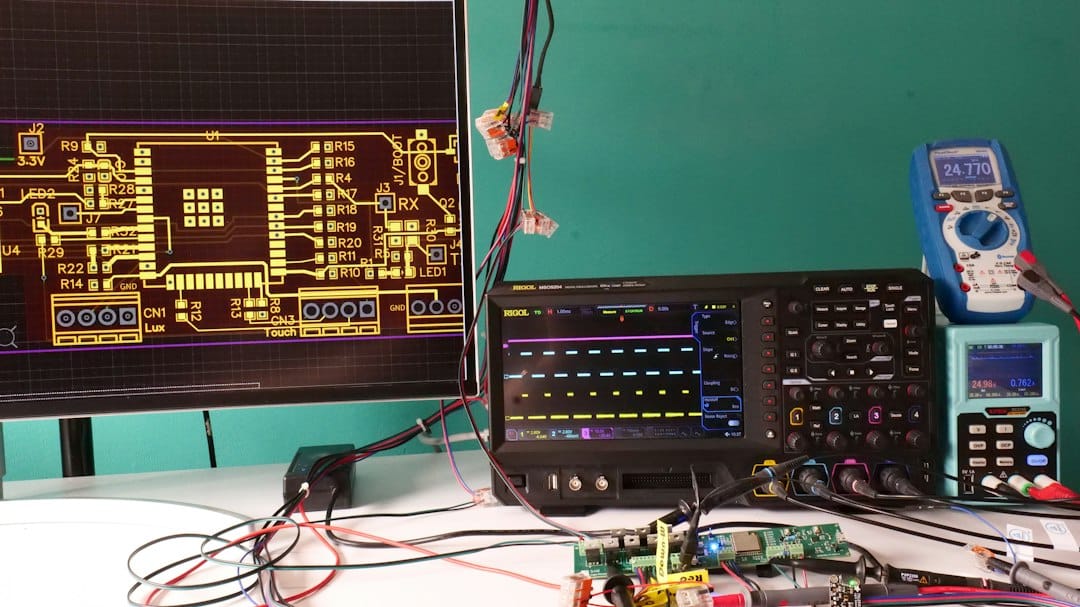
As automotive electronics grow more complex, ensuring the safety integrity of Electronic Control Units (ECUs) has become a top priority under standards like ISO 26262. While functional correctness is routinely validated, timing correctness remains a nuanced challenge. This is especially true regarding compliance with AUTOSAR Timing Extensions (TIMEX). A recent study introduces a novel Hardware-in-the-Loop (HIL) based framework designed to bridge this gap. It treats the safety-critical application as an architectural black box. This approach ensures rigorous verification of timing constraints even when faults are present.
The proposed framework addresses a significant limitation in current validation practices. These practices often overlook how signal faults impact timing compliance. The system uses custom Simulink tracing blocks to record pre-fault, post-fault, and actuator events at the Controller Area Network (CAN) boundary. A Java-based pipeline processes this data. It parses ARXML system definitions to generate executable validators for each specific constraint. The system intelligently compensates for various real-world variables. These include cycle offsets, packet loss, profiling overhead, and injected delay faults. This ensures an accurate assessment of the system's behavior.
In a comprehensive evaluation using a dSPACE SCALEXIO simulator coupled with a MicroAutoBox II executing an ASM gasoline engine controller, the framework demonstrated high precision. The test focused on an end-to-end latency constraint of 975–1005 µs. During a golden run, the mean latency was recorded at 989,603 ns, which passed the constraint. Similarly, a test involving a 1.4× gain fault resulted in a mean latency of 989,712 ns, also passing. However, when a 0.5-second delay fault was introduced, the mean latency shifted dramatically to 500,989,704 ns. This violated every matched pair. These results confirm that boundary observations are sufficient to correctly report the timing impact of both value-altering and timing-altering faults.
This approach not only enhances the reliability of safety-critical systems but also supports traceability required by Automotive SPICE SWE.5 and ISO 26262-6. By providing a robust method for verifying timing constraints under fault conditions, this framework offers a vital tool for engineers developing next-generation automotive embedded systems. It ensures that safety obligations are met with mathematical rigor and practical validation. The ability to detect subtle timing deviations before they reach the vehicle adds a layer of confidence to the development process. Engineers can now trust that their timing models hold up against realistic fault scenarios.
Related in Gadgets

Gadgets
Why Your Browser Says No: The Hidden Logic Behind Access Denied Errors
The digital world moves fast. Yet one experience remains universally frustrating for users everywhere. That sudden stop when a website refuses to load. You see the stark message 'Access Denied' or the HTTP 403 Forbidden code. This is not just a random error. It is a critical sig…
Read More...
Gadgets
Why Your Browser Says No: The Hidden Logic Behind Access Denied Errors
Have you ever stared at a blank screen that simply refuses to let you in? That frustrating 'Access Denied' message is more than just a digital roadblock. It is actually a sign that the internet's security systems are working exactly as they should. When you see an HTTP 403 Forbi…
Read More...
Gadgets
COMBI-CBRN: How Modular Sensors Are Redefining Firefighter Safety in CBRN Emergencies
Global, Source Emergency response teams face a complex puzzle when dealing with Chemical, Biological, Radiological, and Nuclear incidents. The safety of first responders often hinges on the accuracy of initial reconnaissance. Traditional methods frequently rely on separate detec…
Read More...
Gadgets
How Structure-Aware Alignment Boosts AI Accuracy in Partial-Label Learning
The world of artificial intelligence faces a persistent hurdle. Perfectly labeled data is rare and expensive to obtain. Researchers have turned to partial-label learning as a solution. This method allows models to learn from ambiguous supervision. Each instance comes with a set…
Read More...
Gadgets
Boost Weed Detection AI Accuracy Without New Hardware: The MASC Method
Agricultural technology is experiencing a major shift as artificial intelligence models grow more resilient to environmental changes. A new study introduces Metadata-Guided Appearance-Shift Consistency (MASC), a training framework that improves weed detection in outdoor images w…
Read More...
Gadgets
AI Detects Transmission Tower Flaws: 59% Precision Boost for Grid Safety
Modern energy grids depend on the reliability of electrical transmission infrastructure. Manual inspections of towering steel structures remain labor-intensive and prone to human error. A recent breakthrough in computer vision technology offers a transformative solution for iden…
Read More...
Gadgets
Why You Are Blocked: The Hidden Mechanics of Web Access Control
Have you ever stared at a screen and seen those three ominous words: Access Denied? It is not just a technical glitch. It is the result of sophisticated security protocols working hard to protect server resources and sensitive data. This phenomenon is a fundamental aspect of how…
Read More...
Gadgets
Class-D Amplifier Limits: Why Switching Frequency Defines Your Audio Fidelity
Class-D amplifiers have long been celebrated for their impressive energy efficiency. Yet achieving pristine audio quality requires navigating a complex web of technical constraints. A recent study in Electronics (MDPI) offers a new framework for selecting the optimal switching f…
Read More...
Gadgets
Why Your Greenhouse Sensors Fail: The MQTT Timing Trap and How to Fix It
Smart greenhouses promise precision agriculture through continuous data streams. Yet many growers face a frustrating reality where wireless sensor networks falter under the weight of their own complexity. A recent study in Electronics (MDPI) sheds light on this issue by introduc…
Read More...
Gadgets
Bit-Accurate FPGA Control: Reliable PV-STATCOM Ride-Through in Weak Grids
As renewable energy integration accelerates, the stability of power grids facing voltage sags and weak grid conditions has become a critical engineering challenge. A recent study published in Electronics (MDPI) addresses this by delivering a comprehensive analysis of bit-accurat…
Read More...