
How NASA’s Johnson Space Center Builds Future Engineers: A Mentorship Blueprint for Success
We compile, generate and translate using Artificial Intelligence from the below given source. Macro Micro News is responsible for its editorial publication.
Houston, United States, Source:
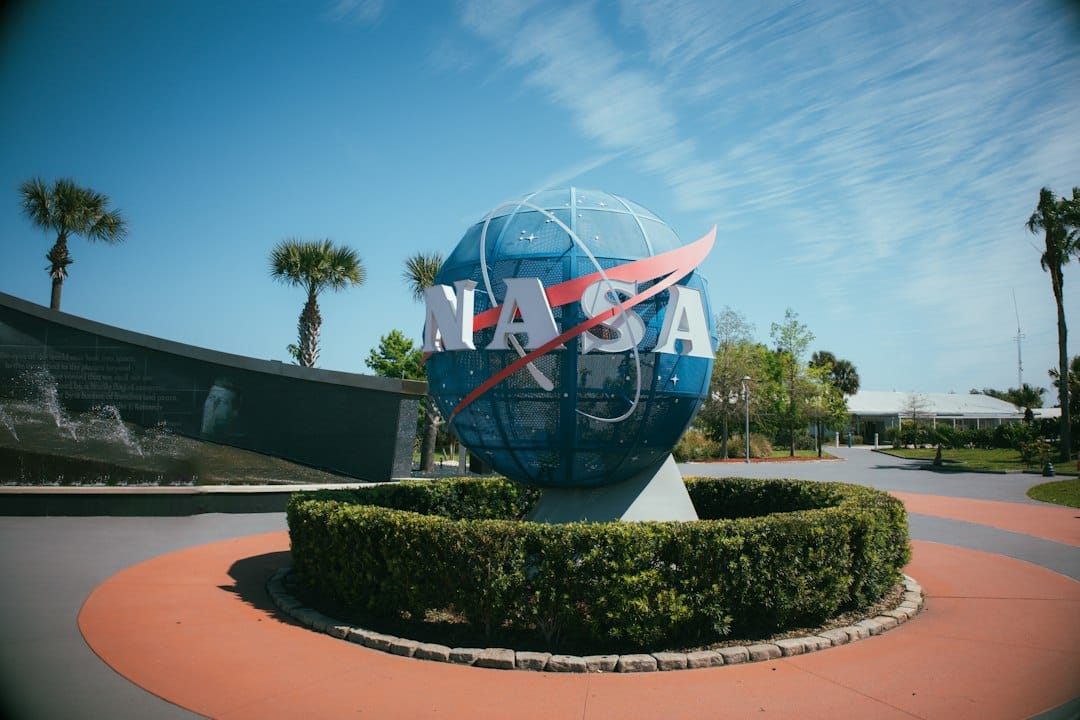
As National Mentoring Day approaches on October 27, 2026, a compelling narrative emerges from NASA’s Johnson Space Center regarding the critical role of mentorship in sustaining America’s leadership in space exploration. The story centers on Daniel Cohen, a Guidance, Navigation & Control (GN&C) engineer, and Malvika Bhardwaj, a computational and applied mathematics student at Rice University. Their professional relationship exemplifies how experienced engineers shape the careers of emerging talent through dedicated guidance and practical exposure.
Bhardwaj, currently interning with the GN&C team, is tasked with developing sophisticated tools to analyze thruster firings for the U.S. Deorbit Vehicle. This vehicle is pivotal to NASA’s plan to safely deorbit the International Space Station at the end of its operational life. Her work involves rigorous computer simulations to test control systems and identify potential failure conditions, ensuring the safety of future orbital operations. Beyond technical execution, Bhardwaj has gained invaluable insight into the collaborative culture at Johnson, observing how team members support one another to keep complex projects moving forward.
Cohen, a Rice University alumnus who began his NASA career as a flight operations intern in 2020, understands the value of this support system. After holding various internships in docking dynamics, propulsion systems, and GN&C analysis, he joined Johnson as a full-time engineer in August 2024. His current responsibilities include developing simulations for the Deorbit Vehicle, analyzing control algorithms, and evaluating SpaceX designs during life-cycle reviews. Additionally, he works on optimizing settings for the Orion spacecraft’s docking camera, which aids navigation during Artemis mission rendezvous activities.
Recognizing the importance of knowledge transfer, Cohen dedicates several hours each week to teaching interns topics such as orbital mechanics and control systems. He actively integrates Bhardwaj into team conversations and meetings, fostering an environment where problem-solving is viewed as a collective effort rather than an individual endeavor. This approach helps interns understand how their specific contributions connect to larger agency goals.
Bhardwaj’s experience highlights the broader accessibility of STEM careers within NASA. Working alongside colleagues in outreach, social media, and digital design has broadened her perspective, demonstrating that diverse interests can find meaningful roles in space exploration. She completed her first project-a set of analysis tools built from scratch-finding particular reward in the debugging process and the final functioning product.
For students considering NASA internships, Bhardwaj offers pragmatic advice: apply even if you do not feel fully prepared. She emphasizes that learning often occurs on the job and encourages trust in one’s ability to navigate new environments. This mindset, supported by mentors like Cohen, ensures that the next generation of engineers is not only technically proficient but also culturally aligned with NASA’s mission of discovery and innovation.
Related in Space Tech
Space Tech
Pegasus Galaxy Collision: What Happens When NGC 7771 Merges?
The cosmos operates on a scale that defies human intuition. Galaxies are not static objects floating in void but dynamic entities engaged in a slow-motion dance spanning billions of years. The NGC 7771 group offers a striking glimpse into this celestial choreography. Located app…
Read More...
Space Tech
Lynds 1251: How Dark Dust Clouds Ignite New Stars in the Cosmos
The cosmos often feels like a silent void, but that darkness is actually a canvas waiting for creation. On November 23, 2026, the Astronomy Picture of the Day featured Lynds 1251, a dark nebula affectionately called the Rotten Fish Nebula. This image does more than show empty sp…
Read More...
Space Tech
Jupiter's Color Code: How Juno Deciphers the Gas Giant's Atmospheric Palette
The gas giant Jupiter has long captivated astronomers with its dynamic atmosphere, a swirling canvas of storms and bands that have been observed for centuries. However, the precise chemical mechanisms behind the planet's vibrant hues remain one of astrophysics' enduring enigmas.…
Read More...
Space Tech
Voyager 2 at Neptune: The Last Look from the Edge of Our Solar System
On November 21, 2026, NASA’s Astronomy Picture of the Day showcases a breathtaking composite image of Neptune. This visual record comes from Voyager 2, the only spacecraft to ever visit this ice giant during its historic flyby. The image stands as a powerful testament to human i…
Read More...
Space Tech
Voyager 1 Enters Interstellar Space: The Historic Milestone of November 2026
On November 20, 2026, the astronomical community marked a profound milestone as NASA’s Astronomy Picture of the Day highlighted the historic journey of Voyager 1. The featured image, captured by the Emirates Astronomical Observatory, depicts a time-exposure photograph where Mors…
Read More...
Space Tech
Orion's Cosmic Canvas: Horsehead and Flame Nebulas Revealed in Stunning Detail
The night sky often serves as a canvas for some of the most breathtaking natural artistry in the universe. Few images capture this essence quite like the combined view of the Horsehead and Flame Nebulas. This celestial scene offers a profound glimpse into the dynamic processes o…
Read More...
Space Tech
M-Class Solar Flare: How NASA's New Image Reveals the Sun's Extreme Heat Mystery
On November 18, 2026, NASA’s Astronomy Picture of the Day shared a striking image captured on May 14, 2025. This visual record highlights an M-class solar flare and invites you to look closer at the dynamic processes shaping our star. The photograph displays bright loops of plas…
Read More...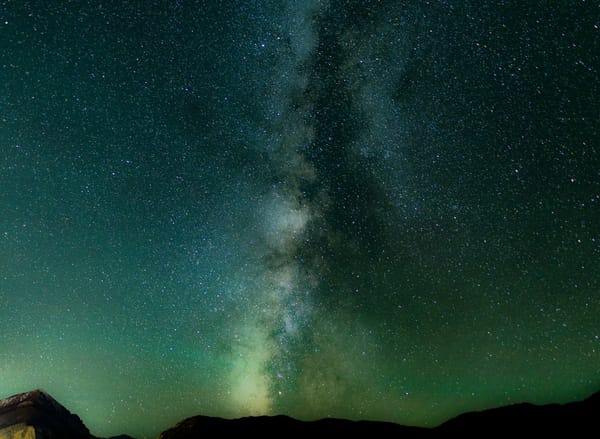
Space Tech
Milky Way Meets Aurora: The Rare Sky Event of November 17, 2026
On November 17, 2026, the night sky presented a breathtaking spectacle that blurred the lines between the distant cosmos and our immediate atmospheric environment. Captured in northern regions, an image revealed two majestic arches dominating the heavens, creating a visual illus…
Read More...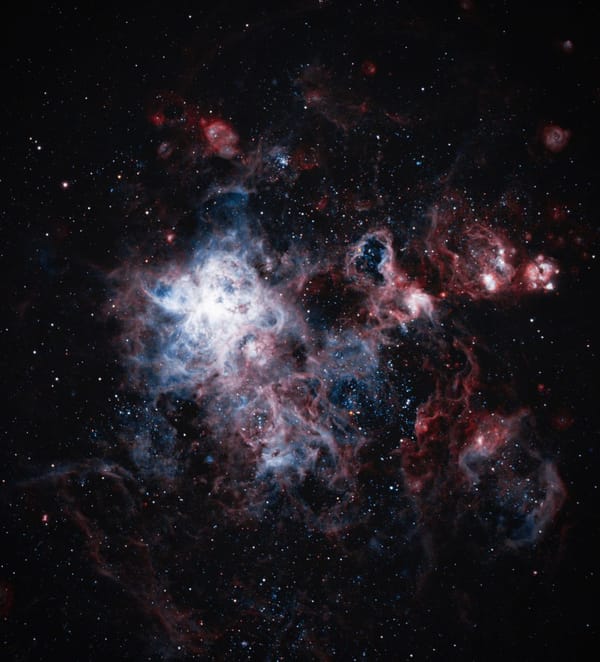
Space Tech
Webb Telescope Reveals NGC 7129: How Violent Jets Sculpt New Stars
The James Webb Space Telescope has delivered a stunning new view of NGC 7129, a star-forming region located about 3,000 light-years away in the constellation Cepheus. This celestial nursery offers astronomers a rare chance to study how stars are born within chaotic and turbulent…
Read More...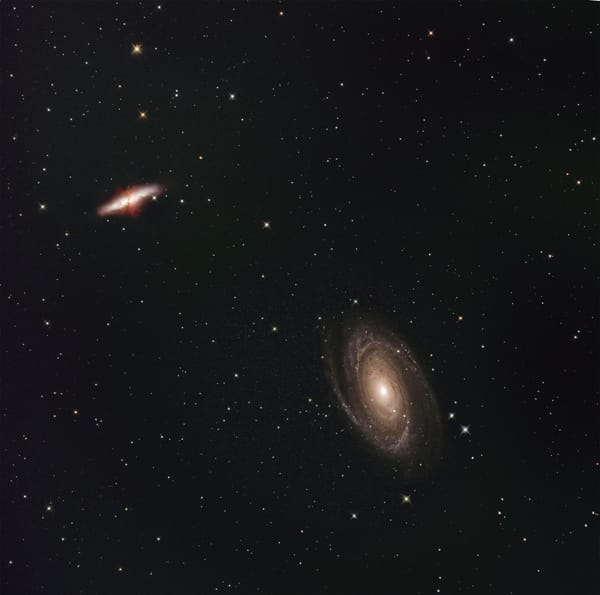
Space Tech
NASA Chandra Data Reveals Why Massive Star AT 2016blu Keeps Exploding
Astronomers have used NASA’s Chandra X-ray Observatory to uncover the reasons behind the erratic behavior of a massive star named AT 2016blu. This discovery offers a clearer picture of how unstable stars evolve and release energy in violent bursts. The star resides in the spiral…
Read More...