
How Near-Infrared Photography Captures the Milky Way Over Manhattan's Light Pollution
We compile, generate and translate using Artificial Intelligence from the below given source. Macro Micro News is responsible for its editorial publication.
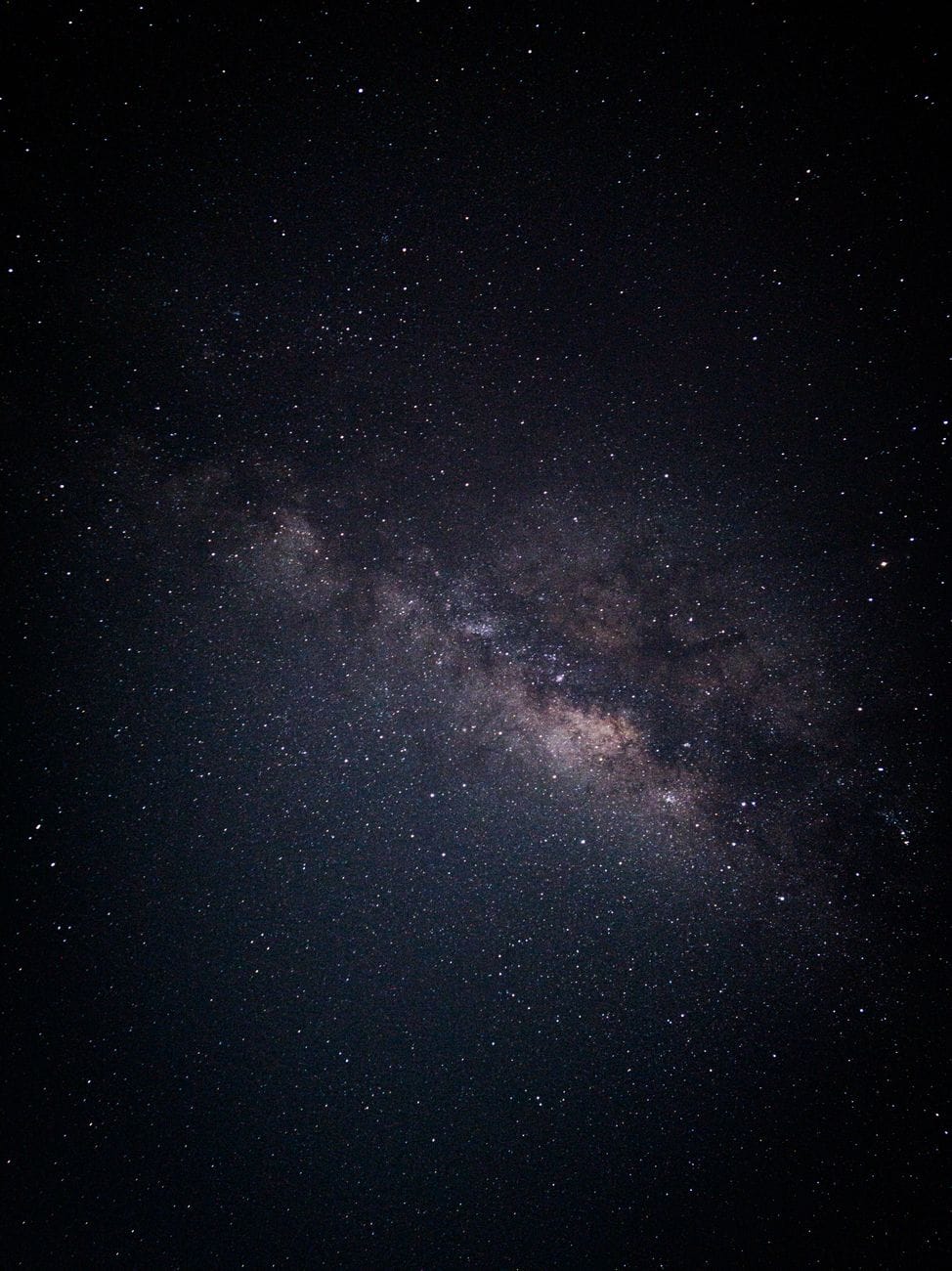
New York City, United States, Source:
On October 15, 2026, NASA’s Astronomy Picture of the Day presented a compelling visual that challenges our assumptions about urban night skies. The image displays the Milky Way galaxy shining clearly above the dense skyline of Manhattan, New York City. This photograph demonstrates that light pollution does not completely erase astronomical visibility within major metropolitan areas. It serves as a reminder that advanced photographic methods can reveal celestial beauty even in heavily populated zones where human vision is limited by artificial lighting.
The ability to capture this scene relies on specialized near-infrared filters. Standard visible light photography often fails against city glare because scattered light washes out faint starlight. By using a filter that blocks most visible wavelengths and allows only near-infrared light to pass, astrophotographers can isolate specific spectral data. Near-infrared radiation interacts with atmospheric conditions and light sources differently than visible light, offering a unique perspective on the night sky.
In this spectral range, various light sources behave in distinct ways. Traditional incandescent bulbs and some older streetlights emit significant infrared radiation, appearing bright in the resulting images. Modern LED and fluorescent bulbs, however, are inefficient emitters of near-infrared light and appear dark or dim. This difference allows natural starlight from the Milky Way to stand out against the urban background. The technique creates a clear view of the cosmos amidst modern infrastructure without relying on contrast-based storytelling.
Terrestrial elements like foliage and certain building materials also reflect or emit near-infrared light, adding texture to the urban foreground. The final image functions as both an astronomical record and an observation of environmental interaction. It illustrates how technology connects urban life with cosmic awareness. Understanding light properties across different spectra enables observers to find viewing opportunities regardless of location. This approach highlights the value of adaptive optics and spectral filtering in modern astronomy. The image encourages viewers to appreciate the universe present above busy streets, showing that the sky remains accessible through the right technical tools.
Related in Space Tech
Space Tech
Pegasus Galaxy Collision: What Happens When NGC 7771 Merges?
The cosmos operates on a scale that defies human intuition. Galaxies are not static objects floating in void but dynamic entities engaged in a slow-motion dance spanning billions of years. The NGC 7771 group offers a striking glimpse into this celestial choreography. Located app…
Read More...
Space Tech
Lynds 1251: How Dark Dust Clouds Ignite New Stars in the Cosmos
The cosmos often feels like a silent void, but that darkness is actually a canvas waiting for creation. On November 23, 2026, the Astronomy Picture of the Day featured Lynds 1251, a dark nebula affectionately called the Rotten Fish Nebula. This image does more than show empty sp…
Read More...
Space Tech
Jupiter's Color Code: How Juno Deciphers the Gas Giant's Atmospheric Palette
The gas giant Jupiter has long captivated astronomers with its dynamic atmosphere, a swirling canvas of storms and bands that have been observed for centuries. However, the precise chemical mechanisms behind the planet's vibrant hues remain one of astrophysics' enduring enigmas.…
Read More...
Space Tech
Voyager 2 at Neptune: The Last Look from the Edge of Our Solar System
On November 21, 2026, NASA’s Astronomy Picture of the Day showcases a breathtaking composite image of Neptune. This visual record comes from Voyager 2, the only spacecraft to ever visit this ice giant during its historic flyby. The image stands as a powerful testament to human i…
Read More...
Space Tech
Voyager 1 Enters Interstellar Space: The Historic Milestone of November 2026
On November 20, 2026, the astronomical community marked a profound milestone as NASA’s Astronomy Picture of the Day highlighted the historic journey of Voyager 1. The featured image, captured by the Emirates Astronomical Observatory, depicts a time-exposure photograph where Mors…
Read More...
Space Tech
Orion's Cosmic Canvas: Horsehead and Flame Nebulas Revealed in Stunning Detail
The night sky often serves as a canvas for some of the most breathtaking natural artistry in the universe. Few images capture this essence quite like the combined view of the Horsehead and Flame Nebulas. This celestial scene offers a profound glimpse into the dynamic processes o…
Read More...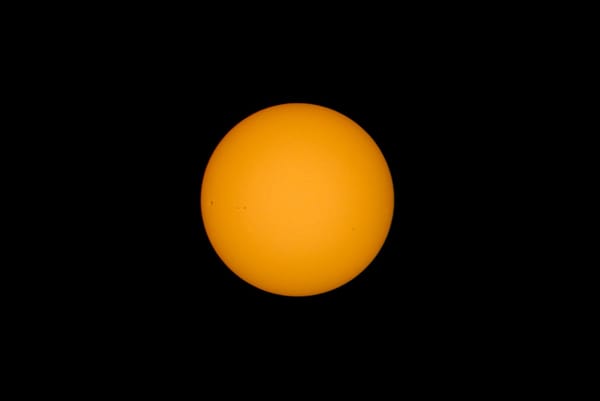
Space Tech
M-Class Solar Flare: How NASA's New Image Reveals the Sun's Extreme Heat Mystery
On November 18, 2026, NASA’s Astronomy Picture of the Day shared a striking image captured on May 14, 2025. This visual record highlights an M-class solar flare and invites you to look closer at the dynamic processes shaping our star. The photograph displays bright loops of plas…
Read More...
Space Tech
Milky Way Meets Aurora: The Rare Sky Event of November 17, 2026
On November 17, 2026, the night sky presented a breathtaking spectacle that blurred the lines between the distant cosmos and our immediate atmospheric environment. Captured in northern regions, an image revealed two majestic arches dominating the heavens, creating a visual illus…
Read More...
Space Tech
Webb Telescope Reveals NGC 7129: How Violent Jets Sculpt New Stars
The James Webb Space Telescope has delivered a stunning new view of NGC 7129, a star-forming region located about 3,000 light-years away in the constellation Cepheus. This celestial nursery offers astronomers a rare chance to study how stars are born within chaotic and turbulent…
Read More...
Space Tech
NASA Chandra Data Reveals Why Massive Star AT 2016blu Keeps Exploding
Astronomers have used NASA’s Chandra X-ray Observatory to uncover the reasons behind the erratic behavior of a massive star named AT 2016blu. This discovery offers a clearer picture of how unstable stars evolve and release energy in violent bursts. The star resides in the spiral…
Read More...