
Jump Higher in 5 Days: Real-Time Feedback Neuromuscular Training Lifts Youth Basketball Vertical Jump
We compile, generate and translate using Artificial Intelligence from the below given source. Macro Micro News is responsible for its editorial publication.
Bucharest, Romania, Source: Source
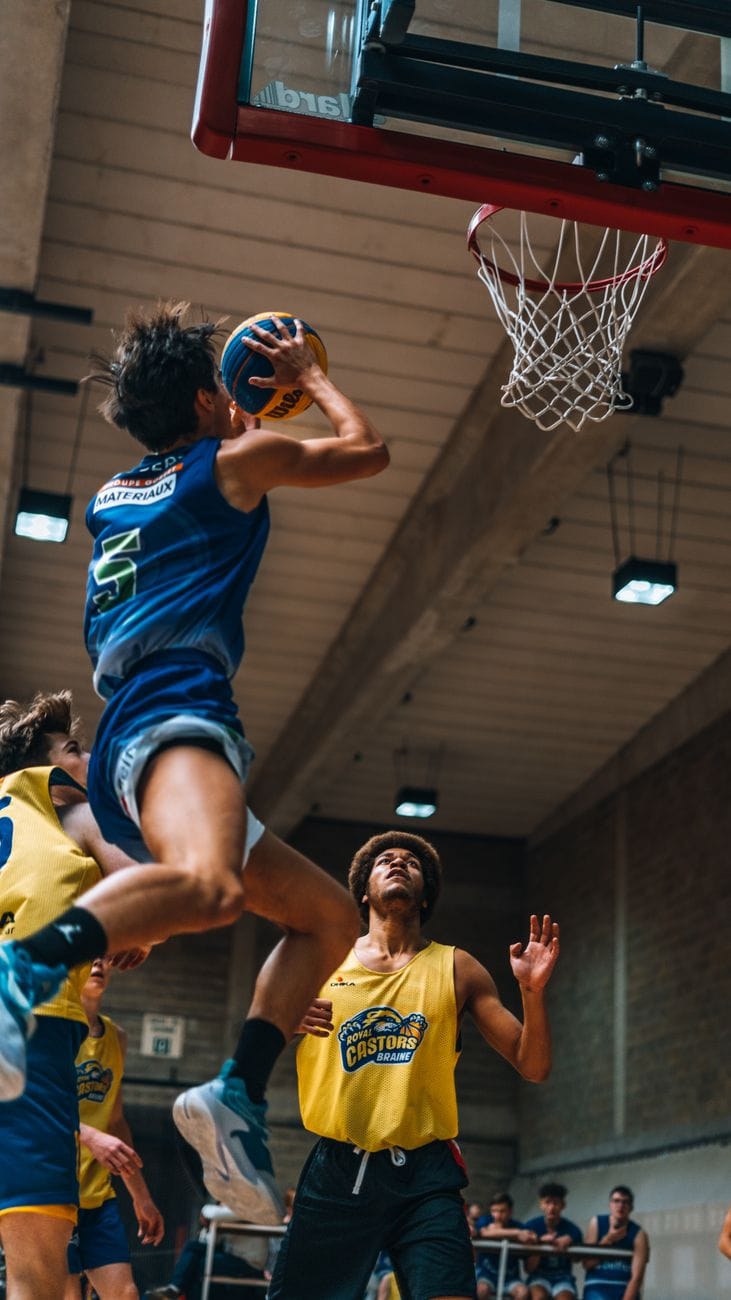
Vertical jumping matters in basketball. It decides who grabs the rebound, who contests the shot, who finishes through contact. Most coaches accept that improving it takes weeks of structured training. Newer thinking says something else. A compact, five-day protocol with real-time feedback might be enough to move the numbers for youth players. It does not require heavy external loading.
Twenty-one male junior basketball players took part. They were around 15 years old and highly competitive, with several athletes representing the Romanian National Basketball Team. The intervention ran through five consecutive days. Each session used the ERGOSIM Condition Simulation Device, a system developed by the Romanian National Center for Sport Research. The equipment tracks force, position, velocity, and acceleration during lower-limb extension. More importantly, the athlete sees their own force-output traces immediately and can adjust the next repetition. This feedback loop is called the CASINOR principle. It turns training into a live motor-learning exercise.
The training targeted the triple-extension chain: ankle, knee, hip. Exercises focused on the ankle plantar flexors, knee extensors, and coordinated triple extension. Loads were intentionally low at 3 to 4 decanewtons. The emphasis remained on clean neuromuscular control under modest loads. Over the five sessions, the simulator's brake intensity dropped from 90 percent to 30 percent, allowing quicker execution. In the final session, a motor-driven baseline speed of 0.5 m/s forced athletes to produce force above a minimum velocity threshold. They also progressed from alternating unilateral movements to simultaneous bilateral actions, which encouraged coordination between limbs.
Researchers measured vertical jump performance before training, immediately after, and then seven days later. Athletes completed a 15-second repeated jump test on an OptoJump optical system. Both bilateral and unilateral conditions were assessed. The MGM-15 method provided mean jump height, average power, and ground contact time.
Results moved fast. Bilateral jump height increased by 17.0 percent, from 0.300 m to 0.351 m. Average power output went up by 14.5 percent. Ground contact time decreased by 10.3 percent. That combination is especially interesting because it means athletes jumped higher while spending less time on the ground. In practice, that is a clear sign of better reactive efficiency and more effective use of the stretch-shortening cycle.
Unilateral numbers followed a similar path. The right limb showed a 22.0 percent increase in jump height and a 20.2 percent increase in power. The left limb improved by 18.9 percent in height and 16.1 percent in power. Right-side contact time dropped by 8.3 percent. Left-side contact time decreased by 5.0 percent. That specific change did not reach statistical significance. At baseline, both limbs had nearly identical average jump heights. After training they converged even further, which suggests the protocol helped support inter-limb symmetry.
Retention looked good too. At the seven-day checkpoint, most of the gains remained. That points to short-term consolidation of neuromuscular adaptations, not a temporary performance spike. The body seemed to keep the movement pattern even after the training week ended.
These findings are easy to appreciate when placed alongside typical jump programs. Basketball plyometric training reviews often report vertical gains in the 4 to 15 percent range after six to twelve weeks. This five-day intervention produced changes at the upper end of that range. It is not a guarantee for every team. It is a strong reason to explore short, feedback-rich training blocks inside the season. A protocol like this can fit into a competitive microcycle without adding heavy mechanical load or disrupting normal practice schedules. For coaches, this is a practical option. For return-to-play specialists, the device's ability to provide objective feedback on limb loading and symmetry adds another layer of value.
The researchers keep the results in perspective. The study had no control group, a modest sample size, and only male junior athletes. Players also continued their normal in-season basketball training throughout the intervention. There is also a possibility that some of the improvement came from the novelty of using an unfamiliar device. Future studies should include larger groups, controlled designs, female athletes, and force plate or electromyography data to identify the exact mechanisms behind these rapid shifts. The practical message remains clear: short, precise, feedback-rich sessions can sharpen explosive performance in a way many coaches still expect only from long training programs.
Related in Sport
Sport
Beyond Talent: How Interdisciplinary Science is Redefining Elite Sports Performance
In the 21st century, the landscape of competitive sports has undergone a profound transformation. No longer confined to the realms of raw motor skills, intuition, and innate talent, high-level athletics now stands at the intersection of biology, psychology, data science, and man…
Read More...
Sport
Fat Burning Myths Debunked: How Lean Mass Dictates Metabolism for Men and Women
For decades the fitness world has operated on a specific assumption about how men and women burn fuel. The prevailing wisdom suggested that men possess a biological edge in fat oxidation during exercise. This belief was often tied to higher testosterone levels and greater skelet…
Read More...
Sport
How Jump Metrics Predict Clubhead Speed in Sub-Elite Golfers
Driving distance stands as a critical determinant of scoring performance in golf. Even modest increases in yardage can translate to significant strokes saved over the course of a tournament. While clubhead speed remains widely recognized as a primary driver of distance, understa…
Read More...
Sport
Deadlifts Before Cycling: Why Heavy Lifting Fails to Boost Endurance Performance
The concept of Post-Activation Performance Enhancement (PAPE) has long been a staple in strength and conditioning protocols. Athletes frequently utilize heavy resistance exercises, such as squats or deadlifts, immediately prior to explosive movements like sprinting or jumping, u…
Read More...
Sport
How Elite Lifters Use Words to Build Confidence: New Study Reveals Mental Strategies
Competitive weightlifting demands extreme physical precision under intense psychological pressure. Athletes must execute complex movements within strict time limits where a single error can shift the entire competitive landscape. A recent study published in Sports (MDPI) on Octo…
Read More...
Sport
Elite Gymnast Shoulder Strength: Biomechanical Insights for Injury Prevention
Shoulder injuries stand as a primary hurdle in artistic gymnastics. This sport requires extreme ranges of motion and places heavy loads on the upper body. A recent study published in Sports (MDPI) explores the biomechanical advantages held by competitive male gymnasts. The resea…
Read More...
Sport
How Machine Learning Decodes Elite Athletic Success: Key Drivers Revealed
The quest for peak athletic performance has always balanced art and science. Recent advances in artificial intelligence now bring unprecedented clarity to the factors that distinguish good athletes from elite ones. A groundbreaking study published in the journal Sports by resear…
Read More...
Sport
Czech Pro Tennis: The Mental Edge That Wins Matches
Professional tennis is often viewed as a physical contest, but the sport places immense psychological demands on athletes. A recent qualitative study of Czech professional players reveals that mental preparation is critical for managing the intense pressure, rapid decision-makin…
Read More...
Sport
Ultramarathon Pain Science: How Runners Turn Suffering Into Speed
The world of ultramarathon running has exploded in popularity over the last twenty years. These events challenge athletes to cover distances far beyond the standard marathon of 42.195 kilometers. While many participants seek personal growth or simply enjoy the beauty of nature,…
Read More...
Sport
Swimming Data Crisis: Implausible Times and Flawed Metrics Undermine Critical Velocity Analysis
A recent scientific commentary has raised significant concerns regarding the validity of bioenergetic performance data in competitive swimming, specifically targeting a study by Amara et al. published in Sports (2026). The critique highlights two critical methodological flaws th…
Read More...