
Jupiter and the Moons: A Celestial Alignment Captured in October 2026
We compile, generate and translate using Artificial Intelligence from the below given source. Macro Micro News is responsible for its editorial publication.
United States, Source:
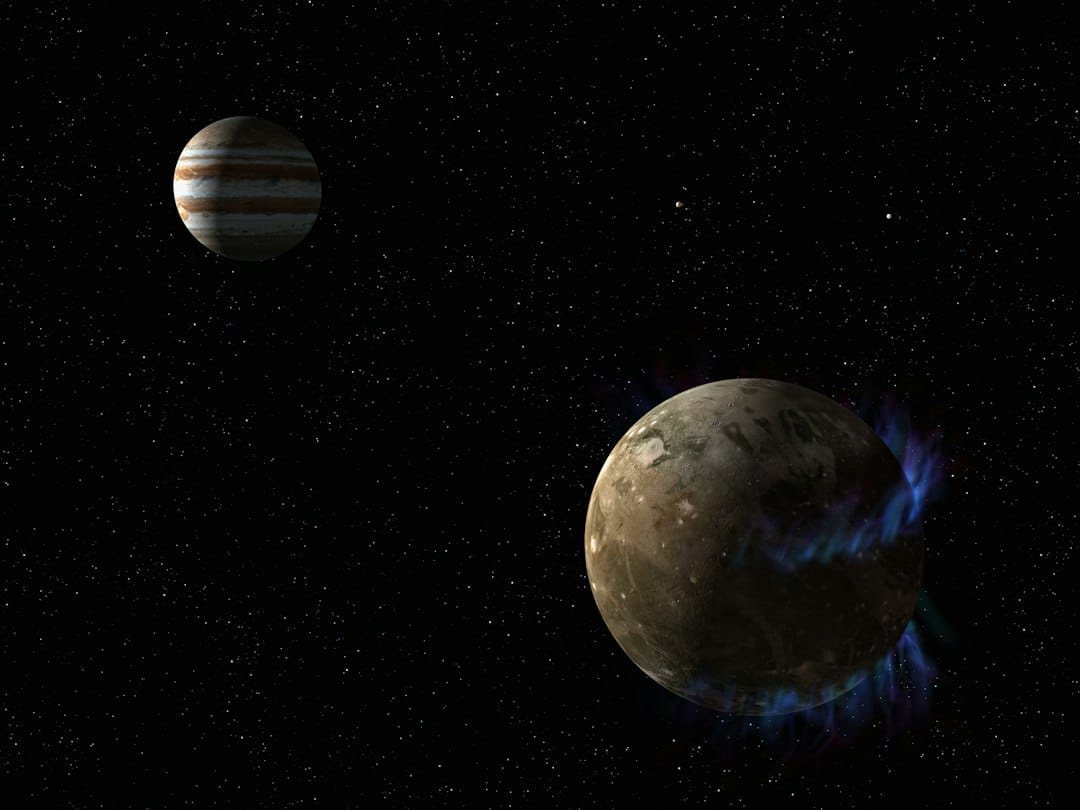
On October 12, 2026, the night sky offered a rare and breathtaking spectacle for astronomers and stargazers alike. The Astronomy Picture of the Day (APOD) featured a stunning composite image titled "Jupiter and the Moons," showcasing a precise alignment of celestial bodies that highlighted the dynamic nature of our solar system. This multi-moon photograph was made possible by a unique geometric event where Jupiter moved directly opposite to Earth relative to the Sun, creating a perfect syzygy that allowed for a clear, unobstructed view of the gas giant and its prominent satellites.
The image captures five distinct moons, though it is important to distinguish between the two planetary systems involved. Four of these moons belong to Jupiter, while one belongs to Earth. Lined up vertically above the Earth's Moon are Jupiter’s four largest Galilean moons: Ganymede, Io, Callisto, and Europa. From bottom to top in the composition, these bright points of light represent some of the most significant worlds in the outer solar system. Ganymede, Io, and Callisto are all larger than Earth's Moon, underscoring the immense scale of Jupiter’s gravitational influence. Europa, while only slightly smaller than our Moon, holds particular scientific interest due to its subsurface ocean, making it a prime candidate in the search for extraterrestrial life.
Earth's Moon appears in the lower left of the frame as a sunlit crescent, intentionally overexposed to balance the exposure with the fainter objects. In contrast, the night side of the Moon, visible on the upper right, is faintly illuminated by earthshine-a phenomenon caused by sunlight reflecting off Earth’s surface and oceans back onto the lunar surface. This delicate interplay of light adds depth and context to the image, reminding viewers of the close relationship between our planet and its nearest neighbor.
This visual alignment is not merely an aesthetic curiosity but a testament to the precision of orbital mechanics. NASA’s robotic spacecraft, currently orbiting Jupiter, has been conducting close passes near three of these moons, gathering invaluable data about their surfaces, atmospheres, and internal structures. The Juno mission, along with previous missions like Galileo, has provided detailed insights into the volcanic activity of Io, the icy crust of Europa, and the ancient, cratered surface of Callisto. Ganymede stands out as the largest moon in the solar system, even larger than the planet Mercury, and possesses its own magnetic field.
The capture of this image required careful timing and technical skill, combining multiple exposures taken near the moment of alignment. It serves as a powerful reminder of the complexity and beauty of our cosmic neighborhood. As we continue to explore the outer planets, images like this bridge the gap between amateur observation and professional astronomy, inspiring wonder and further inquiry into the mysteries of Jupiter and its entourage of moons.
Related in Space Tech
Space Tech
Pegasus Galaxy Collision: What Happens When NGC 7771 Merges?
The cosmos operates on a scale that defies human intuition. Galaxies are not static objects floating in void but dynamic entities engaged in a slow-motion dance spanning billions of years. The NGC 7771 group offers a striking glimpse into this celestial choreography. Located app…
Read More...
Space Tech
Lynds 1251: How Dark Dust Clouds Ignite New Stars in the Cosmos
The cosmos often feels like a silent void, but that darkness is actually a canvas waiting for creation. On November 23, 2026, the Astronomy Picture of the Day featured Lynds 1251, a dark nebula affectionately called the Rotten Fish Nebula. This image does more than show empty sp…
Read More...
Space Tech
Jupiter's Color Code: How Juno Deciphers the Gas Giant's Atmospheric Palette
The gas giant Jupiter has long captivated astronomers with its dynamic atmosphere, a swirling canvas of storms and bands that have been observed for centuries. However, the precise chemical mechanisms behind the planet's vibrant hues remain one of astrophysics' enduring enigmas.…
Read More...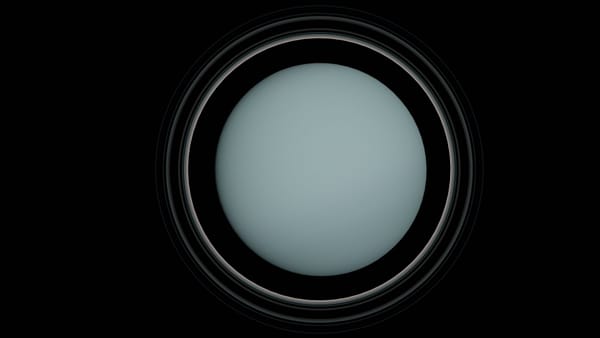
Space Tech
Voyager 2 at Neptune: The Last Look from the Edge of Our Solar System
On November 21, 2026, NASA’s Astronomy Picture of the Day showcases a breathtaking composite image of Neptune. This visual record comes from Voyager 2, the only spacecraft to ever visit this ice giant during its historic flyby. The image stands as a powerful testament to human i…
Read More...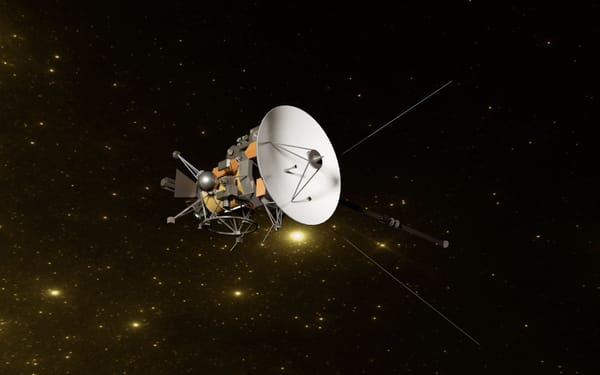
Space Tech
Voyager 1 Enters Interstellar Space: The Historic Milestone of November 2026
On November 20, 2026, the astronomical community marked a profound milestone as NASA’s Astronomy Picture of the Day highlighted the historic journey of Voyager 1. The featured image, captured by the Emirates Astronomical Observatory, depicts a time-exposure photograph where Mors…
Read More...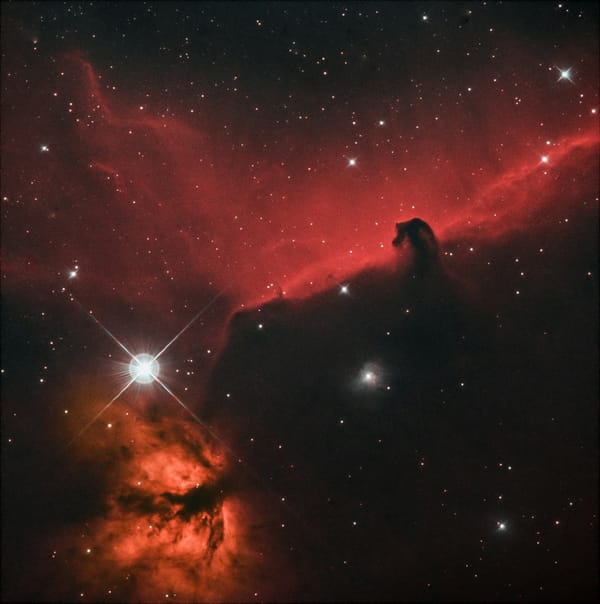
Space Tech
Orion's Cosmic Canvas: Horsehead and Flame Nebulas Revealed in Stunning Detail
The night sky often serves as a canvas for some of the most breathtaking natural artistry in the universe. Few images capture this essence quite like the combined view of the Horsehead and Flame Nebulas. This celestial scene offers a profound glimpse into the dynamic processes o…
Read More...
Space Tech
M-Class Solar Flare: How NASA's New Image Reveals the Sun's Extreme Heat Mystery
On November 18, 2026, NASA’s Astronomy Picture of the Day shared a striking image captured on May 14, 2025. This visual record highlights an M-class solar flare and invites you to look closer at the dynamic processes shaping our star. The photograph displays bright loops of plas…
Read More...
Space Tech
Milky Way Meets Aurora: The Rare Sky Event of November 17, 2026
On November 17, 2026, the night sky presented a breathtaking spectacle that blurred the lines between the distant cosmos and our immediate atmospheric environment. Captured in northern regions, an image revealed two majestic arches dominating the heavens, creating a visual illus…
Read More...
Space Tech
Webb Telescope Reveals NGC 7129: How Violent Jets Sculpt New Stars
The James Webb Space Telescope has delivered a stunning new view of NGC 7129, a star-forming region located about 3,000 light-years away in the constellation Cepheus. This celestial nursery offers astronomers a rare chance to study how stars are born within chaotic and turbulent…
Read More...
Space Tech
NASA Chandra Data Reveals Why Massive Star AT 2016blu Keeps Exploding
Astronomers have used NASA’s Chandra X-ray Observatory to uncover the reasons behind the erratic behavior of a massive star named AT 2016blu. This discovery offers a clearer picture of how unstable stars evolve and release energy in violent bursts. The star resides in the spiral…
Read More...