
Letterkenny Traffic Gridlock: One Shop Made €40 in a Day. What Does That Mean for Your Town?
We compile, generate and translate using Artificial Intelligence from the below given source. Macro Micro News is responsible for its editorial publication.
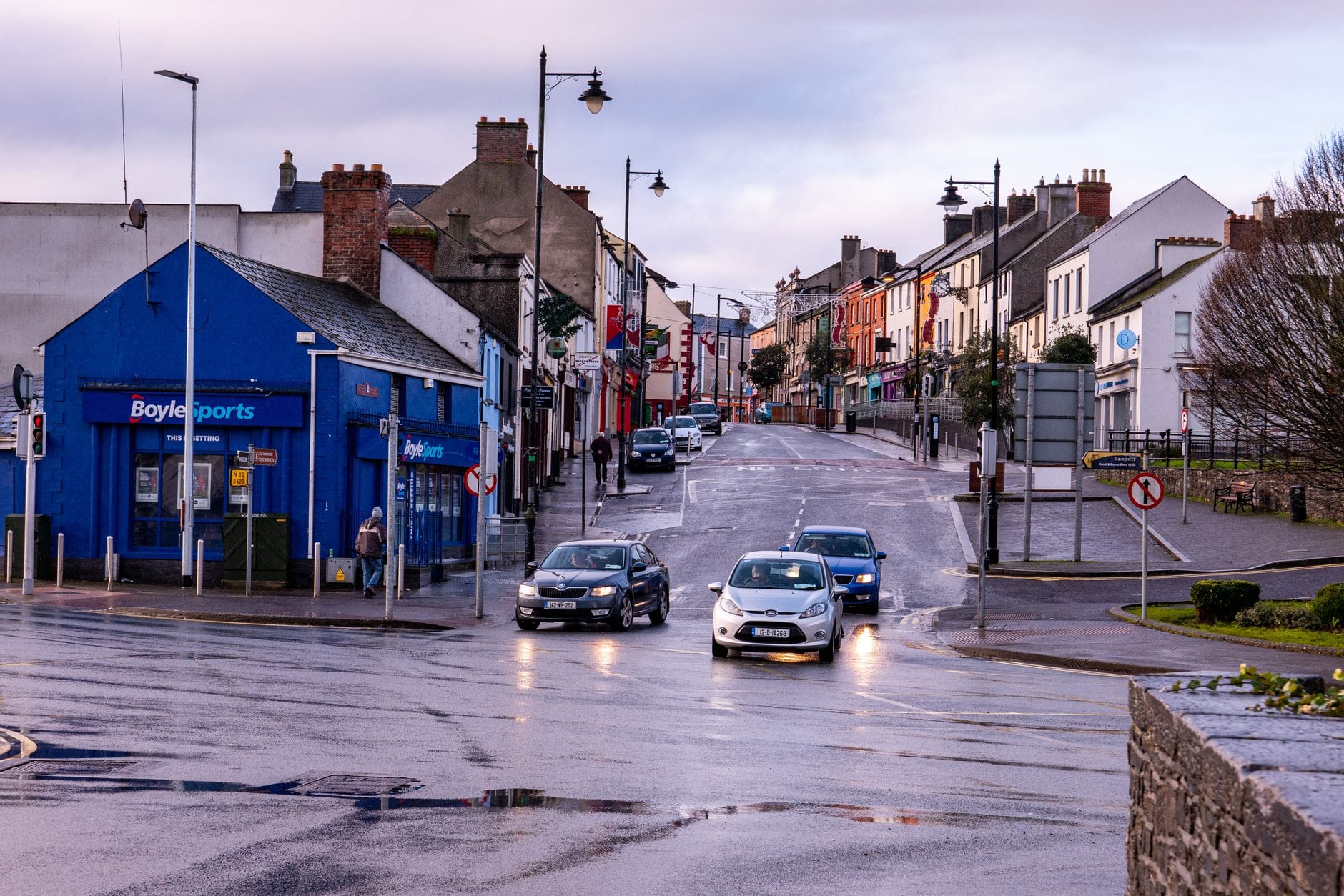
Letterkenny, County Donegal, Ireland, MMN Correspondent: On August 8th, the Station House Hotel in Letterkenny became the venue for a conversation that has been brewing for a long time. People arrived with stories about traffic. Business owners arrived with receipts. Taxi drivers arrived with examples. Before the night was over, they had a plan. Traffic shapes a town's mood as much as its streets.
One story stopped the room. A shop owner told everyone that the whole day brought one customer and a €40 sale. Think about that for a second. In a town of 25,000 people, on a summer day, one shop saw one customer. Another business owner shared video of Letterkenny's main street at six o'clock on a Saturday evening, right in the middle of the holiday season. It was completely empty.
The meeting was organised by Mary T. Sweeney of Aontú. She had been listening to locals who described the daily struggle to get into town. Her point was direct. Letterkenny is the capital of the Northwest, and it is being held back by road decisions that are difficult to understand. She asked the same question that was on many minds. Who is responsible?
The money problem is easy to measure. Safety adds another layer. Shaun Gallagher runs a local taxi company and has written to the chief executive of Donegal County Council with a clear demand for a response within 21 days. He says the health, safety, and welfare of his drivers are at risk. A driver stuck in traffic for hours is losing earnings and carrying stress that follows them on the road.
A bus operator described the same struggle with the new road layout. When several school coaches arrive at the same time, drivers have to find a way through a space that no longer works for them. A trip that should take seven minutes now takes up to an hour. Many people say the only reason they still drive into Letterkenny is the hospital.
The core issue is the Active Travel Plan, known as ATP. The plan was introduced to promote walking and cycling, and that goal has real value. The roll-out has produced very wide footpaths and cycle lanes that reduce the space for vehicles. On a two-lane carriageway that recently underwent €16 million of redesign, two large HGVs cannot pass each other. There is also no hard shoulder, so when traffic stalls, fire engines and ambulances have nowhere to move.
The town has roughly 25,000 residents and no town bus service. There is no transport hub to catch the overflow. Add hilly streets and winter frost to the picture, and cycle lanes will only ever serve a small part of the community. The design of the town needs to reflect the way people actually move.
The meeting ended with a decision that felt different. A campaign committee has been formed to demand an independent Critical Review of the Active Travel Plan and planning in Letterkenny. The same committee will look at other planning issues, including the redevelopment of Market Square.
Sweeney said the people in the room have little confidence in local solutions. The council, she said, has not heard the people who are dealing with the situation daily. One business owner made a point that landed with the whole room. Letterkenny is often mentioned in town planning courses as an example of how not to do things. That reputation is hard to shift, and an independent review might be the best chance to start changing it.
The campaign has already gone beyond Donegal. Sweeney has been in contact with Deputy Peadar Tóibín, Deputy Paul Lawless, and Senator Sarah O'Reilly to bring the issue to national attention. The Chamber of Commerce has also been vocal about the impact on businesses and commuters.
The committee is clear about what happens next. They want an external review, practical solutions, and a Letterkenny that works for shops, families, deliveries, and emergency services. That is the kind of future worth fighting for. The open question is who is responsible for the decisions that led here. The answer will shape how Letterkenny plans for the next generation.
Related in Politics
Politics
Europe's New Aid Strategy: How Team Europe Is Protecting Workers and Fixing Supply Chains in 240 Million Crisis Zones
European Commissioner Lahbib Zouarhi recently took the stage at the Foreign Affairs Council to unveil a bold new vision for humanitarian aid. The message was clear. Europe must step up as "Team Europe" to tackle the growing number of global crises. With nearly 240 million people…
Read More...
Politics
Germany's Growth Mirage: Weidel Exposes the Debt Trap Behind Official Projections
The German federal government recently unveiled its autumn economic projections for October 2026, highlighting a projected growth rate of 1.3 percent for the current year. This optimistic forecast suggests a notable upswing in national economic activity. However, Alice Weidel, c…
Read More...
Politics
EU-Mexico Trade Alliance 2026: How This Partnership Is Reshaping Global Supply Chains
The European Union and Mexico have always been strong partners in multilateral cooperation. By September 2026 their relationship has become a key test for global economic resilience. Trade tensions are rising in many parts of the world. The EU-Mexico partnership offers stability…
Read More...
Politics
Ireland's EU Presidency: How Humanitarian Aid and Preparedness Build a Safer Future
As Ireland takes the helm of the Council of the European Union, Commissioner Lahbib highlights a pivotal moment for global engagement. Europe now faces a dual mandate that requires both moral leadership through humanitarian aid and strengthened internal resilience against a comp…
Read More...
Politics
Saxony-Anhalt Breaks Tradition: AfD's Tobias Rausch Takes Landtag Presidency
German politics witnessed a defining moment on October 6, 2026, when the newly constituted state parliament of Saxony-Anhalt elected Tobias Rausch as its Landtag President. This event marks the first time in the history of the Federal Republic that a member of the Alternative fo…
Read More...
Politics
Von der Leyen's Balkan Strategy: Why EU Expansion is a Mutual Transformation
Ursula von der Leyen has made it clear that the European Union’s path forward involves more than just opening borders. Her recent visits to the Western Balkans highlight a strategic shift where enlargement is treated as a mutual transformation rather than a one-sided gift from B…
Read More...
Politics
EU-Mexico Trade Shift 2026: What Nearshoring and Green Tech Mean for Your Business
The relationship between the European Union and Mexico is undergoing a significant transformation as we navigate through 2026. This partnership has evolved from traditional trade agreements into a robust framework focused on sustainable development digital innovation and diploma…
Read More...
Politics
Germany's 52% State Share: What This Record Means for Your Wallet and Economy
In early October 2026, Germany reached a notable economic milestone. The federal government projected a state share of 52 percent for the current year. This figure marks a new all-time high. It signals a substantial shift in how public expenditure relates to national economic ou…
Read More...
Politics
North Macedonia's EU Path: Security, Economy, and Institutional Readiness
In a significant diplomatic engagement held in Skopje, European leadership reaffirmed its commitment to North Macedonia’s accession to the European Union, highlighting the nation’s pivotal role in regional security and economic stability. The dialogue underscored North Macedonia…
Read More...
Politics
Germany's Subsidy Crisis: Why Taxpayers Are Demanding Fiscal Reform Now
In October 2026, the Bund der Steuerzahler released its annual "Black Book," a detailed report exposing state-funded waste and inefficient subsidy programs across Germany. This publication has sparked a significant conversation about fiscal responsibility, revealing how public f…
Read More...