
M33: The Triangulum Galaxy's Star-Forming Secrets and Cosmic Distance Clues
We compile, generate and translate using Artificial Intelligence from the below given source. Macro Micro News is responsible for its editorial publication.
Global, Source:
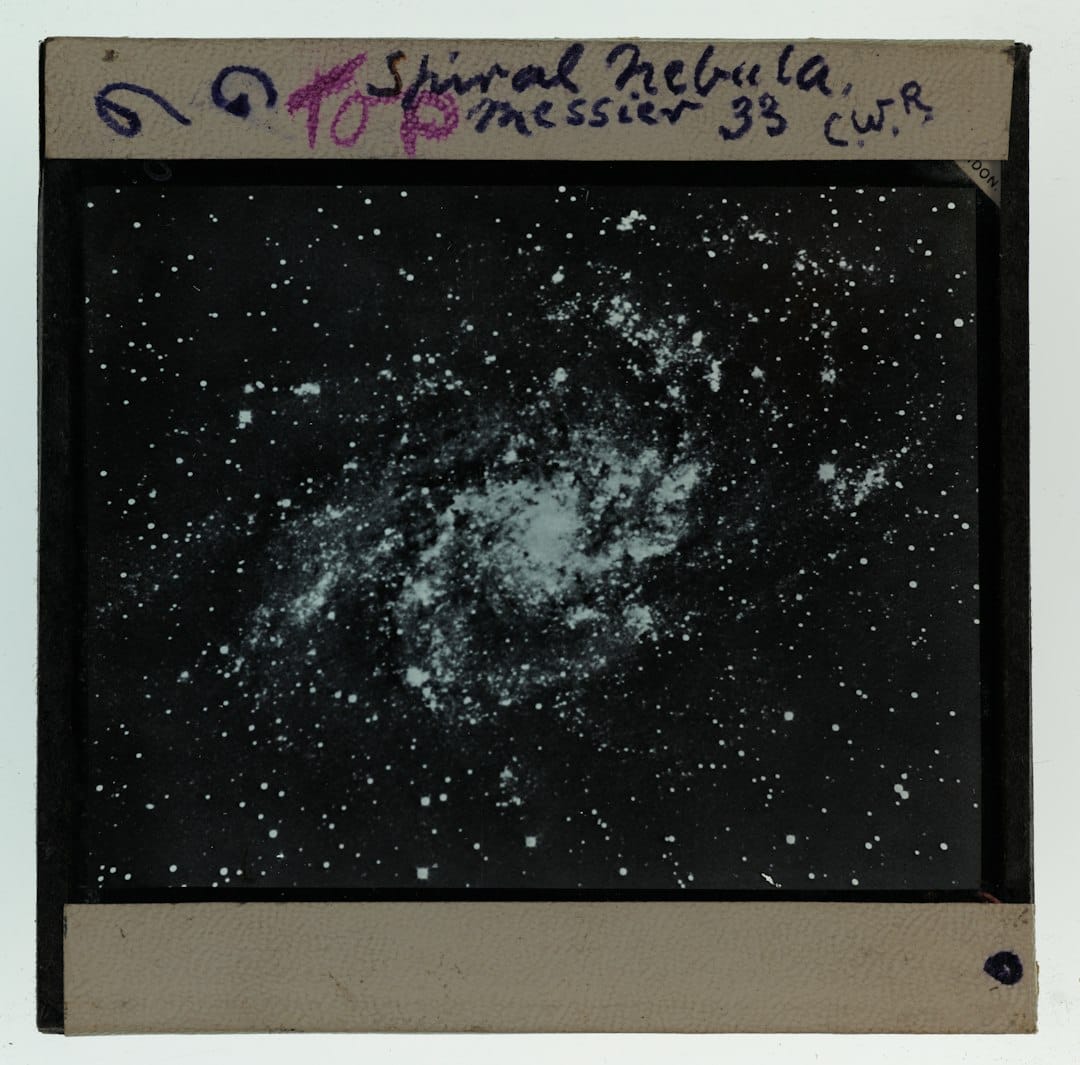
Nestled within the small northern constellation of Triangulum lies one of the most magnificent face-on spiral galaxies visible from Earth. Messier 33, widely known as the Triangulum Galaxy, often carries the evocative nickname Pinwheel Galaxy. This celestial body stands as a testament to the grandeur of cosmic structures. With a diameter exceeding 50,000 light-years it ranks as the third-largest galaxy in the Local Group trailing only behind the Andromeda Galaxy and our own Milky Way.
Located approximately 3 million light-years away M33 is believed to be a satellite galaxy of the Andromeda Galaxy. This gravitational relationship suggests that if observers were situated on a planet within M33 they would witness spectacular views of Andromeda’s grand spiral star system dominating their night sky. Similarly from the perspective of the Milky Way M33 offers a stunning display of its loosely wound spiral arms characterized by vibrant blue star clusters and distinct pinkish regions indicative of active star formation.
One of the most notable features in M33 is NGC 604 the brightest star-forming region in the galaxy. Visible at roughly the five o'clock position relative to the galactic center this massive nebula serves as a stellar nursery where new stars are born. The presence of well-measured variable stars within M33 has made it a crucial cosmic yardstick for astronomers. These celestial markers allow scientists to accurately measure distances across the universe helping to refine our understanding of the scale and expansion of the cosmos.
The study of M33 provides critical insights into the dynamics of spiral galaxies and their interactions within local groups. As a nearby neighbor it serves as an ideal laboratory for observing the processes of star birth and galactic evolution in high resolution. Its proximity allows for detailed analysis that distant galaxies cannot offer making it an essential subject for both amateur astronomers and professional astrophysicists alike. The ongoing observation of M33 continues to enhance our knowledge of the Local Group's structure and history reminding us of the intricate web of gravity and light that binds our galactic neighborhood together.
Related in Space Tech
Space Tech
Equinox 2026: When Day Meets Night and Why Your Clock Is Wrong
The calendar turns a page in 2026 with two pivotal moments that have captivated human imagination for millennia. These are the equinoxes, precise astronomical events where the Sun crosses the celestial equator. They mark the transition between seasons and offer a rare glimpse in…
Read More...
Space Tech
Houston's Japan Festival: How NASA and JAXA Are Inspiring the Next Generation of Space Explorers
Imagine standing in Hermann Park on a crisp September weekend, surrounded by the vibrant sounds of traditional Japanese music and the aroma of authentic cuisine. This was the scene during Houston’s 33rd Annual Japan Festival on September 12-13, 2026. But amidst the cultural cele…
Read More...
Space Tech
Callanish Stones and the Sun's Figure-Eight: A 2026 Celestial Guide
The meeting point of ancient human ingenuity and cosmic mechanics produces some of the most striking visual phenomena in astronomy. On September 20, 2026, NASA’s Astronomy Picture of the Day highlighted a breathtaking composite image titled "Analemma over the Callanish Stones."…
Read More...
Space Tech
Ladakh Night Sky: Witness the Zodiacal Light Phenomenon in 2026
Imagine standing at 4,500 meters above sea level where the air is thin and the darkness is absolute. On September 19, 2026, visitors to the Hanle Dark Sky Reserve in Ladakh, India, were treated to a rare celestial event. Just before astronomical twilight began, the sky revealed…
Read More...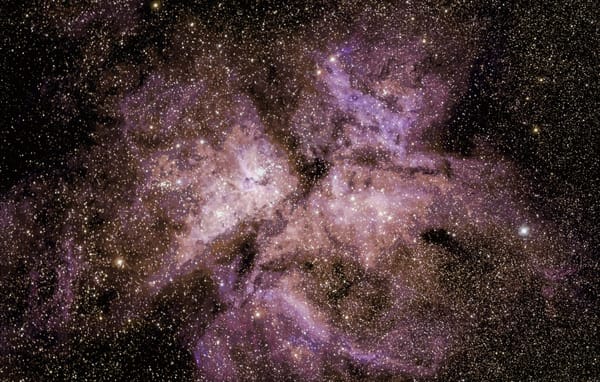
Space Tech
Carina Nebula: Inside the Stellar Treasure Chest of Giant Stars
Deep within the southern constellation of Carina, roughly 7,500 light-years from Earth, lies one of the most active star-forming regions in our galaxy. The Carina Nebula is a vast cosmic cloud that acts as a dynamic engine for stellar birth. Gravity compresses matter here into b…
Read More...
Space Tech
Webb Telescope Reveals M64's Counter-Rotating Gas: A New Era of Galactic Evolution
The James Webb Space Telescope has delivered a striking new view of Messier 64, widely recognized as the Black Eye Galaxy. Situated roughly 17 million light-years from Earth in the constellation Coma Berenices, this spiral galaxy features a distinctive dark dust band that partia…
Read More...
Space Tech
Your Body Is Made of Stardust: The Cosmic Journey of Every Atom You Possess
Consider the atoms that compose your physical form. Each one carries a history spanning billions of years, forged in the violent and majestic events that shaped our universe. While it might seem intuitive to assume all matter is created equally, astrophysics reveals a far more c…
Read More...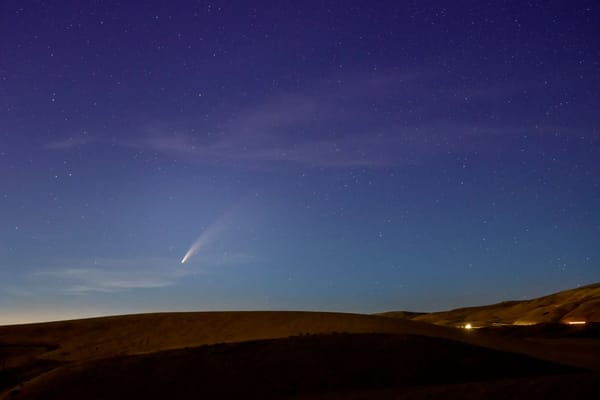
Space Tech
Comet NEOWISE Over the Adriatic: A 2026 Night Sky Spectacle You Must See
On September 13, 2026, the night sky delivered a breathtaking reminder of our solar system's dynamic nature. Comet NEOWISE rose majestically over the shimmering waters of the Adriatic Sea. This stunning astronomical event was captured in high definition by an early-rising photog…
Read More...
Space Tech
Train AI to Reveal Dark Energy: Join NASA’s Artifact InSPECtor Project
You hold the key to unlocking the universe's greatest mysteries. Scientists face a persistent hurdle in their quest to understand dark energy. They must separate genuine cosmic signals from digital noise. A new initiative by NASA called Artifact InSPECtor invites you to help ref…
Read More...
Space Tech
M83: Why This Southern Galaxy Defies Expectations
Global, Source Deep within the southeastern reaches of the constellation Hydra, approximately twelve million light-years from Earth, lies one of the most visually striking galaxies in the night sky: Messier 83, widely known as the Southern Pinwheel. This magnificent spiral galax…
Read More...