
Mars' 1,500km Cloud Mystery: What Aeolis Mensae Reveals About Martian Weather
We compile, generate and translate using Artificial Intelligence from the below given source. Macro Micro News is responsible for its editorial publication.
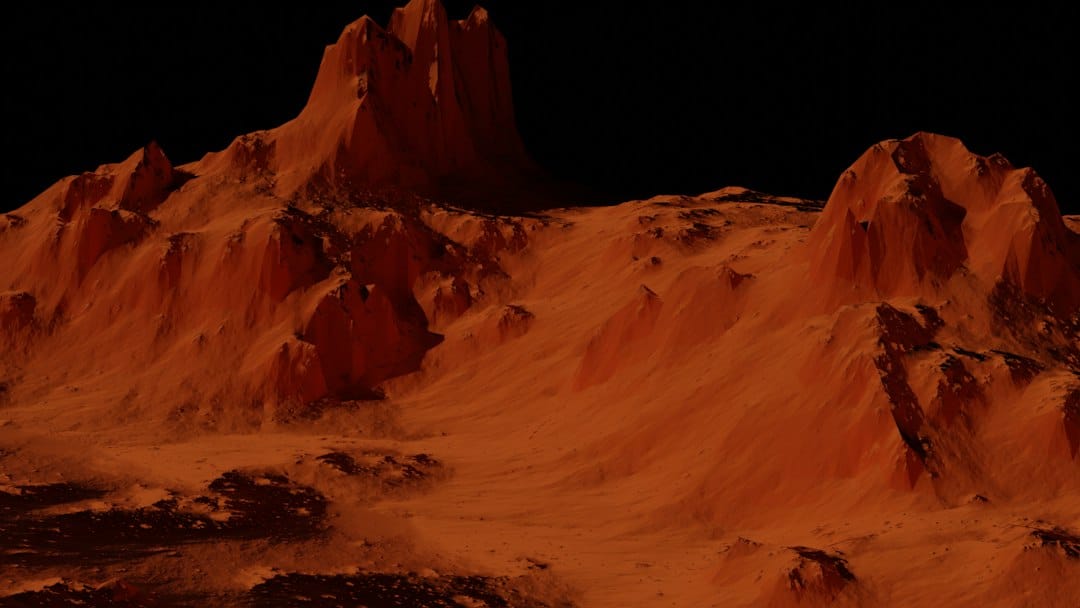
Mars, Source:
Mars is often called the Red Planet, but its skies tell a different story. One feature stands out for its sheer scale and scientific intrigue. An unusually long cloud stretches across the Martian sky. This celestial formation has captivated astronomers and space enthusiasts alike. It offers a glimpse into the complex meteorological processes at work on our planetary neighbor.
The cloud in question is located near Aeolis Mensae. This region is characterized by rugged terrain and significant topographical variations. Unlike typical clouds found on Earth, which are often short-lived and localized, this Martian cloud extends for over 1,500 kilometers. Its elongated shape is not merely a visual curiosity. It is a testament to the powerful wind patterns that dominate the Martian atmosphere. The cloud forms primarily during the morning hours of the Martian spring and summer seasons. This suggests a strong correlation with solar heating and atmospheric stability.
Scientific analysis reveals that this cloud is composed of water ice. This substance behaves differently under Mars' thin atmosphere and low pressure. On Earth, cloud formation typically involves dust particles acting as nuclei around which water vapor condenses. However, on Mars, the atmosphere is too thin and lacks sufficient dust at high altitudes to support this conventional process. Instead, researchers believe that the cloud forms through a unique mechanism involving the interaction between the planet's surface features and atmospheric winds. As air flows over the elevated terrain of Aeolis Mensae, it cools and condenses. Ice crystals form and are then swept downstream by persistent winds. This creates the observed tail-like structure.
This phenomenon was first recorded by NASA’s Viking missions in 1977. It was only in recent years, with the advent of more advanced robotic spacecraft like the Mars Reconnaissance Orbiter, that detailed observations became possible. These missions have provided critical data that help scientists refine models of Martian weather systems. Understanding these cloud dynamics is not just an academic exercise. It has practical implications for future human exploration. Accurate weather predictions are essential for the safety of astronauts and the operation of surface equipment. This makes the study of Martian clouds a priority for space agencies worldwide.
As technology continues to advance, our understanding of Mars will deepen. We will reveal more secrets about its past, present, and potential for life. The long cloud on Mars serves as a reminder of the dynamic nature of our solar system. It highlights the ongoing quest to unravel the mysteries of the cosmos. Each new image and dataset brings us closer to comprehending the intricate dance of wind, ice, and rock that shapes the Martian landscape.
Related in Space Tech
Space Tech
Pegasus Galaxy Collision: What Happens When NGC 7771 Merges?
The cosmos operates on a scale that defies human intuition. Galaxies are not static objects floating in void but dynamic entities engaged in a slow-motion dance spanning billions of years. The NGC 7771 group offers a striking glimpse into this celestial choreography. Located app…
Read More...
Space Tech
Lynds 1251: How Dark Dust Clouds Ignite New Stars in the Cosmos
The cosmos often feels like a silent void, but that darkness is actually a canvas waiting for creation. On November 23, 2026, the Astronomy Picture of the Day featured Lynds 1251, a dark nebula affectionately called the Rotten Fish Nebula. This image does more than show empty sp…
Read More...
Space Tech
Jupiter's Color Code: How Juno Deciphers the Gas Giant's Atmospheric Palette
The gas giant Jupiter has long captivated astronomers with its dynamic atmosphere, a swirling canvas of storms and bands that have been observed for centuries. However, the precise chemical mechanisms behind the planet's vibrant hues remain one of astrophysics' enduring enigmas.…
Read More...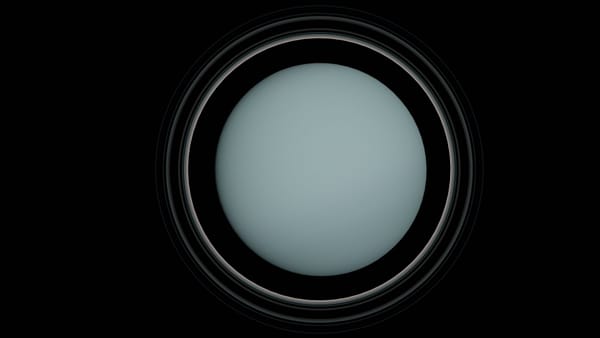
Space Tech
Voyager 2 at Neptune: The Last Look from the Edge of Our Solar System
On November 21, 2026, NASA’s Astronomy Picture of the Day showcases a breathtaking composite image of Neptune. This visual record comes from Voyager 2, the only spacecraft to ever visit this ice giant during its historic flyby. The image stands as a powerful testament to human i…
Read More...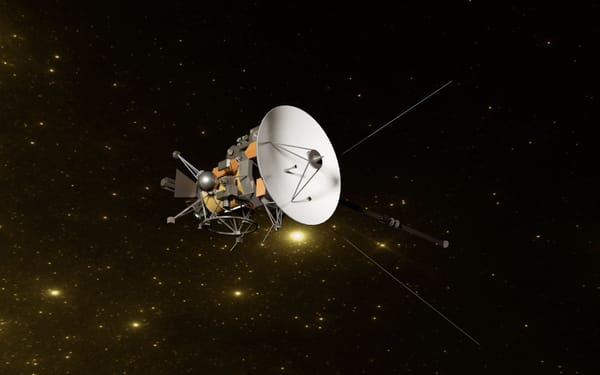
Space Tech
Voyager 1 Enters Interstellar Space: The Historic Milestone of November 2026
On November 20, 2026, the astronomical community marked a profound milestone as NASA’s Astronomy Picture of the Day highlighted the historic journey of Voyager 1. The featured image, captured by the Emirates Astronomical Observatory, depicts a time-exposure photograph where Mors…
Read More...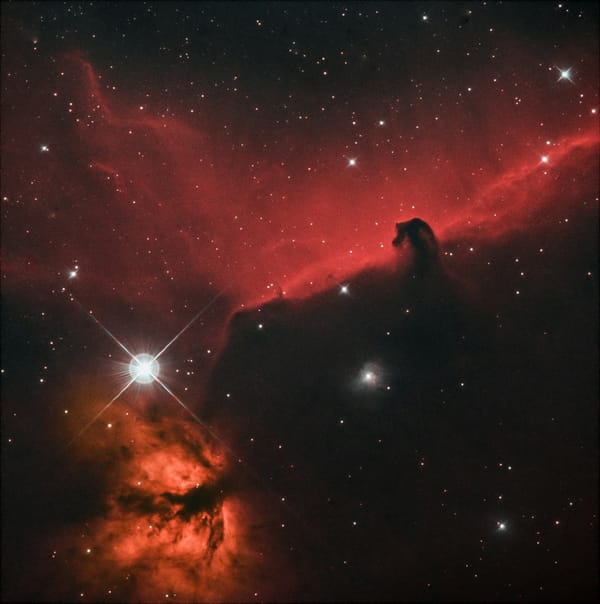
Space Tech
Orion's Cosmic Canvas: Horsehead and Flame Nebulas Revealed in Stunning Detail
The night sky often serves as a canvas for some of the most breathtaking natural artistry in the universe. Few images capture this essence quite like the combined view of the Horsehead and Flame Nebulas. This celestial scene offers a profound glimpse into the dynamic processes o…
Read More...
Space Tech
M-Class Solar Flare: How NASA's New Image Reveals the Sun's Extreme Heat Mystery
On November 18, 2026, NASA’s Astronomy Picture of the Day shared a striking image captured on May 14, 2025. This visual record highlights an M-class solar flare and invites you to look closer at the dynamic processes shaping our star. The photograph displays bright loops of plas…
Read More...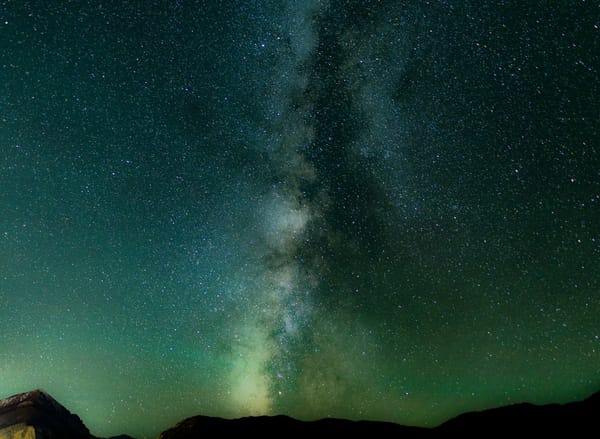
Space Tech
Milky Way Meets Aurora: The Rare Sky Event of November 17, 2026
On November 17, 2026, the night sky presented a breathtaking spectacle that blurred the lines between the distant cosmos and our immediate atmospheric environment. Captured in northern regions, an image revealed two majestic arches dominating the heavens, creating a visual illus…
Read More...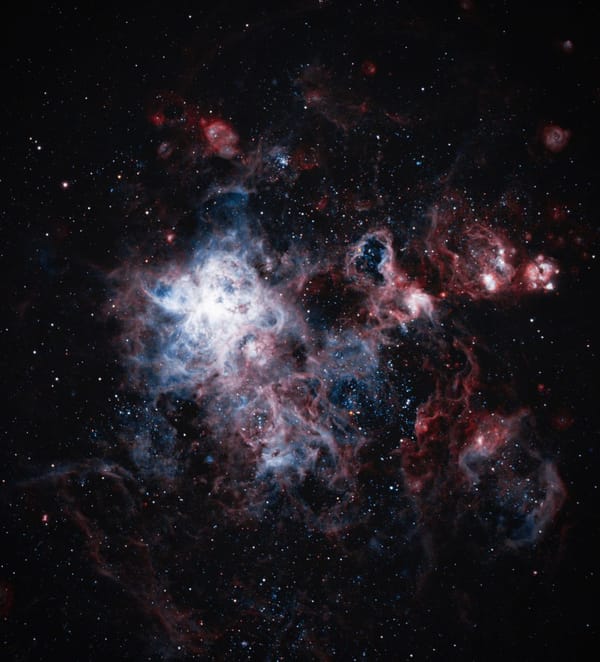
Space Tech
Webb Telescope Reveals NGC 7129: How Violent Jets Sculpt New Stars
The James Webb Space Telescope has delivered a stunning new view of NGC 7129, a star-forming region located about 3,000 light-years away in the constellation Cepheus. This celestial nursery offers astronomers a rare chance to study how stars are born within chaotic and turbulent…
Read More...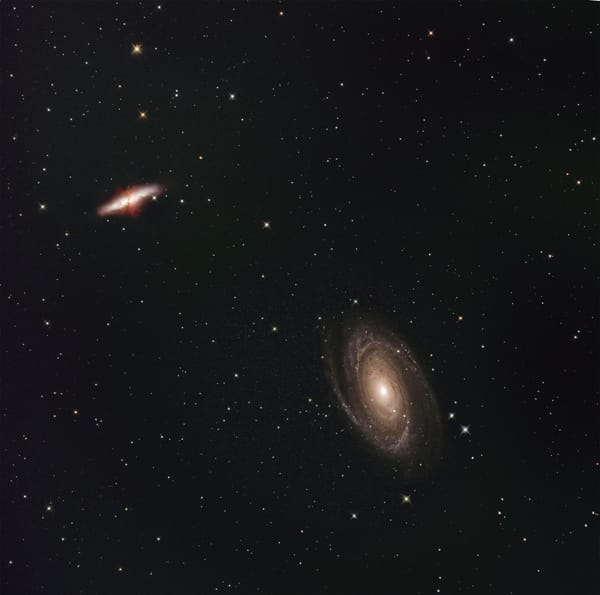
Space Tech
NASA Chandra Data Reveals Why Massive Star AT 2016blu Keeps Exploding
Astronomers have used NASA’s Chandra X-ray Observatory to uncover the reasons behind the erratic behavior of a massive star named AT 2016blu. This discovery offers a clearer picture of how unstable stars evolve and release energy in violent bursts. The star resides in the spiral…
Read More...